Storage capacity › Q3 · Dual certificates
Extensive neuron support
Definitions
Definition 1. Spin network
For \(n\ge2\), \(J=J^\top\in\mathbb R^{n\times n}\), \(J_{ii}=0\), and \(h\in\mathbb R^n\). $$H_i(s)=\sum_{j\ne i}J_{ij}s_j+h_i,\qquad f_{J,h}(s)_i=\sigma(H_i(s)),\qquad\sigma(t)=\begin{cases}+1,&t>0,\\-1,&t\le0.\end{cases}$$ Strict storage requires \(s_iH_i(s)>0\) for every prescribed spin and neuron.
Definition 2. Storage probability
\(D\) is uniform among the \(m\)-element subsets of \(\{-1,1\}^n\). $$p_n(m)=\Pr\{D\text{ is storable}\}.$$
Definition 3. Capacity
$$\alpha_-=\sup\{a>0:p_n(\lfloor an\rfloor)\longrightarrow1\}.$$ This supremum does not assert a sharp threshold.
Definition 4. Two limiting endpoints
$$\begin{aligned}\alpha_-&=\sup\{a>0:\\&\quad p_n(\lfloor an\rfloor)\to1\},\\[6pt]\alpha_+&=\inf\{a>0:\\&\quad p_n(\lfloor an\rfloor)\to0\}.\end{aligned}$$ These are the optimal one-sided endpoints. A single sharp constant requires \(\alpha_-=\alpha_+\); the one-sided goals do not assume equality.
Definition 5. Spin patterns
\(s^\mu\in\{-1,1\}^n\), and \(S=[s^1\ \cdots\ s^m]\in\{-1,1\}^{n\times m}\).
Definition 6. Spin couplings
\(J=J^\top\in\mathbb R^{n\times n}\), \(J_{ii}=0\), and \(h\in\mathbb R^n\). Strict stability means \(s_i^\mu((Js^\mu)_i+h_i)>0\).
Definition 7. Nonstorage certificate
The multipliers \(\lambda_i^\mu\ge0\) have total mass one and satisfy $$\sum_\mu\lambda_i^\mu s_i^\mu=0,\qquad \sum_\mu(\lambda_i^\mu+\lambda_j^\mu)s_i^\mu s_j^\mu=0\quad(i<j).$$ Their existence is equivalent to nonstorage.
Definition 8. First failure size
Choose a uniformly random ordering of all \(2^n\) distinct spin patterns:
$$X_n^1,X_n^2,\ldots,X_n^{2^n}.$$
The “prefix of length \(m\)” means the first \(m\) patterns in this list:
$$D_{n,m}=\{X_n^1,\ldots,X_n^m\},\qquad 1\le m\le2^n.$$
Add patterns one at a time; \(\tau_n\) counts how many have been added when storage first becomes impossible:
$$\begin{aligned}\tau_n=\min\{m\in\{1,\ldots,2^n\}:\\D_{n,m}\text{ is not storable}\}.\end{aligned}$$
Storage is checked anew at each size; the weights and fields may change with \(m\).
$$\begin{aligned}m<\tau_n&\ \Longrightarrow\ D_{n,m}\text{ is storable},\\m\ge\tau_n&\ \Longrightarrow\ D_{n,m}\text{ is not storable}. \end{aligned}$$
Each \(D_{n,m}\) is a uniform distinct \(m\)-set, so
$$p_n(m)=\Pr\{\tau_n>m\}.$$
Thus \(\tau_n-1\) is the largest storable prefix size; \(\tau_n\) is random because the ordering is random. The full cube is nonstorable, so the minimum exists. The recorded proofs also write \(D_m\) for \(D_{n,m}\).
Definition 9. Maximum storable subset
For a finite sample \(D\), $$L(D)=\max\{|E|:E\subseteq D\text{ is storable}\}.$$ Full storage is the event \(L(D)=|D|\).
Definition 10. Storage quantiles
$$q_n(t)=\min\{1\le m\le2^n:p_n(m)\le t\},\quad 0<t<1,\qquad c_n=q_n(1/2).$$ Heredity makes \(p_n\) nonincreasing; the full cube is nonstorable, so these quantiles exist.
Definition 11. Repair count
For a nonstorable set \(D\), $$R(D)=\{x\in D:D\setminus\{x\}\text{ is storable}\}.$$ Put \(R(D)=\varnothing\) when \(D\) stores. For a uniform distinct \(m\)-set, \(\mu_{n,m}=\mathbb E|R(D)|\).
Definition 12. Active certificate neurons
For normalized nonnegative dual multipliers, $$I_\lambda=\{i\in[n]:\sum_{\mu=1}^m\lambda_i^\mu>0\}.$$ The count concerns neuron support, not the number of patterns or positive entries.
Definition 13. Guaranteed sample size
$$c_\ast=1/55296,\qquad M_n=n+\lfloor c_\ast n/\log n\rfloor.$$ Logarithms are natural; \(M_n/n\to1\).
Statement
Neuron-support bound established in Attempt 2; the earlier pattern-support bound is from Attempt 1.
For each fixed \(0<u<2\), some \(\beta(u)>0\) satisfies, at \(m=\lfloor un\rfloor\), $$\Pr\{\exists\text{ normalized exact nonnegative dual supported on at most }\lfloor\beta(u)n\rfloor\text{ neurons}\}\longrightarrow0.$$ This excludes small neuron supports and leaves the probability of an unrestricted certificate open.
Used in the storage-capacity argument.
Attempt 2 · ten-round results
Step1. Below two every dual needs many neurons
Established in Attempt 2 · stated scope
There is an absolute Rademacher constant \(c_R>0\) with the following property. For \(n\ge2\), \(1\le r<n\), \(1\le m\le2^n\), define $$ d=n-r,\qquad M=\max\{m,d+1\},\qquad T_{M,d}=\Pr\{\operatorname{Bin}(M-1,1/2)\ge d\}. $$ Let \(E_r\) be existence of a normalized full canonical nonnegative dual whose active neuron set \(I(\lambda)=\{i:\sum_\mu\lambda_i^\mu>0\}\) has size at most \(r\). For uniform distinct sampling, $$ \Pr(E_r)\le r\binom nr\big(T_{M,d}+2e^{-c_Rd}\big)+\binom m2 2^{-n}. $$ For iid sampling the collision term is omitted. In particular fix \(0<\alpha<2\). For any \(\beta\in(0,1-\alpha/2)\), set $$ \gamma=\max\{\alpha,1-\beta\},\qquad L(\alpha,\beta)=\frac{2(1-\beta-\gamma/2)^2}{\gamma},\qquad H(\beta)=-\beta\log\beta-(1-\beta)\log(1-\beta). $$ If $$ H(\beta)<\min\{L(\alpha,\beta),c_R(1-\beta)\}, $$ then, at \(m=\lfloor\alpha n\rfloor\), $$ \Pr\{\exists\text{ full dual with }|I(\lambda)|\le\lfloor\beta n\rfloor\}\le e^{-\kappa n} $$ for all sufficiently large \(n\), where one valid choice is $$ \kappa=\frac12\min\{L(\alpha,\beta)-H(\beta),\ c_R(1-\beta)-H(\beta),\ \log2\}>0. $$ Such a positive \(\beta\) exists for every \(\alpha<2\), although this source does not give a numerical value of \(c_R\). Hence all two-active-neuron duals, and indeed all certificates with sublinear active-neuron support, occur with probability tending to zero below two. Any full nonstorage witness that exists there must involve at least a positive linear number of neurons. This theorem neither excludes extensive certificates nor supplies a common network storing the full sample.
Proof
- Precisely matched source. Use Tikhomirov, On the probability that the convex hull of random points contains the origin, arXiv:2304.13133v5 (9 August 2025), Theorem 1.2, first displayed inequality. For iid symmetric unit-variance subgaussian entries in \(M\) vectors of dimension \(d\), with \(M>d\), the absorption probability is at most
$$ 1-2^{-M+1}\sum_{k=0}^{d-1}\binom{M-1}{k}+2e^{-c_Rd} =T_{M,d}+2e^{-c_Rd}. $$ Rademacher applicability is explicit in Remark 1.7; no general-position assumption is used. The full primary HTML, exact theorem extract, version, hash and hypothesis check are preserved under exchange/S2/sources/. Only this cited theorem is imported; no numerical value of its existential constant is assumed. This is an application to actual independent raw features, not a universality approximation to the coupled network constraints.
- Signed exterior features really are independent. First sample \(m\) iid uniform spin patterns. Fix an \(r\)-set \(J\subset[n]\) and \(i\in J\). Form
$$ X^\mu=s_i^\mu(s_k^\mu)_{k\notin J}\in\{\pm1\}^{d}. $$ Condition on the entire target-spin row \((s_i^\mu)_{\mu\le m}\). The exterior entries \((s_k^\mu)_{\mu,k\notin J}\) remain independent uniform signs. For each \(\mu\), multiplying its exterior row by its now fixed sign is a bijection of the uniform \(d\)-cube; across different \(\mu\) the transformations involve disjoint independent exterior entries. Consequently all \(md\) coordinates of \((X^\mu)\) are independent uniform signs conditional on the target row. Their conditional law does not depend on that row, so the same iid Rademacher assertion holds unconditionally. This verifies symmetry, unit variance, bounded subgaussian moment, and independence both between vectors and coordinates. The deterministic bias coordinate is omitted entirely; it is not incorrectly treated as iid subgaussian data.
- Strict exterior classifier versus convex absorption. A vector \(w\in\mathbb R^d\) with \(X^\mu\cdot w>0\) for every \(\mu\) exists exactly when \(0\notin\operatorname{conv}\{X^\mu\}\). For necessity, dot any convex zero representation with \(w\). For sufficiency, let \(z\ne0\) minimize norm over that finite convex hull; differentiating \(\|z+t(X^\mu-z)\|^2\) at zero gives \(z\cdot X^\mu\ge\|z\|^2>0\). This provides a strict homogeneous classifier using only neurons outside \(J\), with field zero. It is a sufficient classifier for that one row, and no requirements are placed on inactive-neuron outputs.
- Respecting the source dimension condition. If \(m>d\), Theorem 1.2 applies directly. If \(m\le d\), append \(d+1-m\) fresh iid Rademacher vectors in the same dimension. Convex absorption by the original vectors implies absorption by the augmented collection. In both cases there are \(M=\max\{m,d+1\}>d\) vectors to which the theorem applies, proving
$$ \Pr\{\text{no strict exterior classifier at }(J,i)\}\le T_{M,d}+2e^{-c_Rd}. $$ The padding changes only this upper-bound construction; the sampled network problem retains its original \(m\) patterns.
- Why a certificate with few active neurons forces such a failure. The normalized canonical dual equations are
$$ \lambda_i^\mu\ge0,\quad\sum_{i,\mu}\lambda_i^\mu=1,\quad \sum_\mu\lambda_i^\mu s_i^\mu=0,\quad \sum_\mu(\lambda_i^\mu+\lambda_k^\mu)s_i^\mu s_k^\mu=0\ (i<k). $$ Suppose its active set \(I\) has size at most \(r\). Extend \(I\) to some \(r\)-set \(J\), and choose an active \(i\in I\). For every \(k\notin J\), all \(\lambda_k^\mu=0\), so the shared-edge equation reduces to $$ \sum_\mu\lambda_i^\mu s_i^\mu s_k^\mu=0. $$ Thus \(\sum_\mu\lambda_i^\mu X^\mu=0\), and its row mass is positive. Normalizing by that mass shows zero belongs to the exterior-feature convex hull. Equivalently any strict exterior classifier would have positive \(\lambda_i\)-weighted margin, contradicting this zero sum. Therefore \(E_r\) is contained in the union of exterior-classifier failures over the \(r\binom nr\) pairs \((J,i\in J)\). A union bound and step 4 prove the iid finite estimate. This argument uses only the active row's equalities; it does not combine neuron classifiers fitted without symmetry into a full network, and it does not assume independence of feasibility events.
- The distinct-subset model. The iid list collides with probability \(\delta\le\binom m2 2^{-n}\). If \(C\) denotes no collision, the mixture identity
$$ \Pr(E)=(1-\delta)\Pr(E\mid C)+\delta\Pr(E\mid C^c) $$ gives \(|\Pr(E\mid C)-\Pr(E)|\le\delta\). Conditional on \(C\), forgetting order gives exactly a uniform \(m\)-element subset of the cube. The event \(E_r\) is invariant under order. Adding this single collision bound after the entire union proves the stated finite distinct-sampling estimate.
- Entropy and an explicit rate condition. For \(N=M-1\), a binomial upper tail above its mean satisfies
$$ \Pr\{\operatorname{Bin}(N,1/2)\ge d\}\le\exp\!\left[-\frac{2(d-N/2)^2}{N}\right]\quad(d>N/2). $$ To see this, the centered moment-generating function is \(\cosh(t/2)^N\le e^{Nt^2/8}\); Markov at \(t=4(d-N/2)/N\) yields the bound. Also \(\binom nr\le e^{nH(r/n)}\), since the binomial probability of exactly \(r\) successes at success probability \(r/n\) is at most one. With \(r=\lfloor\beta n\rfloor\), \(m=\lfloor\alpha n\rfloor\), $$ \frac dn\to1-\beta,\quad \frac Nn\to\gamma,\quad \frac{d-N/2}{n}\to1-\beta-\gamma/2>0. $$ The last inequality follows from \(\beta<1-\alpha/2\) and \(\gamma=\max\{\alpha,1-\beta\}\). Thus the first union term has exponential rate at most \(H(\beta)-L(\alpha,\beta)<0\), and the theorem-error term has rate at most \(H(\beta)-c_R(1-\beta)<0\). The factor \(r\) is polynomial; floors and padding contribute only \(o(n)\) in the exponents. The collision term has exponential rate \(-\log2\), since \(m=O(n)\). Choosing half the least positive rate margin absorbs all these \(o(n)\) terms and fixed polynomial prefactors for sufficiently large \(n\), yielding exactly the stated \(\kappa\).
- Existence and scope. As \(\beta\downarrow0\), \(H(\beta)\to0\), while \(c_R(1-\beta)\to c_R>0\) and
$$ L(\alpha,\beta)\longrightarrow\frac{2(1-\max\{\alpha,1\}/2)^2}{\max\{\alpha,1\}}>0 $$ for every fixed \(\alpha<2\). Hence a sufficiently small positive \(\beta\) satisfies the displayed conditions. In particular any fixed two-neuron support, and any prescribed sublinear support bound, is eventually below \(\beta n\) and is excluded with probability tending to one. This rules out arbitrary two-active-neuron certificates, not merely a fixed finite multiplier template. It leaves certificates with more than \(\beta n\) active neurons entirely possible, so no new value or bound for capacity or sharpness is inferred. The exact dual equations therefore still apply to symmetric shared edges, zero diagonal and all free biases.
Sources
Tikhomirov v5, Theorem 1.2, p. 1: closed hull, exact product-sign coordinates; no general-position hypothesis.
In the attempt tree
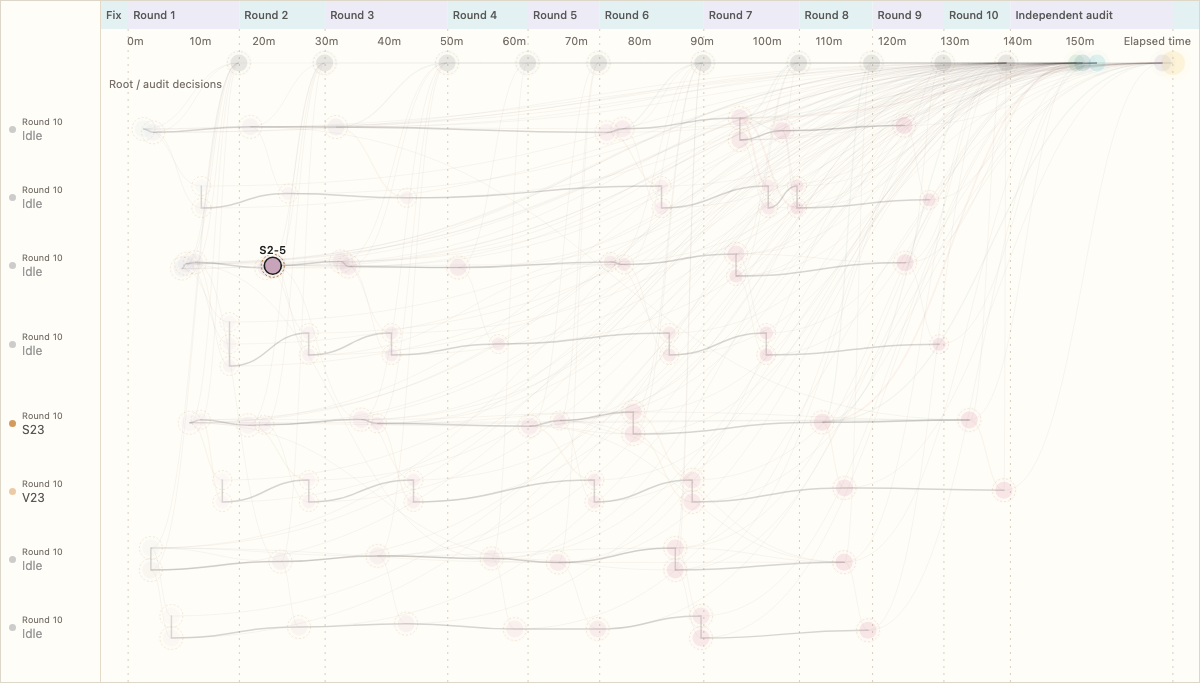
Figure 23. S2-5. Step2. Blind dual and sparse neuron exclusion
Established in Attempt 2 · stated scope
For the canonical symmetric zero-diagonal spin network with arbitrary biases, nonstorage of a finite pattern set is equivalent to existence of $$ \lambda_{i\mu}\ge0,\quad\sum_{i,\mu}\lambda_{i\mu}=1,\quad \sum_\mu\lambda_{i\mu}s_i^\mu=0,\quad \sum_\mu(\lambda_{i\mu}+\lambda_{j\mu})s_i^\mu s_j^\mu=0\quad(i<j). $$ Write \(I(\lambda)=\{i:\sum_\mu\lambda_{i\mu}>0\}\). For every fixed \(0<\alpha<2\), there exist \(\beta,\eta>0\) such that, for \(m=\lfloor\alpha n\rfloor\), $$ \Pr_{\rm distinct}\{\exists\lambda:|I(\lambda)|\le\lfloor\beta n\rfloor\} \le3e^{-\eta n}+\binom m2 2^{-n}. $$ One admissible choice is any \(0<\beta<\min(1/2,1-\alpha/2)\) for which $$ \delta=\tfrac12\min\{1-\beta,2(1-\beta)-\alpha\},\quad \eta=\min\{\delta^2,c(1-\beta)\}-H(\beta)>0, $$ where \(H(t)=-t\log t-(1-t)\log(1-t)\) and \(c>0\) is the existential Rademacher constant in Tikhomirov v5 Theorem 1.2. Every dual, if one exists, therefore uses more than \(\beta n\) neurons with high probability. This does not exclude extensive duals or imply a storage or sharpness limit.
Proof
- For the tie rule \(\sigma(t)=+1\) for \(t>0\) and \(-1\) otherwise, a finite fixed-point family can be made strict by decreasing each field by less than its least positive field, when present. Positive-target fields stay positive and negative-target fields become negative. Strict margins directly imply fixed points.
- Use \(s^\mu\in\{-1,1\}^n\), \(J=J^\top\), \(J_{ii}=0\), and free \(h\), with margins \(s_i^\mu((Js^\mu)_i+h_i)>0\). These are precisely the finite strict constraints used below.
- Let the parameter vector have coordinates \(J_{ij}\) for \(i<j\) and \(h_i\). Let \(a_{i\mu}\) be the row vector giving the displayed margin: its \(h_i\) entry is \(s_i^\mu\) and its incident edge \(\{i,j\}\) entry is \(s_i^\mu s_j^\mu\). Strict feasibility is equivalent to \(0\notin\operatorname{conv}\{a_{i\mu}\}\). One implication follows by dotting a convex combination with a strictly feasible parameter vector. Conversely, if the compact convex hull excludes zero, let \(z\) minimize squared norm in it. For every point \(a\) in the hull, minimality along \(z+t(a-z)\) gives \(\langle z,a\rangle\ge\|z\|^2>0\); choosing parameters equal to \(z\) proves strict feasibility. This argument needs no rank or general-position assumption.
- Consequently infeasibility is exactly existence of numbers \(\lambda_{i\mu}\) satisfying $$\lambda_{i\mu}\ge0,\qquad\sum_{i,\mu}\lambda_{i\mu}=1,$$ $$\sum_\mu\lambda_{i\mu}s_i^\mu=0\quad(i\in[n]),$$ $$\sum_\mu(\lambda_{i\mu}+\lambda_{j\mu})s_i^\mu s_j^\mu=0 \quad(i<j).$$ Define the active-neuron set $$I(\lambda)=\{i:\sum_\mu\lambda_{i\mu}>0\}.$$ This counts neuron rows, not positive constraint entries or patterns.
Sparse active-neuron bound
- Work first with \(m\) independent uniform spin patterns. Fix a deterministic nonempty set \(I\subset[n]\), \(|I|=k\), and set \(i=\min I\), \(d=n-k+1\). If a dual has active set exactly \(I\), its \(i\)-row is nonzero. Its bias balance and its edge equations to every \(j\notin I\) say $$\sum_\mu\lambda_{i\mu}Z^\mu=0,\qquad Z^\mu=(s_i^\mu,(s_i^\mu s_j^\mu)_{j\notin I})\in\mathbb R^d.$$ Dividing by \(\sum_\mu\lambda_{i\mu}>0\) puts zero in the convex hull of these \(m\) vectors. The mapping $$(s_i,(s_j)_{j\notin I})\mapsto(s_i,(s_i s_j)_{j\notin I})$$ is a bijection of the sign cube. Thus the entire \(d\times m\) array of \(Z\) entries is independent Rademacher. No independence between events for different neurons or different \(I\) is claimed or used. Do not condition the input law on \(I\) being the random active set; union over deterministic sets instead.
- Set \(M=\max(m,d+1)\) and, if needed, append \(M-m\) independent Rademacher vectors. Convex-hull membership is monotone under this enlargement, and \(M>d\) ensures the strict source hypothesis. Tikhomirov v5 Theorem 1.2, printed p. 1, with Rademacher input and a fixed admissible subgaussian bound (say \(K=2\)), supplies a constant \(c>0\) independent of \(m,d\) such that $$\Pr\{\exists\lambda:I(\lambda)=I\} \le T_{M,d}+2e^{-cd},\qquad T_{M,d}=1-2^{1-M}\sum_{\ell=0}^{d-1}\binom{M-1}{\ell} =\Pr\{\operatorname{Bin}(M-1,1/2)\ge d\}.$$ The closed convex hull, not just its interior, is used. The source allows discrete coordinates, so no general position is inserted. Its \(c\) is existential, and gives no certified numerical \(\beta\). Remark 1.7 names Rademacher as an example; the printed Definition 2.5 on p. 5 appears as \(\mathbb E(\xi^2/K^2)\le2\) without an exponential. Rademacher also meets the usual exponential-moment convention, so that typography does not affect this application.
- Fix \(0<\alpha<2\), \(m=\lfloor\alpha n\rfloor\), and choose initially any \(0<\beta<\min(1/2,1-\alpha/2)\). Let $$\delta=\frac12\min\{1-\beta,\,2(1-\beta)-\alpha\}>0.$$ If \(1\le k\le\lfloor\beta n\rfloor\), then \(d\ge(1-\beta)n\), \(M-1\le2n\), and $$d-\frac{M-1}{2}\ge\delta n.$$ For \(M=m\) use \(m\le\alpha n\); for \(M=d+1\) use \(M-1=d\). The elementary exponential-moment binomial bound gives $$T_{M,d}\le\exp\left[-\frac{2(d-(M-1)/2)^2}{M-1}\right] \le e^{-\delta^2n}.$$ For completeness, for \(B=\sum_{r=1}^N B_r\) with independent fair bits, \(\mathbb E e^{t(B-N/2)}=(\cosh(t/2))^N\le e^{Nt^2/8}\); Markov's inequality and \(t=4u/N\) give \(\Pr(B-N/2\ge u)\le e^{-2u^2/N}\).
- The entropy bound $$\sum_{k=0}^{\lfloor\beta n\rfloor}\binom nk\le e^{nH(\beta)}, \qquad H(\beta)=-\beta\log\beta-(1-\beta)\log(1-\beta),$$ follows by weighting the binomial sum with \(\beta^k(1-\beta)^{n-k}\): for \(k\le\beta n\) this weight is at least \(e^{-nH(\beta)}\). Union bounding deterministic supports therefore proves $$\Pr_{\rm iid}\{\exists\text{ dual with }1\le|I(\lambda)|\le\beta n\} \le e^{-[\delta^2-H(\beta)]n} +2e^{-[c(1-\beta)-H(\beta)]n}.$$ As \(\beta\downarrow0\), \(H(\beta)\to0\) and \(\delta\to\frac12\min(1,2-\alpha)>0\). Hence choose \(\beta>0\) small enough that $$\eta=\min\{\delta^2,c(1-\beta)\}-H(\beta)>0,$$ giving the upper bound \(3e^{-\eta n}\).
- Let \(E\) be the distinct-pattern event in the iid sample. Its failure probability is at most \(q=\binom m2 2^{-n}\). Conditional on \(E\), the unordered sample is the specified uniform \(m\)-subset. For any symmetric sample event \(A\), writing \(r=\Pr(E^c)\) gives $$\Pr(A\mid E)-\Pr(A)=r[\Pr(A\mid E)-\Pr(A\mid E^c)]\le r\le q.$$ Consequently the canonical distinct law obeys $$\Pr_{\rm distinct}\{\exists\text{ dual with }|I(\lambda)|\le\beta n\} \le3e^{-\eta n}+\binom m2 2^{-n}\longrightarrow0.$$
- The exact conclusion is that, with high probability for every fixed \(\alpha<2\), every infeasibility certificate, if any exists, has more than \(\beta(\alpha)n\) active neurons. Normalization then also forces more than \(\beta n\) positive constraint entries, but says nothing comparable about the number of distinct active patterns. It does not exclude extensive certificates, establish storage for this load, supply a capacity lower bound, prove a sharp threshold, or decide the proposed value 1.6.
Stage A has no unresolved internal gap beyond use of the cited source Theorem 1.2. It proves the stated sparse-certificate estimate only.
Sources
Tikhomirov v5, Theorem 1.2, p. 1: closed hull, exact product-sign coordinates; no general-position hypothesis.
In the attempt tree
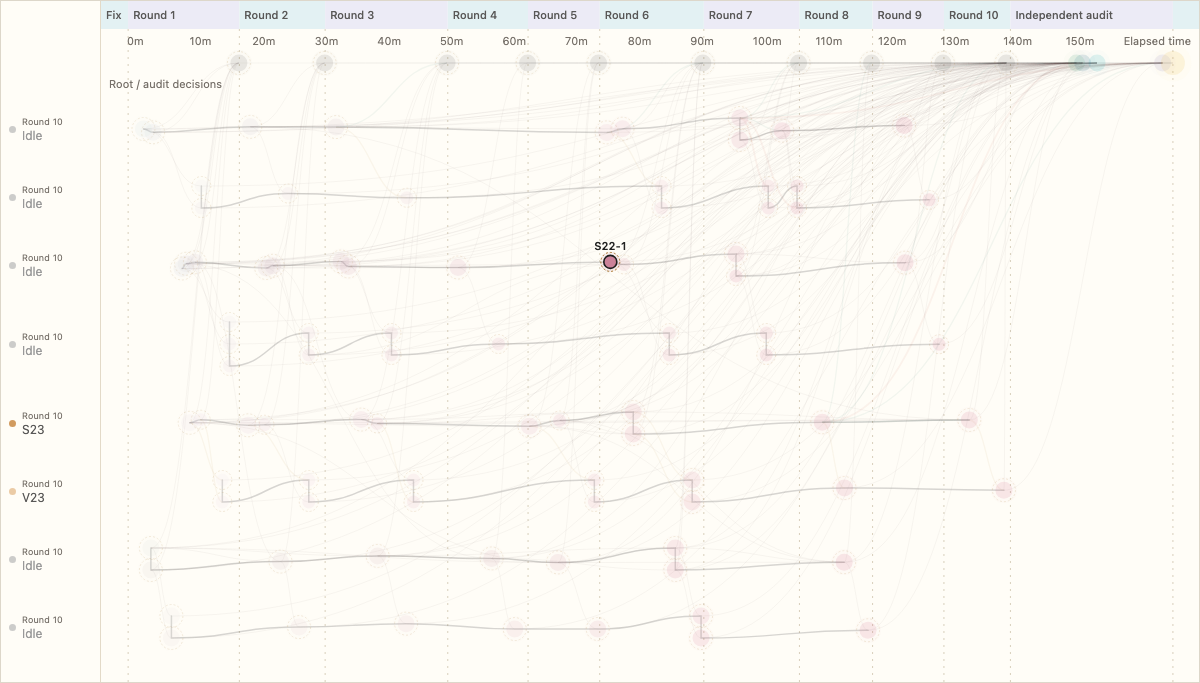
Figure 24. S22-1. Step3. Sparse support theorem survives challenge
Established in Attempt 2 · stated scope
The complete finite bound and exponential sparse active-neuron exclusion in S2-5 hold under Tikhomirov v5 Theorem 1.2. The no-issue paired outcome in V2-5 and the corresponding subsection of drafts/round-5.md accurately preserve this scope. There is no justified inference from that result to exclusion or occurrence of extensive certificates, a numerical support fraction, a new capacity bound, a sharp threshold, or the proposed value 1.6.
Proof
- Actual provenance and checked input. Stage A was written and hashed at 2026-11-07T22:43:04Z before I opened any current-run proof, return, report, draft, or experiment code. Its SHA256 is 5e30251937539aa95adcdf09b1371a1c369979ee8db0aeeb6efdcdedfdcd8238. Only after that checkpoint did I read the entire immutable S2-5 node, its complete V2 paired report (step S2-5, node V2-5, completed 2026-11-07T21:54:52Z, on=holds, issues=[]), and all of drafts/round-5.md. This audit independently reproduces the mathematical details below; it has no dependency on unchecked same-round S22-1. The full canonical contract was read, hashed and acknowledged before either stage.
- Source match: correct theorem, law and normalization. The primary PDF is arXiv:2304.13133v5, 9 August 2025, SHA256 e91ee45e72b352bbc9683a182442702b11af57cf79284ed808ae8c98b7cd847f. On printed p.1, Theorem 1.2 bounds closed-hull origin absorption for \(M>d\) iid vectors with iid symmetric unit-variance coordinates and fixed bounded subgaussian moment by
$$ T_{M,d}+2e^{-c_Rd},\qquad T_{M,d}=1-2^{1-M}\sum_{a=0}^{d-1}\binom{M-1}{a}. $$ Printed p.2, Section 1.2 explicitly uses iid vectors with iid coordinates; Remark 1.7 includes Rademacher. The independent signed features below obey this exact product law, rather than an approximate Gaussian law. Rademacher is symmetric, has variance one and bounded subgaussian norm (take a fixed bound such as 2); \(c_R>0\) is therefore independent of \(m,d\) but remains existential. The theorem is not Wendel's Theorem 1.1, whose general-position hypothesis would fail on the cube. Closed-hull absorption rather than interior absorption is required because a boundary certificate also obstructs strict inequalities. The printed p.5 Definition 2.5 appears to omit an exponential in its moment formula; Rademacher satisfies both that literal display and the usual exponential-moment definition, so this introduces no hypothesis gap here.
- Product feature law: valid only for fixed indexed sets. Fix \(1\le r<n\), a deterministic \(r\)-set \(B\), and \(i\in B\); put \(d=n-r\). Under iid uniform spin sampling, conditional on the entire target row \((s_i^\mu)_\mu\), the exterior array \((s_j^\mu)_{j\notin B,\mu}\) remains uniform on its \(md\)-cube. Multiplication by the fixed target sign in each pattern is a bijection. Thus
$$ X^\mu=(s_i^\mu s_j^\mu)_{j\notin B} $$ has jointly independent Rademacher entries, conditionally and unconditionally. No conditioning on \(B\) being an actually selected active set occurs. The proof instead unions all deterministic choices. No neuron feasibility events are multiplied. Bias is omitted from these exterior features; dropping the bias equation is a safe relaxation of a necessary condition. If one instead retains the signed bias feature \(s_i^\mu\), its unconditional joint law with the signed exterior entries is also product by a sign-cube bijection, but it is not independent of a conditioned target row. S2-5 uses the valid omission route.
- Exact event inclusion and union count. The normalized canonical dual has nonnegative entries of total mass one, bias equations \(\sum_\mu\lambda_i^\mu s_i^\mu=0\), and shared-edge equations
$$ \sum_\mu(\lambda_i^\mu+\lambda_j^\mu)s_i^\mu s_j^\mu=0. $$ For any such dual with active set \(I\), \(1\le|I|\le r\), extend \(I\) to an \(r\)-set \(B\) and select any active \(i\in I\). Every \(j\notin B\) has identically zero multiplier row. The edge equation consequently becomes \(\sum_\mu\lambda_i^\mu X^\mu=0\). Dividing by the positive mass of row \(i\) proves origin absorption. Hence the sparse-dual event is contained in the union of absorption events over exactly \(r\binom nr\) indexed pairs \((B,i)\), not \(\binom nr\) unindexed events. Existence of one suitable pair suffices for the inclusion, and the union bound needs no independence. It is deliberately only a necessary test: independently existing exterior classifiers are not assembled into a symmetric network.
- Strictness and the exact model are preserved. Use \(s^\mu\in\{-1,1\}^n\), \(J=J^\top\), \(J_{ii}=0\), and free \(h\), with margins \(s_i^\mu((Js^\mu)_i+h_i)>0\). For the finite strict linear system, normalized nonnegative annihilators exist exactly when zero is in its row convex hull. If zero is outside, its nearest hull point \(z\ne0\) satisfies \(z\cdot a\ge\|z\|^2>0\) for every row by differentiating squared norm along segments; thus it gives strict feasibility. Each edge row coefficient appears at both its endpoints, producing the plus sign in the displayed dual. Thus the event used above is actual canonical nonstorage with the specified active-neuron support, not the unrestricted model, a nonzero-diagonal model, or merely failure of a chosen construction.
- Padding and binomial off-by-one audit. When \(m>d\) use \(M=m\). Otherwise append \(d+1-m\) fresh iid sign vectors in the same dimension; absorption of the original vectors implies absorption after appending, so \(M=\max(m,d+1)>d\) is always legitimate. No network patterns are changed in the event being bounded. Complementing the binomial sum gives exactly
$$ T_{M,d}=\Pr\{\operatorname{Bin}(M-1,1/2)\ge d\}, $$ with lower threshold \(d\), not \(d-1\). At the padding endpoint \(M=d+1\) this is \(2^{-d}\). Combining steps 2–4 proves the finite iid bound $$ \Pr_{\rm iid}(E_r)\le r\binom nr(T_{M,d}+2e^{-c_Rd}). $$
- Distinct sampling correction is applied once. Let \(C\) be no collision in the iid list, with \(q=\Pr(C^c)\le\binom m2 2^{-n}\). For any event \(A\), the exact mixture formula yields
$$ \Pr(A\mid C)-\Pr(A)=q[\Pr(A\mid C)-\Pr(A\mid C^c)], $$ so its absolute value is at most \(q\). The conditioned unordered sample is the required uniform distinct subset and \(E_r\) is order invariant. This correction is applied after the whole union, giving precisely $$ \Pr_{\rm distinct}(E_r)\le r\binom nr(T_{M,d}+2e^{-c_Rd})+\binom m2 2^{-n}. $$ It is valid for \(m\le2^n\), where conditioning has positive probability. No union factor multiplies the collision term.
- Both exponential margins and every prefactor are accounted for. For \(N=M-1\) and \(u=d-N/2>0\), the fair-binomial mgf is \(\cosh(t/2)^N\le e^{Nt^2/8}\), and Markov at \(t=4u/N\) gives \(T_{M,d}\le e^{-2u^2/N}\). Also \(\binom nr\le e^{nH(r/n)}\), by bounding the probability of exactly \(r\) successes under success fraction \(r/n\) by one. For \(m=\lfloor\alpha n\rfloor\), \(r=\lfloor\beta n\rfloor\), set
$$ \gamma=\max(\alpha,1-\beta),\quad L=\frac{2(1-\beta-\gamma/2)^2}{\gamma}. $$ Then \(N/n\to\gamma\), \(d/n\to1-\beta\). If \(0<\beta<1-\alpha/2\), the limiting gap \(1-\beta-\gamma/2\) is positive. The two union terms have logarithms at most $$ -n[L-H(\beta)]+o(n),\qquad -n[c_R(1-\beta)-H(\beta)]+o(n). $$ The factor \(r\), fixed constant 2, floors and padding contribute only \(o(n)\); the collision term has rate \(-\log2\). If both entropy inequalities are strict, let $$ q_* =\min\{L-H(\beta),c_R(1-\beta)-H(\beta),\log2\}>0. $$ For sufficiently large \(n\), bound each of the three terms by \(e^{-3q_*n/4}\); their sum is at most \(e^{-q_*n/2}\). This verifies the exact stated \(\kappa=q_*/2\), not merely eventual convergence.
- Existence is qualitative; support type is neuron support. As \(\beta\downarrow0\), \(H(\beta)\to0\), \(c_R(1-\beta)\to c_R>0\), and
$$ L\to\frac{2(1-\max(\alpha,1)/2)^2}{\max(\alpha,1)}>0 \quad(0<\alpha<2). $$ Continuity supplies some positive \(\beta\), which is not numerically determined because \(c_R\) is not given numerically. Any prescribed sublinear neuron-support cutoff is eventually below \(\beta n\). This statement concerns every possible dual at once with high probability, not a deterministic guarantee for all samples or a property of only one solver-returned witness. It says nothing analogous about distinct pattern support, effective support, mass delocalization, or the number of minimal obstructions.
- Exact scope of the draft inference. Define \(A_n\) as the event that some dual has at most \(\lfloor\beta n\rfloor\) active neurons, and \(B_n\) as the event that some dual has more. The exact alternative gives
$$ 1-p_n(m)=\Pr(A_n\cup B_n),\qquad \big|1-p_n(m)-\Pr(B_n)\big|\le\Pr(A_n)=o(1). $$ Thus the unknown extensive-dual probability can still determine any remaining storage behavior. The 'Extensive active-neuron support' subsection of draft 5 states the correct finite bound, entropy condition, existential nature of the constants, and expressly leaves extensive certificates and capacity upper-bound improvement open. Its later residual discussion expressly keeps \(Z\); I do not authenticate those separate nodes here and make no inference from them. Neither S2-5, its V2 report, nor that subsection claims a capacity value, a sharp threshold, a fixed positive improvement beyond load one, or validation/refutation of 1.6. I found no overclaim in this chain. The unresolved probabilistic obligation is to estimate full extensive-dual occurrence while retaining sign constraints, all internal shared-edge equations, free-field balance, and any residual degrees of freedom; sparse support exclusion alone does not provide that estimate.
Sources
Tikhomirov v5, Theorem 1.2, p. 1: closed hull, exact product-sign coordinates; no general-position hypothesis.
In the attempt tree
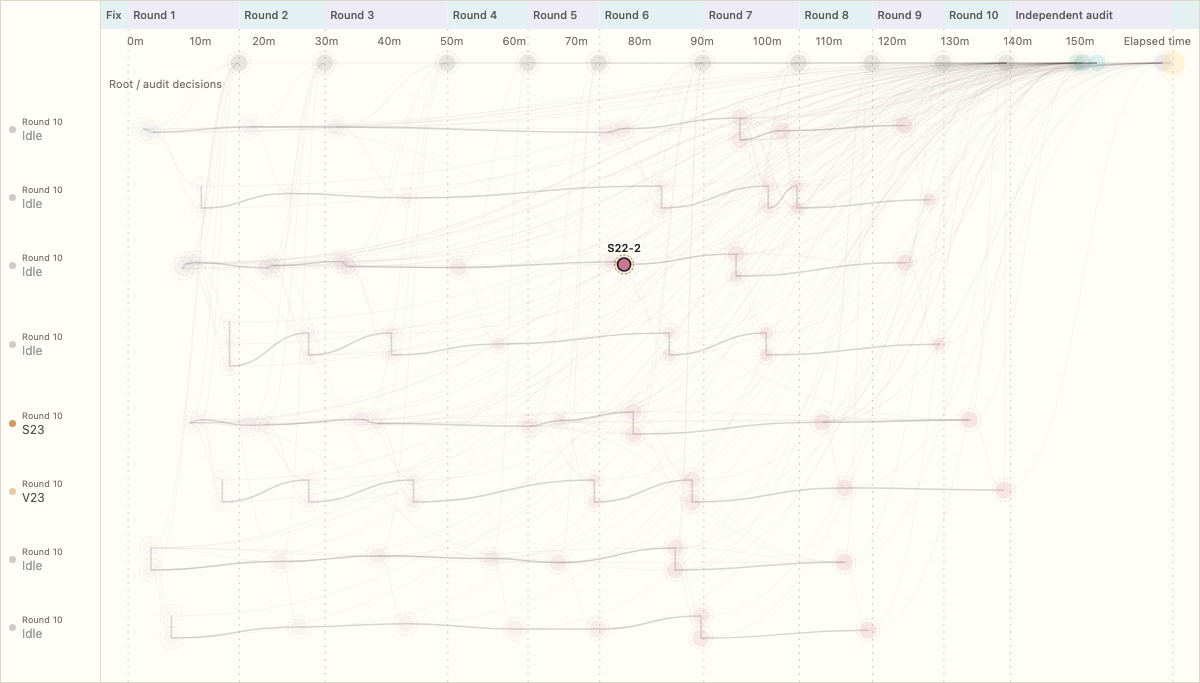
Figure 25. S22-2.
Earlier three-round supporting results
Q1. How many distinct patterns must a nonstorage witness involve?
Definitions
Definition 1. Spin network
For \(n\ge2\), \(J=J^\top\in\mathbb R^{n\times n}\), \(J_{ii}=0\), and \(h\in\mathbb R^n\). $$H_i(s)=\sum_{j\ne i}J_{ij}s_j+h_i,\qquad f_{J,h}(s)_i=\sigma(H_i(s)),\qquad\sigma(t)=\begin{cases}+1,&t>0,\\-1,&t\le0.\end{cases}$$ Strict storage requires \(s_iH_i(s)>0\) for every prescribed spin and neuron.
Definition 2. Storage probability
\(D\) is uniform among the \(m\)-element subsets of \(\{-1,1\}^n\). $$p_n(m)=\Pr\{D\text{ is storable}\}.$$
Definition 3. Capacity
$$\alpha_-=\sup\{a>0:p_n(\lfloor an\rfloor)\longrightarrow1\}.$$ This supremum does not assert a sharp threshold.
Definition 4. Two limiting endpoints
$$\alpha_-=\sup\{u>0:p_n(\lfloor un\rfloor)\to1\},\qquad \alpha_+=\inf\{a>0:p_n(\lfloor an\rfloor)\to0\}.$$ A sharp proportional threshold is equivalent to equality of these endpoints.
Definition 5. Spin patterns
\(s^\mu\in\{-1,1\}^n\), and \(S=[s^1\ \cdots\ s^m]\in\{-1,1\}^{n\times m}\).
Definition 6. Spin couplings
\(J=J^\top\in\mathbb R^{n\times n}\), \(J_{ii}=0\), and \(h\in\mathbb R^n\). Strict stability means \(s_i^\mu((Js^\mu)_i+h_i)>0\).
Definition 7. Augmented projection
$$U=\begin{bmatrix}S\\\mathbf1_m^\top\end{bmatrix},\qquad P=U(U^\top U)^{-1}U^\top$$ when \(U\) has column rank \(m\). Its last coordinate represents a free field.
Definition 8. Nonstorage certificate
The multipliers \(\lambda_i^\mu\ge0\) have total mass one and satisfy $$\sum_\mu\lambda_i^\mu s_i^\mu=0,\qquad \sum_\mu(\lambda_i^\mu+\lambda_j^\mu)s_i^\mu s_j^\mu=0\quad(i<j).$$ Their existence is equivalent to nonstorage.
Definition 9. First failure time
Uniformly order the entire spin cube and let \(\tau_n\) be the first prefix length that is not storable. $$p_n(m)=\Pr\{\tau_n>m\}.$$
Definition 10. Maximum storable subset
For a finite sample \(D\), $$L(D)=\max\{|E|:E\subseteq D\text{ is storable}\}.$$ Full storage is the event \(L(D)=|D|\).
Statement
Attempt 1 · supporting result in its stated scope
Linear pattern support. Let \(n\ge8\), \(1\le m\le2n\), and let \(D\) be a uniform distinct \(m\)-subset of \(\{-1,1\}^n\). Set
$$r=\lfloor n/8\rfloor,\qquad H(t)=-t\log t-(1-t)\log(1-t),\qquad c_0=\tfrac78\log2-2H(1/16)>0.$$
Then
$$\Pr\{\exists E\subseteq D:\ |E|\le r,\ E\text{ nonstorable}\}\le\frac{2n e^{-c_0n}}{1-\binom r2 2^{-n}}.$$
For a normalized nonnegative dual witness satisfying the equations on the Exact duality page, define its active pattern set by
$$T(\lambda)=\{\mu:\ \sum_{i=1}^n\lambda_i^\mu>0\}.$$
Every such active set is itself nonstorable. Thus, for every fixed \(0<\alpha\le2\) at \(m=\lfloor\alpha n\rfloor\), with probability tending to one every nonstorage witness has \(|T(\lambda)|>\lfloor n/8\rfloor\). This assertion is vacuous when the full sample is storable.
Proof and supporting results
Step 1. One-subset strict storage bound
Established in Attempt 1 · stated scope
For integers \(n\ge2\), \(1\le q<n\), and \(\delta_{n,q}=\binom q2 2^{-n}<1\), a uniform distinct \(q\)-subset of the spin cube is not storable with probability at most $$B_{n,q}=\frac{n(2^q-1)2^{-(n-1)}}{1-\delta_{n,q}}.$$ This is an upper bound on nonstorage, not an equivalence between nonstorage and rank failure.
Proof
- Let \(S\in\{-1,1\}^{n\times q}\), with patterns in columns, and suppose every deleted-row matrix \(S_{-i}\) has rank \(q\). Then \(P=S(S^\top S)^{-1}S^\top\) is the orthogonal projection onto \(\operatorname{col}(S)\). If \(P_{ii}=1\), then \(e_i\in\operatorname{col}(S)\); writing \(Sc=e_i\) gives \(S_{-i}c=0\), hence \(c=0\), a contradiction. Thus \(P_{ii}<1\) for every \(i\).
- Set \(J=P-\operatorname{diag}(P)\), \(h=0\). Then J is symmetric with zero diagonal and $$s_i^\mu(Js^\mu)_i=1-P_{ii}>0.$$ This gives simultaneous strict storage with admissible fields.
- A real \(d\)-dimensional subspace \(L\subseteq\mathbb R^a\) contains at most \(2^d\) sign vectors: choose \(d\) coordinate functionals spanning \(L^*\), whose joint restriction to \(L\) is injective. For an \(a\times q\) iid sign matrix with \(q\le a\), exposing columns sequentially therefore bounds the probability that column \(j+1\) belongs to the previous span by \(2^{j-a}\), regardless of its actual dimension. The union bound gives rank-deficiency probability at most \(\sum_{j=0}^{q-1}2^{j-a}=(2^q-1)2^{-a}\).
- For iid uniform spin patterns, each \(S_{-i}\) has iid sign entries and \(a=n-1\ge q\). A union over the \(n\) deletions bounds failure of the sufficient rank condition by \(n(2^q-1)2^{-(n-1)}\). Neither row-event independence nor spin general position is assumed.
- The iid list is distinct except with probability at most \(\delta_{n,q}\), by a union over coincident pattern pairs. Conditional on distinctness, forgetting order gives exactly the uniform \(q\)-subset law, since every subset has \(q!\) equally likely orderings. Dividing the iid failure bound by \(1-\delta_{n,q}\) proves the claim. This reproduces the checked round-1 construction within its stated range, with all ingredients proved here.
Sources
The derivation is self-contained; no external theorem is required.
In the attempt tree
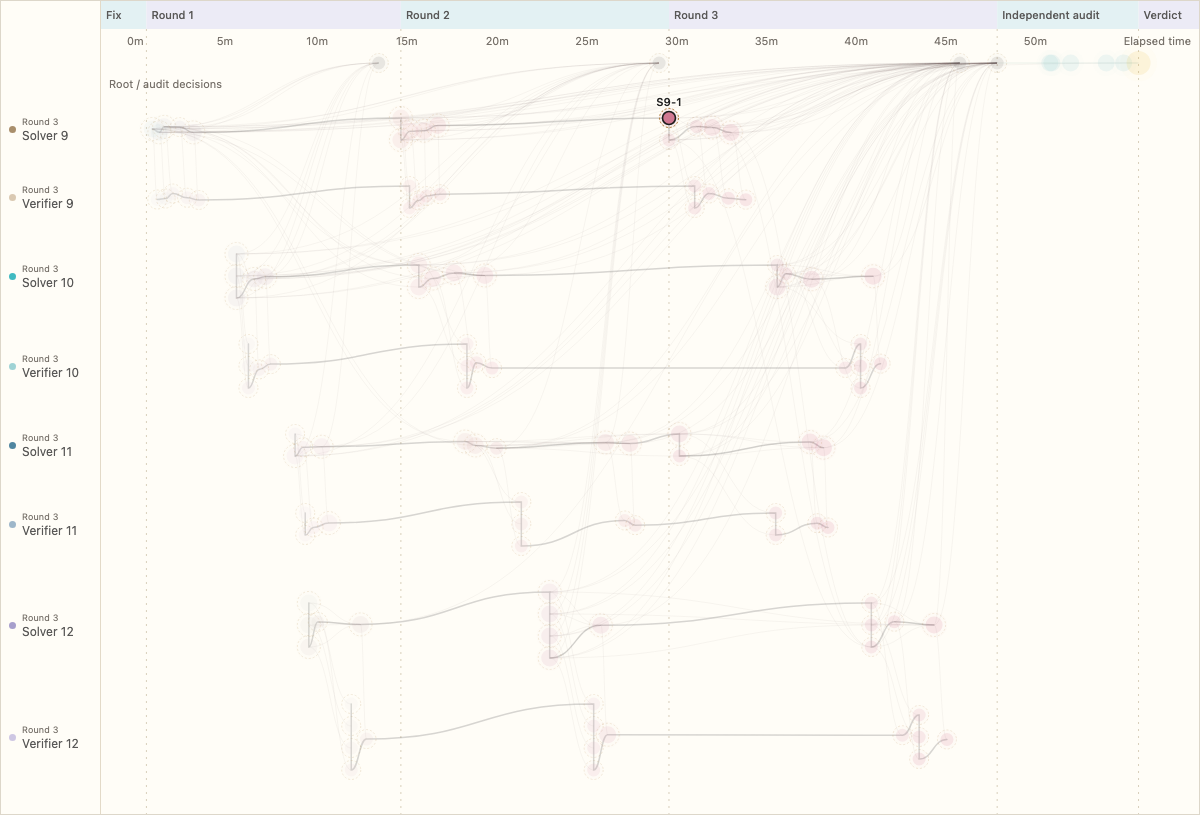
Figure 51. S9-1. Step 2. Uniform subsets need one union bound
Established in Attempt 1 · stated scope
Let \(D\) be a uniform \(m\)-element subset of \(\{-1,1\}^n\), where \(1\le m\le2^n\). Let \(r\ge1\), \(q=\min(r,m)<n\), and \(\delta_{n,q}=\binom q2 2^{-n}<1\). Write \(\mathcal U_r(D)\) for the event that every subset of \(D\) of cardinality at most \(r\) is storable (with a network allowed to depend on the subset). Then $$\Pr\{\mathcal U_r(D)^c\}\le \binom mq\frac{n(2^q-1)2^{-(n-1)}}{1-\delta_{n,q}}.$$ No sum over smaller subset sizes is required, including when \(m<r\).
Proof
- The report for S9-1, timestamped 2026-11-05T23:18:46Z, has no issues. Its single-subset bound applies since \(1\le q<n\) and \(\delta_{n,q}<1\). There are no inherited gaps.
- Select \(D\) uniformly and then a uniform \(q\)-subset \(E\subseteq D\). For each fixed cube \(q\)-subset \(A\), the number of possible supersets \(D\) is \(\binom{2^n-q}{m-q}\), independent of \(A\). Thus \(E\) is exactly uniform among the cube's \(q\)-subsets. Equivalently, a uniform ordering of \(D\) has uniform distinct-pattern marginals at every fixed \(q\)-set of positions.
- Let \(Z\) count unstorable \(q\)-subsets of \(D\). By the preceding marginal identity and linearity of expectation,
$$\mathbb EZ=\binom mq\Pr\{E\text{ is unstorable}\}\le\binom mq B_{n,q}.$$ Hence \(\Pr\{Z\ge1\}\le\binom mq B_{n,q}\). This is the union bound without any independence assumption about the subsets. The only collision conditioning needed is the \(q\)-pattern conditioning already proved in S9-1; conditioning the entire \(m\)-sample is unnecessary here.
- Storage is hereditary: the same weights and biases store every subset of a stored set. Every subset \(F\subseteq D\) with \(|F|\le q\) can be extended inside \(D\) to a \(q\)-subset. Therefore \(Z=0\) implies all such \(F\) are storable. If \(m\ge r\), then \(q=r\); if \(m<r\), then \(q=m\) and the sole \(q\)-subset is \(D\) itself. In both cases \(Z=0\) is exactly \(\mathcal U_r(D)\). The empty subset is vacuously storable. Combining Steps 3 and 4 proves the displayed bound.
Sources
The derivation is self-contained; no external theorem is required.
In the attempt tree
Figure 52. S9-2. Step 3. A negative uniform-subset entropy exponent
Established in Attempt 1 · stated scope
Let \(H(t)=-t\log t-(1-t)\log(1-t)\), with \(H(0)=H(1)=0\) and natural logarithms. For \(n\ge8\), \(1\le m\le2n\), \(r=\lfloor n/8\rfloor\), and uniform distinct \(D\) of size \(m\), $$\Pr\{\mathcal U_r(D)^c\}\le \frac{2n}{1-\binom r2 2^{-n}}\exp(-c_0n)\le\frac{2n}{1-\binom r2 2^{-n}}\exp(-cn),$$ where $$c_0=\frac78\log2-2H(1/16),\qquad c=\frac{3\log2-1}{8}>0.$$ In particular every fixed \(0<\alpha\le2\), with \(m=\lfloor\alpha n\rfloor\), has \(\Pr\{\mathcal U_{\lfloor n/8\rfloor}(D)\}\to1\).
More generally, let \(\alpha>0\) and \(0<\beta\le\alpha\), \(\beta<1\), be fixed. If $$F(\alpha,\beta)=\alpha H(\beta/\alpha)+(\beta-1)\log2<0,$$ then at \(m=\lfloor\alpha n\rfloor\), \(r=\lfloor\beta n\rfloor\), all subsets of size at most \(r\) are storable with probability tending to one exponentially fast. This is a sufficient condition, with no optimality or equality-case claim.
Proof
- The report for S9-2, timestamped 2026-11-05T23:19:34Z, has no issues. Its proof covers the exact distinct-subset law, all smaller sizes, and \(m<r\); no inherited gaps remain. The entropy estimate
$$\binom ab\le\exp\{aH(b/a)\},\qquad0\le b\le a,$$ follows from \(\binom ab p^b(1-p)^{a-b}\le1\) at \(p=b/a\), with endpoints checked separately.
- Put \(r=\lfloor n/8\rfloor\), \(q=\min(r,m)\). Then \(1\le q\le n/8<n\). Also \(\delta_{n,q}\le\delta_{n,r}\le(n^2/128)2^{-n}<1\) for \(n\ge8\); here \(2^n\ge n^2\) for \(n\ge4\), by induction from \(n=4\). Since \(m\le2n\),
$$\binom mq\le\binom{2n}q\le\exp\{2nH(q/(2n))\}\le\exp\{2nH(1/16)\}.$$ The last step uses \(q/(2n)\le1/16\) and the monotonicity \(H'(t)=\log((1-t)/t)>0\) on \((0,1/2)\). These estimates hold even when \(m<r\), so no undefined ratio or negative binomial argument is used.
- Using \(2^q-1\le2^q\le2^{n/8}\) in S9-2, and replacing its denominator by the smaller \(1-\delta_{n,r}\), yields
$$\Pr\{\mathcal U_r(D)^c\}\le\frac{2n}{1-\delta_{n,r}}\exp\left(n\left[2H(1/16)-\frac78\log2\right]\right).$$ For \(0<t<1\), \(-(1-t)\log(1-t)\le t\), hence \(H(t)\le t\log(e/t)\). Consequently $$2H(1/16)-\frac78\log2\le\frac18\log(16e)-\frac78\log2=\frac{1-3\log2}{8}=-c<0.$$ Strict positivity of \(c\) follows, for example, from \(\log2=\int_1^2u^{-1}\,du>1/2\). This proves both explicit finite inequalities, with all floors handled by \(q\le n/8\). The denominator tends to one and the numerator tends to zero exponentially.
- For the general criterion, \(\beta\le\alpha\) ensures \(r\le m\); \(\beta<1\) ensures \(r<n\), eventually with \(r\ge1\). Write \(\alpha_n=m/n\), \(\beta_n=r/n\). The same finite bound and the entropy inequality give, for all sufficiently large \(n\),
$$\Pr\{\mathcal U_r(D)^c\}\le\frac{2n}{1-\binom r2 2^{-n}}\exp\left(n\left[\alpha_nH(\beta_n/\alpha_n)+(\beta_n-1)\log2\right]\right).$$ Continuity, including \(H(1)=0\) when \(\alpha=\beta\), makes the bracket converge to \(F(\alpha,\beta)\). The collision term tends to zero. If \(F<0\), the bracket is eventually at most \(F/2<0\), which proves exponential convergence. When \(\alpha<\beta\), the displayed entropy condition is not asserted; the finite result instead uses \(q=m\) as already proved. No claim is made at \(F=0\), and this calculation does not optimize the largest possible support fraction.
Sources
The derivation is self-contained; no external theorem is required.
In the attempt tree
Figure 53. S9-3. Step 4. Dual support is an unstorable subset
Established in Attempt 1 · stated scope
For a nonempty finite spin sample, nonstorage is equivalent to existence of \(\lambda_i^\mu\ge0\) with $$\sum_{i,\mu}\lambda_i^\mu=1,\quad \sum_\mu\lambda_i^\mu s_i^\mu=0\ (i\in[n]),\quad \sum_\mu(\lambda_i^\mu+\lambda_j^\mu)s_i^\mu s_j^\mu=0\ (i<j).$$ For every such witness its active pattern set \(T(\lambda)=\{\mu:\sum_i\lambda_i^\mu>0\}\) is nonempty and unstorable. Thus, whenever every subset of at most \(r\) patterns is storable, every witness has \(|T(\lambda)|>r\).
Proof
- For free spin parameters \(\theta=(J_{ij}:i<j;h_i:i\in[n])\), let \(a_{i\mu}\) be the coefficient vector of \(s_i^\mu((Js^\mu)_i+h_i)\), with symmetric \(J\) and \(J_{ii}=0\). Strict feasibility is \(a_{i\mu}\cdot\theta>0\) for all \(i,\mu\).
- Let \(K=\operatorname{conv}\{a_{i\mu}\}\). If \(0\in K\), its convex coefficients are nonnegative normalized multipliers with \(\sum\lambda_i^\mu a_{i\mu}=0\); their weighted sum contradicts any strictly positive common functional. If \(0\notin K\), let \(z\) minimize norm over the compact convex set \(K\). For every \(a\in K\), differentiating \(\|z+t(a-z)\|^2\) at \(t=0+\) gives \(z\cdot a\ge\|z\|^2>0\). Taking \(\theta=z\) proves strict feasibility. This proves the exact alternative directly.
- The coefficient of \(h_i\) in \(\sum\lambda_i^\mu a_{i\mu}\) is \(\sum_\mu\lambda_i^\mu s_i^\mu\). The coefficient of the shared edge \(J_{ij}\) is \(\sum_\mu(\lambda_i^\mu+\lambda_j^\mu)s_i^\mu s_j^\mu\), since the edge occurs in both neuron constraints. Thus the alternative is exactly the displayed system; no diagonal variable occurs.
- Nonnegativity implies \(\lambda_i^\mu=0\) for all \(i\) whenever \(\mu\notin T(\lambda)\). Restricting all sums to \(T(\lambda)\) consequently retains every equality and the normalization one. The restricted sample has a dual witness and is unstorable by Step 2. Since storage is hereditary, a hypothesis that all subsets of size at most \(r\) are storable rules out \(|T(\lambda)|\le r\). This counts distinct patterns in the support, rather than individual neuron-pattern constraints.
Sources
The derivation is self-contained; no external theorem is required.
In the attempt tree
Figure 54. S9-4. Step 5. All dual witnesses need linear patterns
Established in Attempt 1 · stated scope
For uniform distinct \(D\) with \(n\ge8\), \(1\le m\le2n\), set \(r=\lfloor n/8\rfloor\), \(c_0=7\log2/8-2H(1/16)>0\). Then $$\Pr\{\exists\text{ normalized nonnegative dual witness }\lambda:\ |T(\lambda)|\le r\}=\Pr\{\mathcal U_r(D)^c\}\le\frac{2n e^{-c_0n}}{1-\binom r2 2^{-n}}.$$ Consequently for every fixed \(0<\alpha\le2\), at \(m=\lfloor\alpha n\rfloor\), with probability tending to one every subset of at most \(\lfloor n/8\rfloor\) patterns is storable and every nonstorage dual witness involves more than \(\lfloor n/8\rfloor\) distinct patterns. The same implication holds with \(r=\lfloor\beta n\rfloor\) whenever \(0<\beta\le\alpha\), \(\beta<1\), and \(F(\alpha,\beta)<0\) as in S9-3. The support assertion is vacuous on storable full samples. These structural conclusions do not determine \(\alpha_-\), prove sharpness, or prove/refute the proposed value \(1.6\).
Proof
- The reports for S9-3 and S9-4, timestamped 2026-11-05T23:20:39Z and 2026-11-05T23:18:46Z respectively, have no issues. All their own supporting reports have likewise been read and contain no gaps or critical issues. The sample law, strict fields, free biases and zero diagonal are exactly those of the original problem.
- By S9-3, \(\mathcal U_r(D)\) fails with probability at most the displayed exponentially small quantity, uniformly for \(1\le m\le2n\). Its proof is the projection rank bound followed by the exact \(q\)-subset marginal union bound with \(q=\min(r,m)\), heredity, and a negative entropy exponent. Thus it proves simultaneous existence of a suitable strict network for every small subset; the network is allowed to vary with the subset.
- By S9-4, any dual witness supported on at most \(r\) patterns restricts to an unstorable subset of at most \(r\) distinct patterns. Conversely, if an unstorable subset \(E\subseteq D\) has size at most \(r\), its exact dual witness exists by the convex-hull alternative in S9-4; extending every multiplier by zero on \(D\setminus E\) retains normalization and all bias and shared-edge balance equations. It is therefore a dual witness for \(D\) with support at most \(r\). This proves equality of the two exceptional events, hence the stated probability bound. The same deterministic argument applies to the general entropy condition of S9-3.
- The result concerns pattern support \(T(\lambda)\), not merely the number of positive neuron-pattern multipliers: all contributions outside \(T(\lambda)\) vanish by nonnegativity. It rules out every small actual obstruction simultaneously, even though the number of potential subsets is exponential. For fixed \(\alpha>0\), \(m=\lfloor\alpha n\rfloor\ge1\) eventually; if \(m<r\), the same proof says the entire sample is storable and there can be no dual witness.
- A witness with support larger than \(r\) remains possible. The proof neither excludes these witnesses for a fixed load above one nor proves they occur with high probability for a fixed load below two. Those are the missing network-specific probability estimates needed to improve the inherited capacity interval or locate a sharp transition. Different small subsets may use different matrices, so their uniform storage cannot be promoted to full-sample feasibility. The assigned structural target is proved; the original exact-capacity and sharp-threshold targets remain unresolved.
Sources
The derivation is self-contained; no external theorem is required.
In the attempt tree
Figure 55. S9-5.