Storage capacity › Q4 · Endpoint equality
First failure, repair and sharpness
Definitions
Definition 1. Spin network
For \(n\ge2\), \(J=J^\top\in\mathbb R^{n\times n}\), \(J_{ii}=0\), and \(h\in\mathbb R^n\). $$H_i(s)=\sum_{j\ne i}J_{ij}s_j+h_i,\qquad f_{J,h}(s)_i=\sigma(H_i(s)),\qquad\sigma(t)=\begin{cases}+1,&t>0,\\-1,&t\le0.\end{cases}$$ Strict storage requires \(s_iH_i(s)>0\) for every prescribed spin and neuron.
Definition 2. Storage probability
\(D\) is uniform among the \(m\)-element subsets of \(\{-1,1\}^n\). $$p_n(m)=\Pr\{D\text{ is storable}\}.$$
Definition 3. Capacity
$$\alpha_-=\sup\{a>0:p_n(\lfloor an\rfloor)\longrightarrow1\}.$$ This supremum does not assert a sharp threshold.
Definition 4. Two limiting endpoints
$$\begin{aligned}\alpha_-&=\sup\{a>0:\\&\quad p_n(\lfloor an\rfloor)\to1\},\\[6pt]\alpha_+&=\inf\{a>0:\\&\quad p_n(\lfloor an\rfloor)\to0\}.\end{aligned}$$ These are the optimal one-sided endpoints. A single sharp constant requires \(\alpha_-=\alpha_+\); the one-sided goals do not assume equality.
Definition 5. Spin patterns
\(s^\mu\in\{-1,1\}^n\), and \(S=[s^1\ \cdots\ s^m]\in\{-1,1\}^{n\times m}\).
Definition 6. Spin couplings
\(J=J^\top\in\mathbb R^{n\times n}\), \(J_{ii}=0\), and \(h\in\mathbb R^n\). Strict stability means \(s_i^\mu((Js^\mu)_i+h_i)>0\).
Definition 7. Nonstorage certificate
The multipliers \(\lambda_i^\mu\ge0\) have total mass one and satisfy $$\sum_\mu\lambda_i^\mu s_i^\mu=0,\qquad \sum_\mu(\lambda_i^\mu+\lambda_j^\mu)s_i^\mu s_j^\mu=0\quad(i<j).$$ Their existence is equivalent to nonstorage.
Definition 8. First failure size
Choose a uniformly random ordering of all \(2^n\) distinct spin patterns:
$$X_n^1,X_n^2,\ldots,X_n^{2^n}.$$
The “prefix of length \(m\)” means the first \(m\) patterns in this list:
$$D_{n,m}=\{X_n^1,\ldots,X_n^m\},\qquad 1\le m\le2^n.$$
Add patterns one at a time; \(\tau_n\) counts how many have been added when storage first becomes impossible:
$$\begin{aligned}\tau_n=\min\{m\in\{1,\ldots,2^n\}:\\D_{n,m}\text{ is not storable}\}.\end{aligned}$$
Storage is checked anew at each size; the weights and fields may change with \(m\).
$$\begin{aligned}m<\tau_n&\ \Longrightarrow\ D_{n,m}\text{ is storable},\\m\ge\tau_n&\ \Longrightarrow\ D_{n,m}\text{ is not storable}. \end{aligned}$$
Each \(D_{n,m}\) is a uniform distinct \(m\)-set, so
$$p_n(m)=\Pr\{\tau_n>m\}.$$
Thus \(\tau_n-1\) is the largest storable prefix size; \(\tau_n\) is random because the ordering is random. The full cube is nonstorable, so the minimum exists. The recorded proofs also write \(D_m\) for \(D_{n,m}\).
Definition 9. Maximum storable subset
For a finite sample \(D\), $$L(D)=\max\{|E|:E\subseteq D\text{ is storable}\}.$$ Full storage is the event \(L(D)=|D|\).
Definition 10. Storage quantiles
$$q_n(t)=\min\{1\le m\le2^n:p_n(m)\le t\},\quad 0<t<1,\qquad c_n=q_n(1/2).$$ Heredity makes \(p_n\) nonincreasing; the full cube is nonstorable, so these quantiles exist.
Definition 11. Repair count
For a nonstorable set \(D\), $$R(D)=\{x\in D:D\setminus\{x\}\text{ is storable}\}.$$ Put \(R(D)=\varnothing\) when \(D\) stores. For a uniform distinct \(m\)-set, \(\mu_{n,m}=\mathbb E|R(D)|\).
Definition 12. Active certificate neurons
For normalized nonnegative dual multipliers, $$I_\lambda=\{i\in[n]:\sum_{\mu=1}^m\lambda_i^\mu>0\}.$$ The count concerns neuron support, not the number of patterns or positive entries.
Definition 13. Guaranteed sample size
$$c_\ast=1/55296,\qquad M_n=n+\lfloor c_\ast n/\log n\rfloor.$$ Logarithms are natural; \(M_n/n\to1\).
Statement
Endpoint, window and center equivalences established in Attempt 2; the network probability premises remain open.
Uniformly order the cube, let \(\tau_n\) be its first nonstorable prefix length, and set \(c_n=\min\{m:p_n(m)\le1/2\}\). For every fixed \(c\in[1,2]\), $$\alpha_-=\alpha_+=c\quad\Longleftrightarrow\quad\tau_n/n\xrightarrow{\Pr}c,$$ $$\Longleftrightarrow\quad (\tau_n-c_n)/n\xrightarrow{\Pr}0\quad\text{and}\quad c_n/n\to c.$$ Neither the shrinking window nor the limiting center is established for this network.
Used in the storage-capacity argument.
Attempt 2 · ten-round results
Step1. Repair cores give exact load influences
Established in Attempt 2 · stated scope
Let \(V=\{-1,1\}^n\), \(N=2^n\), and let \(\mathcal H\) be its storable sets under the original network conventions. Put \(p(0)=1\), and for a uniform distinct \(m\)-set \(D_m\), let \(L(A)=\max\{|E|:E\subseteq A,E\in\mathcal H\}\), \(\Delta(A)=|A|-L(A)\). For a nonstorable set \(A\), define $$R(A)=\{x\in A:A\setminus\{x\}\in\mathcal H\};$$ set \(R(A)=\varnothing\) when \(A\in\mathcal H\). Let \(K(A)\) be the intersection of all maximum-cardinality storable subsets of \(A\). If \(\mathcal M(A)\) denotes the inclusion-minimal nonstorable subsets of a nonstorable \(A\), then $$R(A)=\bigcap_{F\in\mathcal M(A)}F,\qquad R(A)=\varnothing\ \text{if }\Delta(A)\ge2.$$ On the stratum \(\Delta(A)=1\), \(K(A)=A\setminus R(A)\). For every \(1\le m\le N\), $$\boxed{\ p(m-1)-p(m)=\frac{\mathbb E|R(D_m)|}{m}=\Pr\{\tau_n=m\}\ },$$ where \(\tau_n\) is the first nonstorable prefix of a uniform ordering of \(V\), and $$\boxed{\ \mathbb E\Delta(D_m)-\mathbb E\Delta(D_{m-1}) =1-\frac{\mathbb E|K(D_m)|}{m}\ }.$$ Consequently \(\mathbb E\Delta(D_k)/k\le\mathbb E\Delta(D_m)/m\) for \(1\le k\le m\).
Here is a sufficient sharp-window premise, NOT established for the network. Suppose fixed \(0<A<B\) satisfy \(p_n(\lfloor An\rfloor)\to1\) and \(p_n(\lfloor Bn\rfloor)\to0\). For each fixed \(0<\varepsilon<1/2\), suppose numbers \(r_n(\varepsilon)>0\) tending to infinity satisfy $$\mathbb E|R(D_m)|\ge r_n(\varepsilon) \quad\text{whenever}\quad \lfloor An\rfloor<m\le\lfloor Bn\rfloor, \quad \varepsilon\le p_n(m)\le1-\varepsilon.\tag{RC}$$ Define \(q_n(\theta)=\min\{m:p_n(m)\le\theta\}\). Then eventually $$q_n(\varepsilon)-q_n(1-\varepsilon) \le 2+\frac{Bn}{r_n(\varepsilon)},$$ and therefore $$\frac{\tau_n-q_n(1/2)}n\xrightarrow{\Pr}0.$$ A deterministic sharp threshold at a single constant additionally requires the separate location assertion \(q_n(1/2)/n\to c\). No network proof of (RC) or of this location assertion is supplied.
Proof
- Storage is hereditary: the very same symmetric zero-diagonal matrix and biases strictly store every subset of a stored sample. A singleton is stored by zero weights and a suitably signed bias. The full cube is nonstorable because two vertices differing only at neuron i have the same neuron-i input field but opposite target outputs. Thus the prefix time in the statement exists. No independence between neuron-feasibility events is being assumed.
- A finite nonstorable set has an inclusion-minimal nonstorable subset by repeated deletion. For nonstorable A, deleting x cures A exactly when it removes every member of the family \(\mathcal M(A)\): equivalently every minimal nonstorable subset contains x. This proves the intersection formula. If \(\Delta(A)\ge2\), no subset of size \(|A|-1\) is storable, so R is empty. If \(\Delta(A)=1\), all maximum storable subsets have size \(|A|-1\) and are precisely \(A\setminus\{x\}\) for x in R; taking their intersection gives \(K=A\setminus R\). The formula concerns actual pattern obstructions, without any choice or counting of dual certificates.
- Conditional on a uniform distinct m-set A, delete a uniform point X of A. The remainder is exactly a uniform distinct (m-1)-set: each such remainder has the same number N-m+1 of completions. Since heredity excludes 'A stored but the remainder nonstored', the difference of the two storage indicators is one exactly when A is nonstored and X belongs to R(A). Conditional averaging gives \(p(m-1)-p(m)=\mathbb E|R(D_m)|/m\). For uniform ordered prefixes, heredity gives \(p(m)=\Pr(\tau_n>m)\), so the difference is also \(\Pr(\tau_n=m)\). This is an exact without-replacement identity, including m=N.
- Write \(\ell=L(A)\). If x belongs to K(A), every size-\(\ell\) storable subset uses x; deleting x leaves optimum exactly \(\ell-1\), because any optimum loses one point and no size-\(\ell\) optimum survives. If x does not belong to K(A), at least one optimum avoids x, so deletion leaves optimum exactly \(\ell\). Therefore
$$\Delta(A)-\Delta(A\setminus\{x\})=\mathbf1_{\{x\notin K(A)\}}.$$ Average first over uniform x, then over A, to obtain the second boxed identity. Since K is contained in every optimum, \(|K(A)|\le L(A)=m-\Delta(A)\); consequently $$\mathbb E[\Delta(D_{m-1})\mid D_m=A] =\Delta(A)-1+|K(A)|/m\le (1-1/m)\Delta(A).$$ Taking expectations and dividing by m-1 for m>1 gives the asserted normalized-defect monotonicity by iteration. On the one-defect stratum the conditional drift is exactly |R(A)|/m; on larger-defect strata the first boxed derivative is zero while deficit drift can remain positive. This explicitly separates the statistic controlling the zero-defect atom from concentration of the deficit itself.
- To prove the conditional criterion, fix \(0<\varepsilon<1/2\), put \(a_n=q_n(1-\varepsilon)\), \(b_n=q_n(\varepsilon)\), and write \(r_n=r_n(\varepsilon)\). The exterior assumptions imply eventually
$$\lfloor An\rfloor<a_n\le b_n\le\lfloor Bn\rfloor.$$ For every integer m with \(a_n<m<b_n\), monotonicity and the quantile definitions give \(\varepsilon<p_n(m)\le1-\varepsilon\). (RC) and the first boxed identity therefore imply $$p_n(m-1)-p_n(m)\ge r_n/m\ge r_n/(Bn).$$ The sum of these nonnegative differences is at most one. There are \(b_n-a_n-1\) such indices, so \(b_n-a_n\le1+Bn/r_n\) when \(b_n>a_n\), which implies the slightly looser displayed bound in every case. A jump directly across both quantiles has width zero and causes no exception.
- The resulting width is o(n) for every fixed \(\varepsilon\). The median lies between \(a_n\) and \(b_n\). For any \(\eta>0\), eventually \(q_n(1/2)-\eta n<a_n\) and \(q_n(1/2)+\eta n>b_n\); integer rounding changes these bounds by at most two. The survival identity from Step 3 then bounds the lower and upper tail probabilities by \(\varepsilon\) each. Taking the limit superior and then letting \(\varepsilon\downarrow0\) proves median-window concentration. If the deterministic normalized median converges to c, the triangle inequality gives \(\tau_n/n\to c\), and its survival function gives the original strict-side fixed-load limits. The converse location obligation is not derived from (RC), from deficit monotonicity, or from any transitivity theorem.
- (RC) is a new explicit local statistical obligation, not an asserted network theorem: it asks for a growing expected intersection of minimal nonstorable pattern subsets on intermediate-probability sample sizes. Minimum witness size alone does not bound this intersection. The exact identities and their quantitative implication are proved; the original sharpness and capacity are unresolved.
Sources
The recorded argument is self-contained; its exact dependencies remain linked.
In the attempt tree
Figure 26. S3-1. Step2. One-neuron extension has an exact coupling
Established in Attempt 2 · stated scope
Let \(s^1,\ldots,s^m\in\{-1,1\}^n\) be a finite indexed sample, allowing repeated projected columns, which is strictly storable with symmetric zero-diagonal J and free fields h. For any prescribed labels \(y^1,\ldots,y^m\in\{-1,1\}\), the extended indexed patterns \((s^\mu,y^\mu)\) are storable on n+1 neurons if and only if there exist \(v\in\mathbb R^n,c\in\mathbb R\) with $$y^\mu(v^\top s^\mu+c)>0\qquad(1\le\mu\le m).$$ When this condition holds, the extended network can use incident edges of arbitrarily small magnitude and leave every old field unchanged.
For iid uniform spin patterns, let \(Q_{n,m}\) denote storage probability (duplicates impose repeated consistent constraints), and let \(C(S)\) be the number of strictly affine-separable label columns on the old feature rows \((s^\mu)^\top\), \(S=(s^1,\ldots,s^m)\). With \(E_n\) denoting storage of S, $$\Pr(E_{n+1}\mid S)=C(S)/2^m\quad\text{on }E_n,$$ $$Q_{n+1,m}=\mathbb E\!\left[\mathbf1_{E_n}C(S)/2^m\right] +\Pr(E_{n+1}\cap E_n^c).$$ Thus, for \(u_{n,m}:=\Pr\{Y\text{ is not strictly affinely separable on }S\}\), $$Q_{n+1,m}\ge Q_{n,m}-u_{n,m}.$$ If \(r=\operatorname{rank}[(s^\mu)^\top\ 1]_{\mu\le m}\), then \(C(S)\ge2^r\), and full row rank gives \(C(S)=2^m\). Returning to uniform distinct sampling, for \(m\le2^n\) and \(\delta_{n,m}=\binom m2 2^{-n}\), $$p_{n+1}(m)\ge p_n(m)-u_{n,m}-\delta_{n,m}-\delta_{n+1,m}.$$ The term u is not bounded asymptotically here; this comparison alone does not prove monotonicity of median locations or their convergence.
Proof
- Use spin coordinates, with strict constraints \(s_i^\mu((Js^\mu)_i+h_i)>0\), \(J=J^\top\), \(J_{ii}=0\). These are the canonical spin constraints, including all appended edges and fields. Since the finite old sample is strictly stored, its minimum signed margin \(\gamma=\min_{i,\mu}s_i^\mu((Js^\mu)_i+h_i)\) is positive.
- Necessity of the affine-label condition holds for every extended network, even when the old projected sample was not storable: the new neuron's field has the form \(a^\top s^\mu+c'\), because its diagonal entry is zero. Its strict fixed-point inequalities are precisely affine separability of y by the old features. No self-interaction term is available to encode y directly.
- For sufficiency under the stated old-storage hypothesis, let v,c satisfy the displayed strict affine conditions, and choose \(\epsilon>0\). Define
$$J'=\begin{pmatrix}J&\epsilon v\\\epsilon v^\top&0\end{pmatrix}, \qquad h'=(h,\epsilon c).$$ This has exact symmetry and zero diagonal. Each old signed margin changes by \(\epsilon s_i^\mu v_i y^\mu\), whose absolute value is at most \(\epsilon\|v\|_\infty\). Choose \(\epsilon\|v\|_\infty<\gamma/2\), with no restriction from this inequality if v=0. Then all old margins remain at least \(\gamma/2>0\), while every new-neuron signed margin equals \(\epsilon y^\mu(v^\top s^\mu+c)>0\). Epsilon may be made arbitrarily small. If old columns coincide with conflicting new labels, the affine condition fails, as it should; indexed repetitions therefore introduce no hidden distinctness assumption.
- For iid extended patterns, the old columns S are iid uniform n-spin vectors and the new column Y is independent and uniform in \(\{-1,1\}^m\). On the event E_n, Steps 2–3 show that exactly C(S) of its 2^m possibilities are storable in dimension n+1. This proves the conditional equality and, by splitting on E_n, the exact decomposition. Dropping the nonnegative second summand gives
$$Q_{n+1,m}\ge Q_{n,m}-\mathbb E[\mathbf1_{E_n}(1-C(S)/2^m)] \ge Q_{n,m}-u_{n,m}.$$ The last equality defining u is just conditional counting, without Cover equality or an independence assertion involving the event E_n.
- Let B be the m by (n+1) augmented feature matrix with rows \(((s^\mu)^\top,1)\), and choose r linearly independent rows, indexed by I. The linear map \(\theta\mapsto B_I\theta\) is onto \(\mathbb R^r\). For each sign assignment on I, choose theta making its r entries those signs. The same signs hold in an open neighborhood of theta. Every row of B is nonzero because its last coordinate is one, so the zero set of each other row functional is a proper hyperplane. A finite union of proper hyperplanes cannot cover that open neighborhood (for example, restrict to a generic line through an interior point). Choose theta in the neighborhood avoiding every such hyperplane. It gives a strictly separable full label column with the prescribed signs on I. Distinct sign assignments on I give distinct columns, proving C(S) at least 2^r. If r=m this lower bound equals all 2^m possibilities. This argument makes no affine general-position claim for spin features.
- In dimension d, the iid sample is distinct with probability at least \(1-\delta_{d,m}\), by the union bound over colliding pairs. Conditional on distinctness, its unordered law is exactly the uniform distinct m-subset law, and the indexed storage event agrees with set storage. For any event with these two laws, mixture decomposition gives \(|Q_{d,m}-p_d(m)|\le\Pr(\text{collision})\le\delta_{d,m}\). Apply this for d=n and d=n+1 to the preceding lower bound, obtaining the stated distinct-sampling comparison. At m=O(n), both collision terms vanish exponentially; the only uncontrolled substantive error is u.
- A bound u=o(1) in a proportional-load range would give approximate one-step dimensional monotonicity there. Even that statement would not by itself force convergence of normalized median locations; approximate one-step monotonicity of an unnormalized index is compatible with varying slopes on longer ranges. The exact coupling is proved, while any asymptotic bound on affine-label failure and any dimensional argument giving one limiting center are separate open premises.
Sources
The recorded argument is self-contained; its exact dependencies remain linked.
In the attempt tree
Figure 27. S3-2. Step3. Rare witness uniqueness amplifies repairs
Established in Attempt 2 · stated scope
For any finite hereditary family \(\mathcal H\) on a ground set V, let \(D_m\) be a uniform distinct m-set and let p(m) be its acceptance probability. For each A, let \(\mathcal M(A)\) be its inclusion-minimal nonaccepted subsets, \(T(A)=|\mathcal M(A)|\), and \(R(A)=\{x:A\setminus\{x\}\in\mathcal H\}\) if A is not accepted, with R empty otherwise. Let U be any event determined by \(D_m\) on which every member of \(\mathcal M(D_m)\) has at least r elements, where \(1\le r\le m\) is an integer. Write \(\eta=\Pr(U^c)\), \(\pi=\Pr\{U,T(D_m)=1\}\). Then $$\mathbb E|R(D_m)|\ge r\pi,$$ $$\pi\ge\left[1-p(m)-\eta-\Pr\{U,T\ge2\}\right]_+ \ge\left[1-p(m)-\eta-\tfrac12\mathbb E[\mathbf1_U T(T-1)]\right]_+.$$ For every nonaccepted deterministic A of size m, $$|R(A)|\ge\left[m-\sum_{F\in\mathcal M(A)}(m-|F|)\right]_+;$$ in particular, on \(U\cap\{1\le T\le t\}\), $$|R(A)|\ge[m-t(m-r)]_+.$$ For uniform prefix thinning from m to \(k=m-\ell\), \(1\le\ell\le m\), $$\boxed{\ p(k)\ge p(m)+\pi\left[1-\frac{\binom{m-r}{\ell}}{\binom m\ell}\right] \ge p(m)+\pi(1-e^{-r\ell/m})\ },$$ where the numerator is zero if \(\ell>m-r\).
For the canonical network, these apply to actual minimal nonstorable pattern sets, preserving all original hypotheses. If on every intermediate-probability layer in a fixed proportional-load bracket one has \(r\ge cn\) for a fixed c>0 and $$\inf_{m:\ \varepsilon\le p_n(m)\le1-\varepsilon} n\,\Pr\{U,T(D_m)=1\}\longrightarrow\infty \quad\text{for every fixed }0<\varepsilon<1/2,\tag{WU}$$ then the checked repair-core condition (RC) holds and the first-failure time has an o(n) window about its deterministic median. Thus (WU) requires neither high-probability uniqueness nor a bound on the total number of all possible witnesses; a probability \(n^{-\gamma}\), \(0<\gamma<1\), uniformly on transition layers would suffice. The witness-uniqueness probability or the competing-witness moment in these displays is NOT bounded for the actual network. A limiting normalized median remains separate.
Proof
- All arguments below first concern a finite hereditary family; the network's strict storage family is such a family because deleting patterns preserves its symmetric zero-diagonal realization and all strict inequalities. No sample-coordinate or neuron independence is introduced. The complete immutable S3-1 and its holds report V3-1 have been read before this dependent use. That checked result gives
$$R(A)=\bigcap_{F\in\mathcal M(A)}F,\qquad \mathbb E|R(D_m)|=m[p(m-1)-p(m)],$$ and the conditional implication from growing expected repair-core size on all intermediate-probability layers to an o(n) window about deterministic medians. Its network-specific growth and location gaps remain open.
- On U and T=1, denote the unique minimal obstruction by F. The intersection formula gives R=F, so |R| is at least r. Elsewhere |R| is nonnegative. Averaging proves \(\mathbb E|R|\ge r\pi\). Also
$$\pi=\Pr(U,T\ge1)-\Pr(U,T\ge2) \ge1-p(m)-\eta-\Pr(U,T\ge2).$$ Nonnegativity allows taking the positive part. For integer T, \(\mathbf1_{\{T\ge2\}}\le T(T-1)/2\). Multiply by \(\mathbf1_U\), average and substitute to prove the moment lower bound. This is a bound on simultaneous distinct minimal pattern obstructions, not on the number of representations or multiplier choices for one obstruction.
- For deterministic nonaccepted A, the complement of its repair core is the union of the complements of its minimal obstructions:
$$A\setminus R(A)=\bigcup_{F\in\mathcal M(A)}(A\setminus F).$$ The union bound on cardinalities gives \(|R|\ge m-\sum_F(m-|F|)\), and nonnegativity gives the displayed positive part. If T is at most t and all |F| at least r, the sum is at most t(m-r). This explains a second mechanism beyond literal uniqueness: sufficiently few obstructions with sufficiently small omitted portions have a large common intersection. The inherited support ratio near r/m=1/16 does not by itself make this bound positive for two obstructions; it supplies no control of T or their common intersection.
- Conditional on D_m=A, its k-prefix set is a uniform k-subset, equivalently obtained by a uniform ell-subset deletion. If A is already accepted then every thinning is accepted. If A lies in U with T=1 and unique obstruction F, a thinning is nonaccepted exactly when it still contains F: every nonaccepted subset of A contains a minimal nonaccepted subset of A, and F is the only such set. Thus deleting at least one point of F cures the whole set. Its exact probability is
$$1-\frac{\binom{m-|F|}{\ell}}{\binom m\ell} \ge1-\frac{\binom{m-r}{\ell}}{\binom m\ell}.$$ These two sufficient acceptance events are disjoint: the first has T=0, the second T=1. Average them to get the boxed inequality. For \(\ell\le m-r\), the avoidance ratio is \(\prod_{j=0}^{\ell-1}(1-r/(m-j))\le(1-r/m)^\ell\le e^{-r\ell/m}\). For \(\ell>m-r\) the ratio is zero, and the exponential bound still holds. This is exact distinct sampling, not iid thinning and not a sum over uncontrolled witness counts.
- In the network, take U to mean every subset of at most floor(n/8) patterns is storable. The full inherited proofs S9-1–S9-5 in three-round-paired and their paired reports have been read. They prove that for n at least 8 and m at most 2n,
$$\eta\le\frac{2n e^{-c_0n}}{1-\binom{\lfloor n/8\rfloor}{2}2^{-n}}, \qquad c_0=7\log2/8-2H(1/16)>0.$$ Here H is binary entropy with natural logarithms. Every minimal nonstorable subset then has size at least floor(n/8)+1. Their self-contained support proof uses projection-based strict symmetric storage for small samples, exact uniform-subset marginals and a union bound with negative entropy exponent. Its dual interpretation concerns distinct pattern support, with both free-field equations and shared-edge equations included. Therefore it gives the linear r and an exponentially small eta required in the present inequalities, but says nothing about T=1, T(T−1), or overlap erosion. Replacing \(\pi\) by \(\Pr(T=1)-\eta\) is valid, so exponentially rare support exceptions do not obstruct an independently proved uniqueness probability much larger than 1/n.
- On any proportional-load bracket where the stated linear support and (WU) premises hold, Step 2 gives uniformly on each fixed epsilon band
$$\mathbb E|R(D_m)|\ge cn\,\Pr(U,T=1)\longrightarrow\infty.$$ This is exactly the sufficient (RC) premise in the already checked S3-1, with \(r_n(\varepsilon)=cn\inf_m\Pr(U,T=1)\). If an epsilon band is empty, the quantiles have crossed directly and no premise is needed there. The checked argument gives the o(n) median window; it does not give convergence of those medians divided by n. For the stated example lower bound \(\Pr(U,T=1)\ge c_\varepsilon n^{-\gamma}\), Step 2 gives expected repair core at least \(cc_\varepsilon n^{1-\gamma}\), hence a quantile-window bound O(n^\gamma) from S3-1. This is conditional and does not certify such a lower bound for the network.
- The new finite inequalities are also verified exhaustively in scripts/S3/check_round2.py: all 167 nonempty hereditary families on four ground elements, 1,328 nonaccepted-set core cases, and 1,670 layer/thinning cases passed exact integer/rational assertions. Those checks validate the combinatorics, not (WU) for high-dimensional networks. The missing estimate has been reduced to a specified occurrence or competing-witness probability rather than assumed from support size. The center-convergence gap and original capacity target remain open.
Sources
The recorded argument is self-contained; its exact dependencies remain linked.
In the attempt tree
Figure 28. S3-3. Step4. Linear witnesses can share only two points
Established in Attempt 2 · stated scope
This is an abstract hereditary-family obstruction, NOT a network counterexample. Reuse the inherited block construction, with its analysis proved here. For sufficiently large n, let \(K=2^{\lceil2\log_2 n\rceil}\), \(B=2^n/K\), and partition the cube into K equal blocks by its first \(\log_2K\) spin coordinates. Define $$A\in\mathcal H_n\iff |A|\le n\quad\text{or}\quad (|A|<2n\text{ and every block contains at most one point of }A).$$ Every minimal nonaccepted set has more than n elements. For \(n+2\le m<2n\), write \(h_n(m)=\Pr(D_m\in\mathcal H_n)\), and let \(E_1\) be the event of exactly one block containing two sampled points and all other occupied blocks containing one. Then $$R(D_m)=\begin{cases}\text{the repeated pair},&E_1,\\\varnothing,&E_1^c,\end{cases}$$ $$h_n(m)=\frac{(K)_mB^m}{(2^n)_m},\qquad \Pr(E_1)=h_n(m)\binom m2\frac{1-1/B}{K-m+1},$$ $$\boxed{\ \mathbb E|R(D_m)| =h_n(m)\frac{m(m-1)(1-1/B)}{K-m+1}=O(1)\ } \quad\text{at }m=\lfloor\alpha n\rfloor,\ 1<\alpha<2.$$ For every failed sample at these sizes there are at least two minimal obstructions; on \(E_1\) they are exactly the \((n+1)\)-subsets containing the repeated pair, so $$T(D_m)=\binom{m-2}{n-1},\qquad \bigcap_{F\in\mathcal M(D_m)}F=\text{the repeated pair}.$$ Along \(n=2^j\), fixed \(1<\alpha<2\), $$h_n(\lfloor\alpha n\rfloor)\to e^{-\alpha^2/2},\qquad \mathbb E|R(D_{\lfloor\alpha n\rfloor})|\to\alpha^2 e^{-\alpha^2/2},$$ $$\Pr(E_1)\to\tfrac12\alpha^2e^{-\alpha^2/2}>0,\qquad \frac1n\log T(D_m)\to\alpha\log\alpha-(\alpha-1)\log(\alpha-1)>0\quad\text{on }E_1.$$ Thus even deterministic linear minimum witness support, translation transitivity, and a positive-probability defect-one stratum cannot imply repair-core growth or the uniqueness bridge. This does not decide whether the actual network has a sharp threshold.
Proof
- The construction itself is inherited, not claimed as a new family; the exact repair-core and simultaneous-witness calculations below are the new statements. Since n squared is at most K and K is below twice n squared, eventually \(\log_2K\le n\) and B is an integer tending to infinity. The family is hereditary: deleting points preserves either the size cutoff or distinct occupied blocks. Cube translations permute the blocks, so it is translation-transitive. Every set of size at most n is accepted, proving that every minimal nonaccepted set has size at least n+1. This does not purport to realize the family by symmetric threshold networks.
- In the stated range, deletion of one point leaves size at least n+1, so a nonaccepted A is repaired exactly when that deletion leaves no repeated block. This is possible exactly when A has one block of multiplicity two and all other occupied blocks of multiplicity one. A multiplicity at least three leaves a collision after every single deletion; two collided blocks cannot both be fixed by deleting one point. On the one-pair event, deleting either repeated point works and deleting a singleton does not. This proves the displayed pointwise R formula.
- Since m is between n+1 and 2n−1, full acceptance is exactly occupying distinct blocks. Count ordered distinct samples: choose m distinct blocks and one vertex per block to obtain \((K)_mB^m\) accepted ordered lists, out of \((2^n)_m\). For the event E_1, choose the pair of positions, its block, two ordered distinct vertices in that block, then distinct other blocks and one point in each. Its ordered count is
$$\binom m2 K(B)_2(K-1)_{m-2}B^{m-2}.$$ Divide by \((2^n)_m\), and then by the no-collision probability. The ratio of block factors is $$\frac{K(K-1)_{m-2}}{(K)_m}=\frac1{K-m+1},$$ and the within-block factor is \((B)_2/B^2=1-1/B\). This proves the E_1 probability formula. Step 2 gives expected repair size twice that probability. Since K is at least n squared and m=O(n), the displayed upper bound is uniformly O(1) at every fixed interior load. This is an exact distinct-sampling count.
- Any nonaccepted subset of size below 2n contains a repeated pair. Every (n+1)-subset containing that pair is nonaccepted, and all its proper subsets have size at most n and are accepted. Thus these are minimal obstructions. For m at least n+2, the number of such filler choices is \(\binom{m-2}{n-1}>1\), so T=1 never occurs on a failed sample in this range. On E_1 there is no other repeated pair. Every nonaccepted subset must contain this unique pair, and a minimal such set must have exactly n+1 points: if it were larger, it would contain a proper nonaccepted (n+1)-subset. Hence the exact count is \(\binom{m-2}{n-1}\). Both pair points belong to every such set, while each other sampled point is omitted by some filler choice since m is at least n+2. Their intersection is exactly the pair. In particular these samples have deletion defect one: removing a pair point stores m−1 points, whereas the full set fails.
- Along n=2^j, K=n squared. For m=floor(alpha n), the logarithm of the no-collision formula is
$$\log h_n(m)=\sum_{a=0}^{m-1}\left[\log(1-a/K)-\log(1-a/2^n)\right] =-\frac{m(m-1)}{2K}+O(m^3/K^2+m^2/2^n)\to-\alpha^2/2.$$ Here m/K tends to zero, so the Taylor error is uniform. The exact expected-core and E_1 formulas then give their stated limits. For the witness count, the elementary integral comparison \(\log(q!)=q\log q-q+O(\log(q+1))\) in the binomial coefficient gives $$\frac1n\log\binom{m-2}{n-1} \to\alpha\log\alpha-(\alpha-1)\log(\alpha-1).$$ This limit is positive for alpha greater than one, because its derivative is \(\log(\alpha/(\alpha-1))>0\) and its limit as alpha decreases to one is zero. Thus exponentially many large distinct witnesses can coexist with a repair core of size two on an event of positive limiting probability.
- In scripts/S3/check_round2.py, a finite equal-block analogue with N=12, K=6, B=2, lower cutoff three and upper cutoff six exhausts all 792 five-element samples. It checks the R formula for every sample and the exact probability identity. All 480 one-pair samples also have the predicted three minimal obstructions and intersection of size two. These exact integer/rational checks passed. The finite analogue uses a general equal-block universe solely to verify the combinatorics; the asymptotic statement above uses the actual cube partition.
- The inherited minimum-support theorem for networks rules out small actual obstructions with high probability, but a lower bound on each set's size cannot bound the size of their intersection or the frequency of a single obstruction: the present family satisfies the stronger deterministic condition that all obstruction sizes exceed n, yet the expected repair core remains bounded and uniqueness is impossible at all these failed sample sizes. The example only blocks that generic inference. It does not disprove (RC), sharpness, median convergence, or the suggested capacity for the canonical network.
Sources
The recorded argument is self-contained; its exact dependencies remain linked.
In the attempt tree
Figure 29. S3-4. Step5. Affine error closes across all dimensions
Established in Attempt 2 · stated scope
Let \(Q_{n,m}\) be storage probability for m iid uniform n-spin patterns, with repeated patterns imposing repeated consistent constraints. Let \(u_{n,m}\) be the probability that an independent uniform label vector \(Y\in\{\pm1\}^m\) is not strictly affinely separable on those n-spin features. There is an absolute \(c_R>0\), as in the checked Tikhomirov source, such that for \(n\ge2,m\ge1\), $$M=\max\{m,n+2\},\qquad a_{n,m}=\Pr\{\operatorname{Bin}(M-1,1/2)\ge n+1\}+2e^{-c_R(n+1)},$$ $$\boxed{\ u_{n,m}\le\min\{1,a_{n,m}\},\qquad Q_{n+1,m}\ge Q_{n,m}-\min\{1,a_{n,m}\}\ }.$$ When \(m>n+1\), the binomial term with M=m is also a lower bound for u.
For final dimension \(v\ge n\), set \(Z\sim\operatorname{Bin}(m-1,1/2)\), \(t=\max\{n,m-1\}\), and $$\begin{aligned} A_{n,v}(m)&=\mathbb E[(\min\{Z,v\}-n)_+] +[2^{-t}-2^{-v}]_+\\ &\quad+\frac{2e^{-c_R(n+1)}(1-e^{-c_R(v-n)})}{1-e^{-c_R}},\\ B_{n,v}(m)&=\min\{1,A_{n,v}(m)\}. \end{aligned}$$ Then \(A_{n,v}(m)=\sum_{d=n}^{v-1}a_{d,m}\) exactly and $$\boxed{\ Q_{v,m}\ge Q_{n,m}-B_{n,v}(m)\ }.$$ For \(1\le m\le2^n\), define the exact collision probability $$\rho_{d,m}=1-\frac{(2^d)_m}{2^{dm}}\qquad(d\ge n).$$ The stronger endpoint-only distinct comparison is $$\boxed{\ p_v(m)\ge \max\!\left\{0,\frac{(1-\rho_{n,m})p_n(m)-B_{n,v}(m)}{1-\rho_{v,m}}\right\}\ }.$$ No intermediate-dimension collision errors are summed.
For fixed \(0<\varepsilon<1\), uniformly over \(m\le(2-\varepsilon)n\) and all \(v\ge n\), $$\begin{aligned} A_{n,v}(m)&\le A_{n,\infty}(m)\\ &=\mathbb E[(Z-n)_+]+2^{-\max(n,m-1)} +\frac{2e^{-c_R(n+1)}}{1-e^{-c_R}}\\ &\le m e^{-\kappa_\varepsilon n}+2^{-n} +\frac{2e^{-c_R(n+1)}}{1-e^{-c_R}}, \qquad\kappa_\varepsilon=\frac{\varepsilon^2}{2(2-\varepsilon)}. \end{aligned}$$ Consequently there are \(C_\varepsilon,k_\varepsilon>0\) such that, for all sufficiently large n in that range and every \(v\ge n\), $$Q_{v,m}\ge Q_{n,m}-C_\varepsilon e^{-k_\varepsilon n},\qquad p_v(m)\ge p_n(m)-C_\varepsilon e^{-k_\varepsilon n}.$$ This closes the affine-error gap of S3-2. It proves neither a shrinking load window nor convergence of normalized median locations.
Proof
- Checked inputs and exact source. I read the full immutable S3-2, its holds report V3-2, the full S2-5 and its holds report V2-5, the saved complete Theorem 1.2 extract and source record, and the primary HTML's Remark 1.7 and iid-vector discussion. All reports precede this unit. Tikhomirov, arXiv:2304.13133v5 (9 August 2025), Theorem 1.2, first displayed inequality, gives for M>d iid vectors with iid symmetric unit-variance subgaussian coordinates
$$\Pr\{0\in\operatorname{conv}(X^1,\ldots,X^M)\} \le\Pr\{\operatorname{Bin}(M-1,1/2)\ge d\}+2e^{-c_Rd}.$$ Its companion lower inequality gives the same binomial term as a lower bound. Remark 1.7 explicitly permits Rademacher coordinates. The source constant is existential and is not assigned a numerical value. The original source's d is a feature dimension, not the number of neurons.
- Affine labels, including the bias coordinate, are raw iid signs. Given iid old patterns \(S^\mu\in\{\pm1\}^n\) and independent iid labels \(Y^\mu\), define
$$X^\mu=Y^\mu(S^\mu,1)\in\{\pm1\}^{n+1}.$$ For each row, the map \((s,y)\mapsto(ys,y)\) is a bijection of the full (n+1)-sign cube, with inverse \((z,t)\mapsto(tz,t)\). Therefore every coordinate of X is independent uniform Rademacher, both within a row and across the independent rows. In contrast to fixing all target signs first, this unconditional transformation makes the last coordinate genuinely random and independent of the others; it is not a deterministic bias coordinate passed incorrectly to the source. All source hypotheses hold exactly in dimension n+1.
- Strict failure is exactly convex absorption, with padding respected. Strict affine separability of Y is the existence of \(\theta=(w,b)\) satisfying \(X^\mu\cdot\theta>0\) for all mu. This is equivalent to zero lying outside their finite convex hull: a convex zero combination rules out strict positivity, while a nonzero minimum-norm hull point z satisfies \(z\cdot X^\mu\ge\|z\|^2>0\) if zero is outside. Thus u is exactly the absorption probability, including boundary absorption. If m>n+1 apply the source directly. If m≤n+1, append fresh iid Rademacher vectors until there are M=n+2>n+1; absorption by the original vectors implies absorption by the enlarged collection. This proves the stated upper bound with M=max(m,n+2). In the padded case its binomial term is exactly \(2^{-(n+1)}\), not an invalid source application at m≤d. The lower bound is asserted only in the unpadded case. No affine general-position claim is used.
- Strict symmetric extension. The checked S3-2 supplies the deterministic extension equivalence on a storable projection. For completeness, if old spin parameters J,h have minimum signed margin gamma>0 and the new labels have strict separator w,b, append the symmetric incident edge vector delta*w and last external field delta*b, keeping old J and old external bias parameters h_i unchanged. Choose delta positive with delta*||w||_infinity<gamma/2. Every old local field is perturbed; every old signed margin changes by at most delta*||w||_infinity and remains positive. The new margins are delta times the strict affine margins. Symmetry and zero diagonal hold exactly at every extension, including the new last diagonal. Thus the coupled event 'old sample stored and no affine-extension failure' implies storage in the larger dimension. For one step its failure probability is at most min(1,a), yielding the first comparison. Repeated projected columns, including conflicting new labels, are handled by the affine condition and require no extra assumption.
- Iterate on one nested iid array; do not multiply neuronal probabilities. Generate iid patterns on v neurons once and project to each dimension d=n,...,v. Let F_d be failure of strict affine separability of coordinate d+1 from the first d. Its unconditional probability is u_{d,m} and is bounded by a_{d,m} by Steps 2–3. On the base storage event and outside the union of these F_d, repeated small-edge constructions from Step 4 store the full projected sample. No independence between the events F_d, or between them and base storage, is required. Their union probability is at most min(1,sum a)=B, so \(Q_{v,m}\ge Q_{n,m}-B\).
- Exact sum, including the padded tail. For d≤m−2 the binomial tail in a_{d,m} is \(\Pr(Z\ge d+1)\), with \(Z\sim\operatorname{Bin}(m-1,1/2)\). For d≥m−1 the padding makes that tail exactly \(2^{-(d+1)}\), rather than zero. Summing the first part over d=n,...,v−1 gives \(\mathbb E[(\min\{Z,v\}-n)_+]\), because Z never exceeds m−1. Summing the second part from d=max(n,m−1) to v−1 gives \([2^{-\max(n,m-1)}-2^{-v}]_+\). The source-error terms form the geometric series printed in A. This proves the exact finite formula, and its monotone limit as v tends to infinity is the displayed A-infinity. Source padding creates only these upper-bound vectors, never extra sampled network patterns.
- Distinct transfer uses a nested collision event. In the same array let C_d be no collision among the m projected d-spin patterns. For m≤2^n, C_n is a subset of C_v and both have positive probability; \(\Pr(C_d)=1-\rho_{d,m}\). On C_n the original n-projection is uniform distinct and its storage probability is p_n(m), hence
$$\Pr(E_n\cap C_n)=(1-\rho_{n,m})p_n(m).$$ Outside the union of extension failures, E_n implies E_v. Therefore $$\Pr(E_v\cap C_v)\ge\Pr(E_v\cap C_n) \ge(1-\rho_{n,m})p_n(m)-B.$$ Divide by \(\Pr(C_v)=1-\rho_{v,m}\) and use nonnegativity. This proves the stronger boxed comparison. It introduces no collision correction at an intermediate dimension and no unsupported assumption that a projected distinct sample stays distinct. For a single step it gives the same formula with v=n+1. The exact rho is the complement of (2^d)_m ordered distinct tuples among 2^{dm} iid tuples; its union upper bound is \(\binom m2 2^{-d}\).
- Uniform exponential summability below starting load two. If m≤(2−epsilon)n, then \(\mathbb E[(Z-n)_+]\le m\Pr(Z\ge n+1)\). When this probability is nonzero, its threshold exceeds the mean by at least epsilon*n/2, and the binomial moment-generating-function bound \(\mathbb E e^{t(Z-(m-1)/2)}\le e^{(m-1)t^2/8}\) gives
$$\Pr(Z\ge n+1)\le\exp[-2(n+1-(m-1)/2)^2/(m-1)] \le e^{-\kappa_\varepsilon n}.$$ When m≤n+1 it is zero and the same upper bound is harmless. The remaining binomial-padding sum is at most 2^{-n}, and the source errors have the displayed geometric sum. Thus A-infinity is exponentially small up to a factor m=O(n), uniformly over all final dimensions v, even when v/n is unbounded. Take any exponent smaller than min(kappa_epsilon,log 2,c_R); polynomial factors are absorbed in C_epsilon for sufficiently large n. For distinct sampling, \(\rho_{v,m}\le\rho_{n,m}\le\binom m2 2^{-n}=O(n^2 2^{-n})\), and rearranging Step 7 gives additive loss at most \((\rho_{n,m}+B)/(1-\rho_{n,m})\). It has the same uniform exponential form.
- Exact finite checks and remaining target. scripts/S3/check_round3.py verified the finite binomial-plus-geometric identity in 11,970 exact rational cases, including m≤d padding, v=n, both sides of d=m−1, and empty sum ranges. It exhausts 1,020 signed-feature input rows through old dimension eight, confirming that the affine map is a bijection. These checks supplement the analytic proof. The former u=o(1) gap in S3-2 is now closed with an exponential bound under the stated load restriction. The theorem only propagates a success probability from smaller dimension to larger dimension at fixed m; it does not bound how many additional patterns a larger network stores, prove (RC), or establish a limit of median/n. No numerical value of capacity, including 1.6, is inferred.
Sources
Tikhomirov v5, Theorem 1.2, p. 1: closed hull, exact product-sign coordinates; no general-position hypothesis.
In the attempt tree
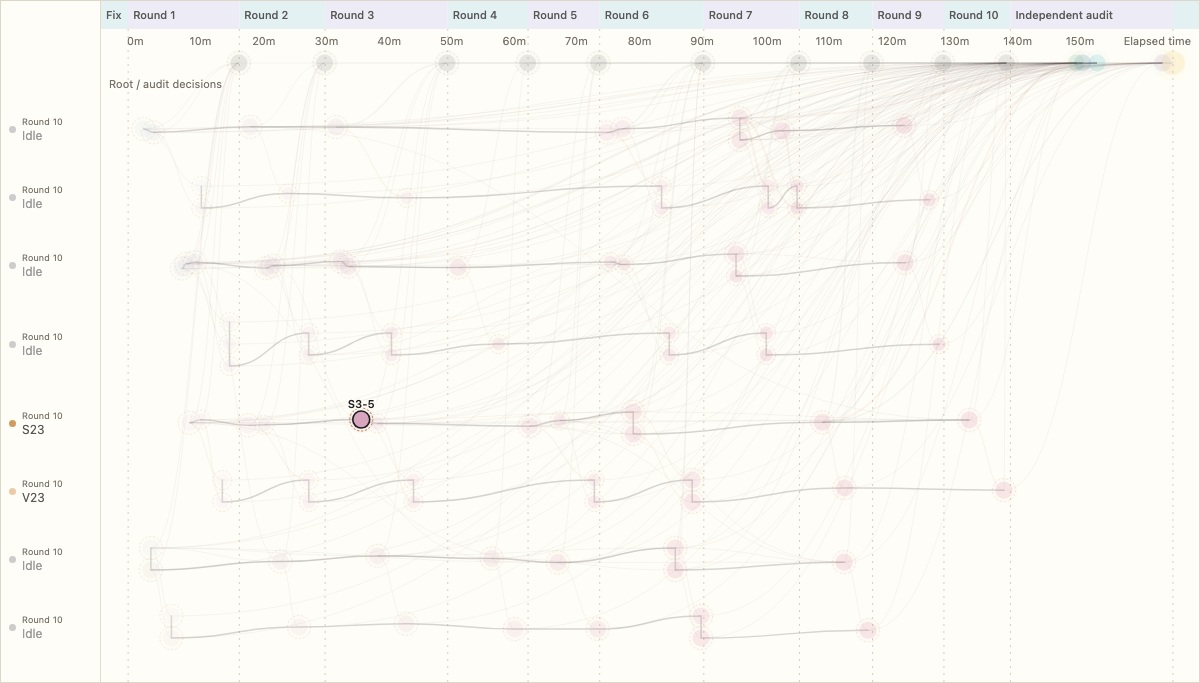
Figure 30. S3-5. Step6. Dimension monotonicity leaves center drift
Established in Attempt 2 · stated scope
Let decreasing acceptance profiles p_n(m) have quantiles \(q_n(\theta)=\min\{m:p_n(m)\le\theta\}\). Suppose for some M_n and e_n≥0 that $$p_v(m)\ge p_n(m)-e_n\quad(v\ge n,\ 0\le m\le M_n).$$ For \(0<\theta<\theta+e_n<1\), $$q_v(\theta)\ge\min\{q_n(\theta+e_n),M_n+1\}.$$ The same assertion with e_n=0 holds for \(0<\theta<1\). In particular an exponentially accurate same-load comparison below (2−epsilon)n gives this truncated median inequality; it does not by itself control the change from theta+e_n to theta.
If, additionally, all fixed quantile windows are o(n), \(q_n(\eta)-q_n(1-\eta)=o(n)\) for every fixed \(0<\eta<1/2\), and \(q_n(1/2)\le(2+o(1))n\), then the same-load comparisons below (2−epsilon)n for every epsilon>0 imply only the useful one-sided regularity $$\inf_{v\ge n}\frac{q_v(1/2)-q_n(1/2)}n\ge-o(1).$$ Even exact monotonicity is insufficient for convergence: on each cube let the abstract hereditary family accept exactly sets of size at most $$a_n=2^{\lceil\log_2 n\rceil},\qquad h_n(m)=\mathbf1_{\{m\le a_n\}}.$$ These uniform-distinct profiles satisfy \(h_v(m)\ge h_n(m)\) for v≥n wherever m is in the smaller sampling domain, hence every weaker source-error distinct comparison above. Their first-failure times and medians equal \(a_n+1\) deterministically, yet $$\liminf q_n(1/2)/n=1,\qquad\limsup q_n(1/2)/n=2.$$ They have all strict exterior limits below load one and above load two. This is an abstract family, NOT a threshold-network counterexample or a model of its iid repeated-pattern constraints.
A self-contained sufficient extra location premise is: for a fixed finite C and all integers n,k≥2, $$q_{n+k}(1/2)\le q_n(1/2)+q_k(1/2)+C.\tag{SA}$$ Under (SA) and bounded positive q_n/n, $$\frac{q_n(1/2)}n\longrightarrow c =\inf_{k\ge2}\frac{q_k(1/2)+C}{k}.$$ If the separate stochastic window assertion \((\tau_n-q_n(1/2))/n\to0\) in probability holds, then \(\tau_n/n\to c\) and the two original strict-side storage limits follow. Neither (SA) nor that window assertion is proved for the canonical network.
Proof
- Quantile inference has an unavoidable probability-level shift. Let \(L=\min\{q_n(\theta+e_n),M_n+1\}\). Every integer 0≤m<L satisfies m≤M_n and p_n(m)>theta+e_n, so the assumed comparison implies p_v(m)>theta. Therefore its first index with probability at most theta is at least L. The same reasoning works at e_n=0. This proof uses no stochastic independence and no continuous interpolation of the integer index. Without a sharp-window assumption, a long plateau just above theta can make q_n(theta+e_n) much smaller than q_n(theta), even for tiny positive e_n; the displayed inequality does not silently identify them.
- What an additional per-n sharp window would give. Fix a small delta>0 and use the assumed comparison on M_n=floor((2−delta)n), with e_n tending to zero. For sufficiently large n, e_n<1/10, so Step 1 and monotonicity in the probability level imply, uniformly in v≥n,
$$q_v(1/2)\ge\min\{q_n(3/5),M_n+1\}.$$ The assumed fixed quantile-window shrinkage gives q_n(3/5)≥q_n(1/2)−o(n), since both are inside, for example, the 1/10 to 9/10 window. The assumed upper median bound gives q_n(1/2)≤(2+o(1))n. Hence the minimum on the right is at least q_n(1/2)−delta*n−o(n). Delta is arbitrary, which proves the one-sided o(n) normalized regularity in the statement. This is conditional on per-n sharp windows; no actual-network repair-core premise is established by a dimension comparison.
- A legal abstract uniform-distinct family. The number a_n is the smallest power of two at least n. It is nondecreasing and satisfies n≤a_n<2n unless n is a power of two, when a_n=n. For n≥2, a_n is strictly below 2^n, so the cutoff family is nontrivial on the n-cube. A cardinality cutoff is hereditary and invariant under every permutation of the cube, in particular translations. Its acceptance probability for a uniform distinct m-set is exactly h_n(m), independent of the particular set. Nondecreasing a_n gives h_v(m)≥h_n(m) at the same m in the common domain. In any endpoint-corrected comparison with nonnegative error B and decreasing collision probabilities rho_n≥rho_v, its right side is at most h_n(m), since (1−rho_n)/(1−rho_v)≤1. Thus this family satisfies even the stronger exact distinct-profile monotonicity, not just an asymptotic relaxed comparison. No assertion is made that its iid law with repeated copies has the network's repeated-constraint semantics; the counterexample concerns precisely the distinct profiles used to define medians and capacity.
- Sharp per-n window with two different normalized accumulation points. Every prefix through a_n is accepted and every longer prefix rejected, so tau and all quantiles are the deterministic integer a_n+1. Every fixed quantile window has length zero, and the centered stochastic window is identically zero. At n=2^j, (a_n+1)/n tends to one. At n=2^{j-1}+1, a_n=2^j and (a_n+1)/n tends to two. The bounds n≤a_n<2n give no other smaller liminf or larger limsup. For any fixed alpha<1 the sampled size is eventually below a_n, while for alpha>2 it is eventually above a_n, proving the stated exterior limits. Consequently even exact dimensional profile monotonicity, all these brackets, and perfect per-n sharpness do not force a single limiting normalized center. This is not an infeasibility example for the actual network.
- A sufficient location premise with a complete proof. Write \(b_n=q_n(1/2)+C\). Assumption (SA) is exactly b_{n+k}≤b_n+b_k for n,k≥2. Let \(c=\inf_{k\ge2}b_k/k\), finite under the stated boundedness. Then b_n/n≥c for every n. Fix k≥2. For all sufficiently large n, write n=a*k+r with integers a≥0 and k≤r≤2k−1, by taking a=floor(n/k)−1. Repeated subadditivity, always with indices at least two, gives b_n≤a*b_k+b_r. The finitely many b_r with k≤r≤2k−1 are bounded constants once k is fixed. Divide by n and let n tend to infinity to obtain limsup b_n/n≤b_k/k. Take the infimum over k≥2, giving limsup≤c; the opposite liminf inequality was already established. Thus b_n/n and hence q_n(1/2)/n converge to c. The restriction that no dimension-one network was defined introduces no gap in this argument.
- Location plus a separate window would finish sharpness. Under the additional unproved stochastic window assertion, the triangle inequality gives tau_n/n→c in probability. For any fixed alpha<c, choose a positive gap between alpha and c; with probability tending to one tau_n exceeds floor(alpha*n), so p_n at that size tends to one. For alpha>c the analogous upper tail gives probability tending to zero. If the inherited strict exterior bounds below one and above two also hold, c must lie in [1,2]. The dimension comparison by itself proves neither (SA) nor the stochastic window, and the cutoff countermodel shows the missing location assertion is substantive even after a window is supplied.
- Exact finite checks. scripts/S3/check_round3.py checks n=2,...,2048, the cutoff bounds and monotonicity, and 18,423 profile-comparison cases at points just below, at and above each cutoff against dimensions n, n+1 and 2n. All assertions passed. The two normalized subsequences and subadditive convergence are proved analytically above. No computation or countermodel has been reclassified as a claim about canonical network capacity.
Sources
The recorded argument is self-contained; its exact dependencies remain linked.
In the attempt tree
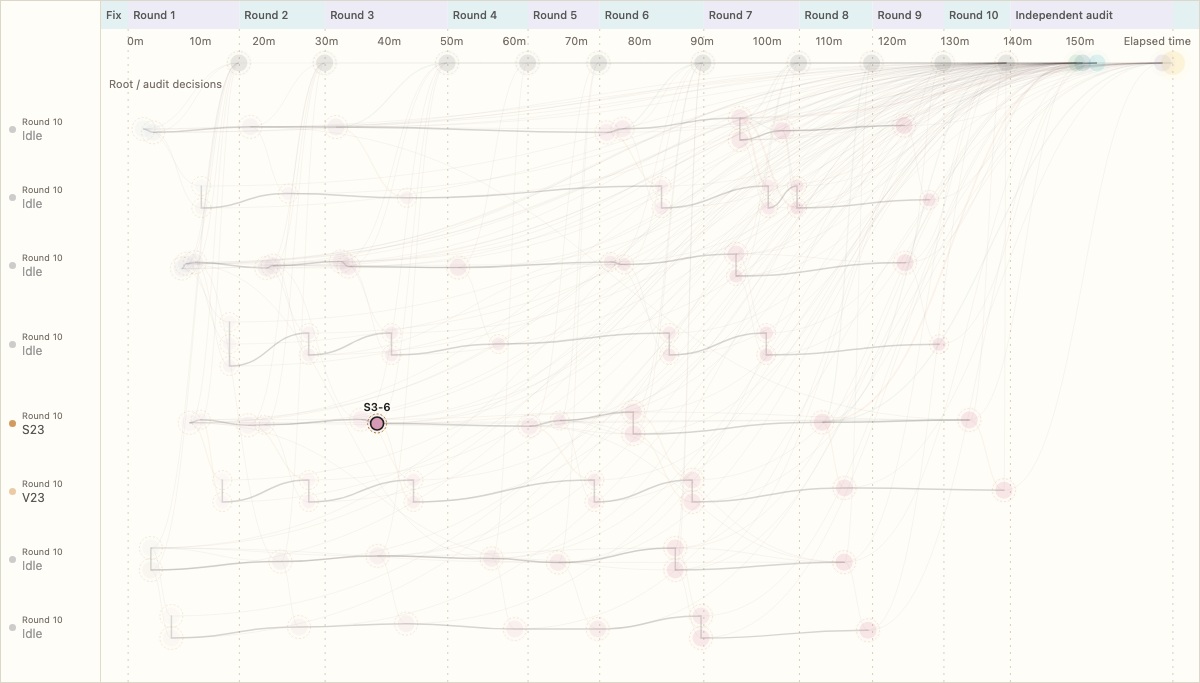
Figure 31. S3-6. Step7. First failure size-biases repair cores
Established in Attempt 2 · stated scope
In the canonical network let \(N=2^n\), let \(X_1,\ldots,X_N\) be a uniform permutation of the cube, \(D_m=\{X_1,\ldots,X_m\}\), and let tau be its first nonstorable prefix. For nonstorable A let \(R(A)=\{x\in A:A\setminus\{x\}\text{ is storable}\}\), and put R empty for storable A. Write \(r(A)=|R(A)|\), \(\mu_m=\mathbb E r(D_m)\), \(q_m=\Pr(\tau=m)=\mu_m/m\). For every m-set A and x in A, $$\boxed{\ \Pr\{D_m=A,\tau=m,X_m=x\} =\frac{\mathbf1_{\{x\in R(A)\}}}{m\binom Nm}\ }.$$ If \(q_m>0\), $$\Pr\{D_\tau=A\mid\tau=m\}=\frac{r(A)}{\binom Nm\,\mu_m},\qquad \Pr\{X_\tau=x\mid D_\tau=A,\tau=m\}=\frac1{r(A)}\quad(x\in R(A)),$$ $$\boxed{\ \mathbb E[r(D_\tau)\mid\tau=m] =\frac{\mathbb E[r(D_m)^2]}{\mathbb E r(D_m)}\ },\qquad \mathbb E\!\left[\frac1{r(D_\tau)}\mid\tau=m\right] =\frac{\Pr\{r(D_m)>0\}}{\mu_m}.$$ Thus a stopped-set average estimates a size-biased moment ratio, not the original RC quantity mu. The stopped law omits every r=0 set, including nonstorable sets with no single deletion repair.
For b independent ideal uniform orderings let \(K_m=\sum_{j=1}^b\mathbf1_{\{\tau_j=m\}}\). Then $$K_m\sim\operatorname{Bin}(b,q_m),\qquad \widehat\mu_m=mK_m/b,\qquad \mathbb E\widehat\mu_m=\mu_m,\qquad \operatorname{Var}(\widehat\mu_m)=\frac{m\mu_m-\mu_m^2}{b}.$$ Counts for different m in the same cohort are multinomial components and must not be declared independent.
Suppose every run has a certified integer interval \(\ell_j\le\tau_j\le u_j\), allowing broad or one-sided censoring up to N. Put $$K_m^- =\#\{j:\ell_j=u_j=m\},\qquad K_m^+=\#\{j:\ell_j\le m\le u_j\}.$$ For a predetermined finite set of L queried loads and \(0<\delta<1\), simultaneously with probability at least \(1-\delta\), $$\boxed{\ m\max\{0,K_m^-/b-h_b\}\le\mu_m \le m\min\{1,K_m^+/b+h_b\},\qquad h_b=\sqrt{\frac{\log(2L/\delta)}{2b}}\ }.$$ The intervals may be chosen adaptively from certificate results; no assumption about how censoring depends on the sample is needed. An exact binomial inversion and an optional time-uniform alternative are specified in the proof. Numerical failures are unknown and cannot shrink certified tau intervals. These are finite-n estimation results under ideal independence; they prove no empirical RC growth, shrinking asymptotic window, normalized-center limit, or capacity.
Proof
- Canonical applicability and scope. The full unchanged problem was reread, hashed and acknowledged for round five. I reread the complete checked S3-1, S3-5, S4-4 and their applicable reports before use. No current numerical experiment is run here. Storage is hereditary under the exact same real symmetric zero-diagonal W and free biases. The finite strictification rule in the canonical statement preserves this property, including target-zero fields initially at zero. A singleton stores and the full cube contains a nonstorable adjacent pair, so tau exists with 2≤tau≤N. The full exact finite certificate conventions are rederived in the companion independent unit; no old cohort is reused as new independent prefix trials. The dimension comparison in S3-5 does not alter the sampling law or remove stopping bias.
- Count all orderings for the joint law. Conditional on D_m=A, all m possible last elements are equally likely. More exactly, fixing A and x in A leaves (m−1)! orders of A minus x before x and (N−m)! orders afterwards. Its probability is
$$\frac{(m-1)!(N-m)!}{N!}=\frac1{m\binom Nm}.$$ For every one of those orders, tau=m holds exactly when A is nonstorable and A minus x is storable. If A minus x stores, all its earlier prefixes store by heredity; if A stores there is no failure at m. This condition is precisely x in R(A), proving the first boxed joint law. Given a stopped A and last point x, the preceding order is uniform on A minus x and the future order is uniform on the complement; these claims follow from the same count and require no independent-neuron premise.
- Conditioning creates the size bias. Sum the joint law over x to get
$$\Pr(D_m=A,\tau=m)=r(A)/(m\binom Nm),\qquad \Pr(\tau=m)=\mu_m/m.$$ Normalize by this latter probability to obtain the conditional density r(A)/(binom(N,m)*mu). Normalize the joint law at fixed A to get a uniform last point among its r(A) repairs. In particular every exactly stopped sample has r≥1 and deletion defect exactly one; larger-defect and zero-repair samples cannot be observed at their layer through this stopping rule. Multiplying the conditional density by r(A) and summing over all A gives E_uniform[r^2]/mu. Multiplying instead by 1/r over its positive support gives P_uniform(r>0)/mu. The latter does not recover mu from stopped samples alone unless that boundary probability is separately known; inverse weighting only recovers the uniform distribution conditional on r>0 after normalization. All conditional displays require q_m>0; if q_m=0 they are undefined rather than evidence of a particular core size.
- A finite check that the two means differ. On a four-element abstract universe, reject precisely sets containing either {0,1} or {0,2,3}. This is a hereditary acceptance family. At m=3 its four uniform-layer core sizes are 2,2,3,0, giving mu=7/4. The stopped probabilities of the three positive-core sets are respectively 2/7,2/7,3/7, giving conditional stopped mean 17/7, not 7/4. This is solely a finite illustration of the sampling identity, not a network counterexample. If all true tau values of independent runs and their repair sizes are observed, the stopped core average among the K_m=k>0 cases has conditional mean E_uniform[r^2]/mu. Selecting only the cases whose tau or deletion tests happened to resolve need not preserve that conditional distribution; informative unresolved cases must not be discarded.
- Correct estimator and fixed-sample uncertainty. Each independent full ordering supplies one Bernoulli indicator 1{tau=m} of mean q_m, so K_m is binomial and its scaled count has the stated expectation and variance. The vector of first-failure counts over disjoint m values is multinomial, since each run has exactly one tau. For each fixed m, the centered Bernoulli mgf is bounded by exp(t^2/8), giving
$$\Pr\{|K_m/b-q_m|\ge h\}\le2e^{-2bh^2}.$$ For completeness, the log mgf's second derivative is a tilted Bernoulli variance at most 1/4, and its value and first derivative at zero vanish; integrating twice gives the bound, and Chernoff optimization yields the display. Union bound over L predetermined queried m values proves the stated simultaneous h_b. Dependence between load counts does not invalidate that union bound. Multiply by m to estimate the original unconditional uniform-layer mu; no stopped-core averaging is needed.
- Exact censoring is pathwise safe even when informative. A stored prefix at s certifies tau>s. A nonstorable prefix at t certifies tau≤t. Let s be the largest exactly certified stored prefix (at least the empty prefix) and t the smallest exactly certified nonstored prefix (at most N by the adjacent-pair obstruction); then a valid interval is [s+1,t], tightened by any other exact implications. A numerical failure, timeout or uncertified near-zero margin supplies neither endpoint. Conflicting exact bounds s≥t indicate a certificate/sampler error requiring audit. For every true tau inside its certified interval, the indicator of a singleton interval at m is at most 1{tau=m}, which is at most the indicator that the interval contains m. Thus K^-≤K≤K^+ pointwise. Substitute this enclosure in the confidence event for the latent exact K. The proof needs no independence or noninformativeness of censoring and no extra failure probability for censoring itself: interval containment must be certified, not merely probable. For survival p_n(k)=P(tau>k), the analogous certain/possible counts are #{j:ell_j>k} and #{j:u_j>k}; the same Bernoulli argument gives finite confidence bounds for p if those statistics are included in the queried-family error allocation.
- Optional exact binomial inversion. To avoid the conservatism of the closed-form h_b, set alpha=delta/(2L). For an integer count c, define l_b(0)=0; otherwise l_b(c) is the unique z in (0,1) with P(Bin(b,z)≥c)=alpha. Define u_b(b)=1; otherwise u_b(c) solves P(Bin(b,z)≤c)=alpha. Both endpoints are nondecreasing in c, by monotone Bernoulli coupling as z varies. Under the true q, the event l_b(K)>q is an upper-tail rejection whose probability is at most alpha: it consists of counts whose true upper-tail probability is below alpha. Similarly P(u_b(K)<q)≤alpha. Discreteness makes coverage conservative rather than anti-conservative. Therefore the interval
$$m[\,l_b(K_m^-),u_b(K_m^+)\,]$$ has simultaneous coverage at least 1−delta over the L queried loads, by monotonicity, the pointwise K enclosure, and a union bound. No asymptotic normal approximation is used.
- Adaptive number of completed runs requires a separate bound. The fixed-b radius is not automatically valid after choosing b from the observed counts. For an infinite sequence of independent ideal runs, a valid optional alternative is
$$h_b^{\rm all}=\sqrt{\log(2L b(b+1)/\delta)/(2b)}.$$ At each positive integer b, the failure budget for each load is delta/[L b(b+1)]. Summing over all b and all L loads gives at most delta because sum 1/[b(b+1)]=1. Hence the same censored interval bounds with this radius hold simultaneously for every b and at an arbitrary adaptive stopping time. All generated runs must remain in the ordered cohort, including unresolved ones; dropping runs based on outcome or solver difficulty does not satisfy the premise.
- Implementable sampling and reproducibility are different claims. Under ideal independent uniform bits, drawing cube IDs and rejecting repeated IDs within a run generates a uniform ordered sample without replacement: each newly accepted ID is uniform among the remaining vertices. Its first K accepted IDs have exactly the prefix law of a uniform full permutation; generating the exponentially large remainder is unnecessary for a finite prefix experiment. Independent ideal streams give independent runs. A fixed recorded PRNG algorithm, seed, ordered accepted IDs and certificate transcript make a run reproducible, but deterministic seed choices alone do not prove the ideal uniformity or inter-run independence assumed by the binomial laws. Replaying a seed or re-certifying an existing sample adds no stochastic observation. The cohort and every unresolved interval must be retained. None of these finite confidence bounds establishes divergence of mu on an infinite sequence of n, the unproved RC premise, or convergence of median/n.
- Exact finite verification. scripts/S3/check_round5.py enumerates all 166 nonempty hereditary families on four elements that reject the full universe, and all 24 permutations for each. It verifies 5,312 joint (m,A,last-point) probabilities exactly and 404 positive-mass conditional second/first-moment identities. The 7/4 versus 17/7 example passes. All 32,000 tested interval-censoring count enclosures hold even when intervals are selected from the latent tau values themselves. These finite checks supplement the derived laws and are not numerical evidence of network RC growth.
Sources
The recorded argument is self-contained; its exact dependencies remain linked.
In the attempt tree
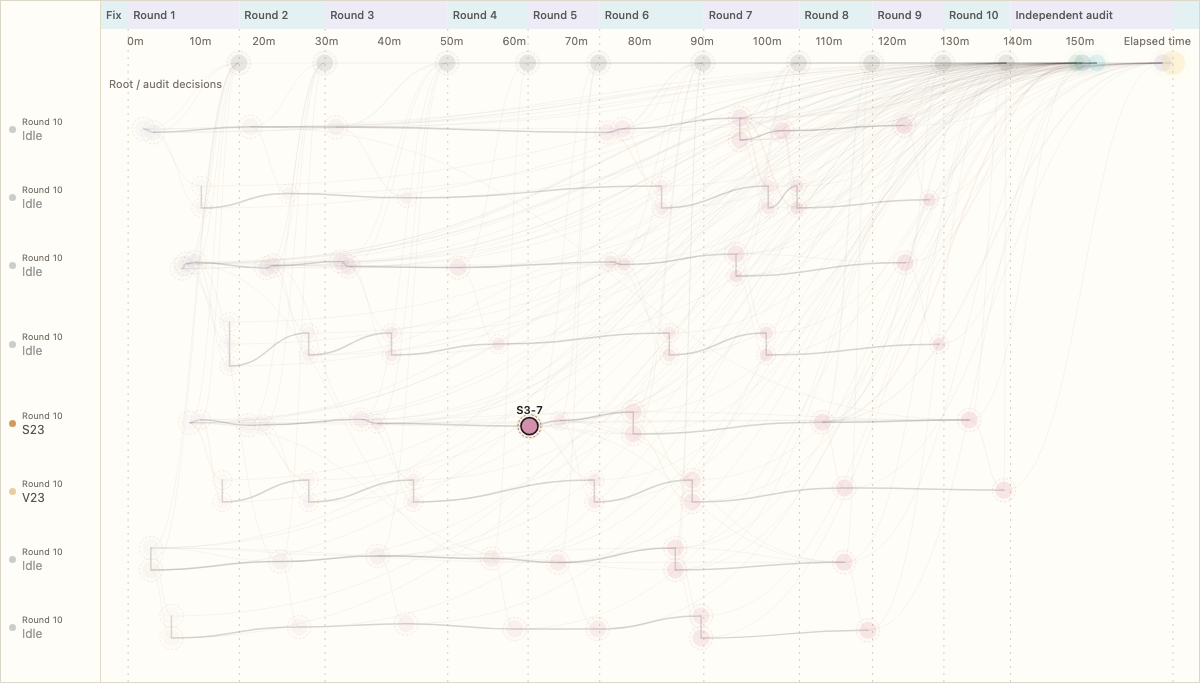
Figure 32. S3-7. Step8. Exact supports bound every deletion repair
Established in Attempt 2 · stated scope
Let A be a fixed distinct canonical pattern set of size m whose nonstorage is exactly certified, and define \(R(A)=\{x\in A:A\setminus\{x\}\text{ is storable}\}\), \(r(A)=|R(A)|\). For each produced full normalized dual \(\lambda^{(j)}\), define its PATTERN support $$T_j=\{\mu\in A:\sum_i\lambda_i^{(j),\mu}>0\}.$$ Let P consist of points x with an exact strict primal certificate for A minus x, and let F consist of points x with an exact nonstorage certificate for A minus x. Define $$C=\left(\bigcap_{j=1}^{J}T_j\right)\setminus F,$$ with the empty intersection equal to A. Then $$\boxed{\ P\subseteq R(A)\subseteq C,\qquad |P|\le r(A)\le|C|\ }.$$ Any point outside a produced pattern support is thereby a certified nonrepair, whether or not that deletion was separately solved. Neuron supports and counts of positive multiplier entries do not provide this containment. If C is empty then r(A)=0 and the deletion deficit is at least two; such an A cannot be an exactly identified first-failure set. If A is first-failure at m, its last point is in R(A) and hence in every T_j. If A is certified storable then R(A) is empty by convention; stored deletion certificates alone do not prove that an otherwise unknown A is nonstorable.
For optional statistical probing, freeze all certificate information above, put \(U=C\setminus P\), \(c=|U|\), and sample \(1\le\ell\le c\) points uniformly without replacement from U, using fresh randomness conditional on that frozen information. If H of their deletions are truly storable, then $$H\sim\operatorname{Hypergeom}(c,r(A)-|P|,\ell),\qquad \widehat r=|P|+cH/\ell,\qquad\mathbb E[\widehat r\mid A,\text{frozen information}]=r(A).$$ For c>1 the conditional variance is $$\operatorname{Var}(\widehat r)=\frac{c^2}{\ell}\,\frac{r-|P|}{c} \left(1-\frac{r-|P|}{c}\right)\frac{c-\ell}{c-1};$$ it is zero if c=1. If only h_+ sampled deletions are exactly certified storable and h_? remain unresolved, then, with conditional probability at least \(1-\delta\), $$r(A)\in[|P|,|C|]\cap \left[|P|+\frac{c h_+}{\ell}-d_\ell, |P|+\frac{c(h_++h_?)}{\ell}+d_\ell\right], \quad d_\ell=c\sqrt{\frac{\log(2/\delta)}{2\ell}}.$$ The deterministic interval always holds; the second interval requires the stated uniform random deletion sample and fixed ell, or an explicit time-uniform error allocation. These are conditional statistics for this A. If A was selected at first failure, even an unbiased deletion estimator targets its size-biased core distribution, not the original uniform-m-set RC mean.
Proof
- Exact canonical certificates, with every shared edge and bias retained. Use \(s^\mu\in\{-1,1\}^n\), \(J=J^\top\), \(J_{ii}=0\), and free \(h\), with margins \(s_i^\mu((Js^\mu)_i+h_i)>0\). A full negative certificate is nonnegative normalized lambda with
$$\sum_{i,\mu}\lambda_i^\mu=1,\qquad \sum_\mu\lambda_i^\mu s_i^\mu=0,\qquad \sum_\mu(\lambda_i^\mu+\lambda_k^\mu)s_i^\mu s_k^\mu=0\quad(i<k).$$ These equations include the contributions of both neurons to a shared edge and include every free field. A strict primal dotted with these coefficients would give zero as a positive weighted sum of strict margins, a contradiction. Integer certificates can be checked by a positive total mass and exact zero unnormalized moments before normalization. The complete checked S4-4 and its report were read for this certificate convention; none of its fixed-cohort counts is used as new sampling evidence here.
- Produced pattern supports are sufficient upper information. If mu is outside T_j, nonnegativity makes every multiplier at that pattern zero. Deleting such a point leaves the entire dual, its normalization and every balance equation unchanged. Consequently that deletion is nonstorable, so the point is not in R(A). Equivalently R(A) is contained in every produced T_j. Restricting a full dual to T_j also proves that T_j itself is a nonstorable subset; it need not be inclusion-minimal and the solver need not have found a minimum-support witness. This argument concerns pattern indices, not neuron indices or the number of nonzero neuron-pattern entries. It holds pointwise for adaptively chosen or repeated certificates and supplies no probabilistic independence assumption.
- Combine exact deletion classifications without recoding unknowns. Under the premise that A is nonstorable, an exact strict primal for A minus x puts x in R(A), and an exact dual for that deletion excludes x. Step 2 then gives P subset R subset C after removing F. Inconsistent P outside C indicates a false certificate or indexing error and must be audited. Numerical solver failures, timeouts and unresolved reconstructions enter neither P nor F. If all deletions are classified, the interval collapses to the exact cardinality. If C is empty, no (m−1)-subset is storable, so the maximum stored subset has size at most m−2 and deficit is at least two. If a set is known to be an exact first-failure prefix, removing its last point stores the preceding prefix, so that point belongs to P once its certificate is included and must lie in every T_j. A nonstorable deletion itself implies A nonstorable by heredity; a stored deletion alone does not. If A is known storable, use the stipulated R empty and do not interpret all its stored deletions as repairs of failure.
- Fresh uniform probes have a finite-population law. Freeze A and the valid certificate transcript. There are exactly r−|P| true repairs among the c unresolved candidate points U=C minus P; all other possible repair locations have already been excluded. Sampling an ell-subset uniformly from U, independently of hidden deletion outcomes conditional on this frozen population, selects H successes with hypergeometric mass
$$\Pr(H=h)=\frac{\binom{r-|P|}{h}\binom{c-r+|P|}{\ell-h}}{\binom c\ell}.$$ The sample need not be independent across its points; it is exactly without replacement. A selected point has success probability (r−|P|)/c, giving the displayed unbiased estimator. For c>1, two distinct sampled positions have success covariance \(-p(1-p)/(c-1)\), where p=(r−|P|)/c: both are successes with probability (cp)(cp−1)/[c(c−1)]. Thus Var(H)=ell*p(1-p)*(c−ell)/(c−1), and scaling by c/ell gives the variance in the statement. For c=1 its sole outcome is deterministic. If c=0, r=|P| exactly and no probing is required.
- A direct concentration proof needs no iid deletion assumption. Reveal the ell uniformly sampled distinct candidates in order and use the Doob martingale for H. Given the previous reveals, couple completions after two possible next candidates x,y by swapping x and y in the remaining random completion. The final sampled subsets are identical if the alternate point is also selected later, and otherwise differ by one replacement. Their success counts differ by at most one, so the conditional next-reveal expectations have range at most one. A centered variable in an interval of length one has conditional mgf at most exp(t^2/8): its log mgf has tilted variance at most 1/4 and zero value/derivative at zero. Iteration and Chernoff give
$$\Pr\{|H-\ell(r-|P|)/c|\ge t\mid A,\text{frozen transcript}\}\le2e^{-2t^2/\ell}.$$ At t=sqrt(ell*log(2/delta)/2), scale by c/ell. True H lies between h_+ and h_++h_? because only exact stored/nonstored certificates classify a test; censoring can depend arbitrarily on its outcome. Substitute these pathwise bounds in the confidence event and intersect with the always-valid deterministic interval. This proves the stated conditional guarantee without a missing-at-random premise. It does not turn a nonuniform solver-chosen subset of deletions into a hypergeometric sample.
- Adaptive probing and stopped-set selection remain separate. If a uniform random order of the frozen U is generated, the same bound can hold for all ell simultaneously by replacing log(2/delta) with log(2 ell(ell+1)/delta), allocating delta/[ell(ell+1)] to each positive ell and summing. This permits choosing the sample length after seeing outcomes. If the candidate population is changed adaptively, a new frozen phase with fresh conditional-uniform sampling and an explicit error-budget allocation is needed for this stated guarantee; otherwise retain only the deterministic certificate bounds. If A came from a first-failure experiment, each conditional probing estimate is unbiased for the r of that selected A, but selected A values are not uniform m-sets. Averaging such estimates at a fixed stopped m therefore estimates a stopped conditional mean under fully resolved representative sampling. To estimate the original RC mean, use independent-prefix event counts or independent uniform m-sets; do not assume that conditional unbiasedness removes the initial selection bias. Discarding unresolved stopped sets can add another selection bias.
- Exact finite verification and scope. scripts/S3/check_round5.py verifies certificate-style set containments and partial-classification bounds in 9,504 cases over all 166 nonempty hereditary families on four points with a rejected full set. It checks 3,500 hypergeometric mean/variance calculations by exhaustive uniform sampling and rational arithmetic. These are finite combinatorial checks; actual network certificate validity is governed by the exact moment equations in Step 1. No LP failure is accepted as nonstorage, no produced support is declared minimal, no stopped sample is relabeled as uniform, and no finite estimation interval is promoted to an asymptotic RC or center theorem.
Sources
The recorded argument is self-contained; its exact dependencies remain linked.
In the attempt tree
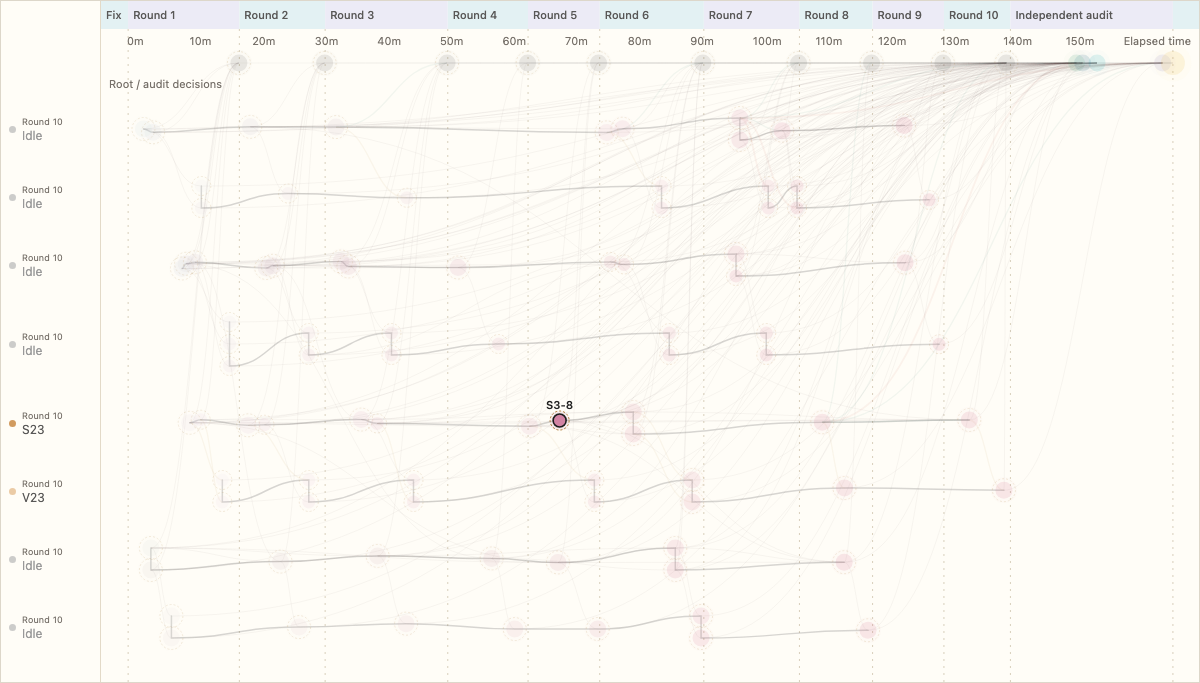
Figure 33. S3-8. Step9. Dimension extension leaves center open
Established in Attempt 2 · stated scope
For the canonical distinct law, the dimension comparison and quantile conclusions of S3-5 and S3-6 hold, with their stated conditional gaps. In particular, for every fixed \(0<\varepsilon<1\), there are \(C_\varepsilon,c_\varepsilon>0\) such that $$p_v(m)\ge p_n(m)-C_\varepsilon e^{-c_\varepsilon n}\qquad(v\ge n,\ 1\le m\le(2-\varepsilon)n),$$ uniformly in every final dimension v. This same-load statement, even replaced by exact dimension monotonicity and supplemented with deterministic finite-dimensional first failures, does not force convergence of the normalized medians. The blind Stage A checkpoint was completed before reading any current-run return/report/draft and has SHA256
8385d877811c365315bfe9b912771ea8c013a423e4afa8c5e60c942b3e38f98d. No actual failure was found in the audited units or draft5's corresponding passages.Proof
- Contract, blindness and source scope. I read the entire canonical problem, recomputed its SHA256 and appended the required S23 round-six acknowledgment. Stage A used only that problem and Tikhomirov, On the probability that the convex hull of random points contains the origin, arXiv:2304.13133v5 (9 August 2025). Theorem 1.2, p.1, was independently extracted and visually inspected in the primary PDF. The blind derivation was saved at
exchange/S23/blind-r6.mdat actual time 2026-11-07T22:42:54Z and hashed before opening current-run proofs, reports or drafts. Its simultaneous cross-edge construction gives an error of (v−n) times a single affine-fit failure bound, hence polynomial-final-dimension uniformity; it does not pretend to prove the stronger all-v summation before reading it. After saving that checkpoint, I read the complete S3-5, S3-6, their complete V3 reports, and the full round-five draft. The following complete rederivation audits the stronger result; it uses no unchecked same-round unit.
- Use \(s^\mu\in\{-1,1\}^n\), \(J=J^\top\), \(J_{ii}=0\), and free \(h\), with margins \(s_i^\mu((Js^\mu)_i+h_i)>0\). For the tie rule \(\sigma(t)=+1\) for \(t>0\) and \(-1\) otherwise, a finite fixed-point family can be made strict by decreasing each field by less than its least positive field, when present. Positive-target fields stay positive and negative-target fields become negative. Strict margins directly imply fixed points. Repeated consistent patterns impose repeated copies of the same inequalities.
- Signed affine features and the exact primary theorem. For m iid old d-spin patterns S^mu and independent iid labels Y^mu, set Z^mu=Y^mu(S^mu,1). The map (s,y) to (ys,y) bijects the (d+1)-sign cube, with inverse (z,t) to (tz,t). Consequently all entries of the Z sample, including its last coordinate, are iid Rademacher. The same assertion is not made conditionally on fixing all labels. Strict affine fit is equivalent to 0 outside conv{Z^mu}: a convex zero combination forbids positivity, while a nonzero nearest hull point z satisfies z dot Z^mu≥||z||²>0 by the directional derivative of squared distance. Failure includes boundary absorption. Theorem1.2 applies to symmetric unit-variance subgaussian Rademachers in feature dimension d+1, with sample size M=max(m,d+2)>d+1. If m≤d+1, pad with fresh vectors; absorption can only increase. Thus with an absolute existential constant c_R>0,
$$u_{d,m}\le\min(1,a_{d,m}),\quad a_{d,m}=P\{\operatorname{Bin}(\max(m,d+2)-1,1/2)\ge d+1\}+2e^{-c_R(d+1)}.$$ For m>d+1 the same binomial tail is also the theorem's lower bound for u. No numerical c_R, affine general position, or Gaussian universality is assumed.
- Symmetric strict extension. Suppose old parameters J,h store every old pattern with minimum margin gamma>0, and w,b strictly separate the next labels. Append symmetric incident edges eta*w and external field eta*b, with new diagonal zero and old external h fixed. Choose eta>0 so eta||w||_infinity<gamma/2. Every old margin changes by at most eta||w||_infinity, since the new spin is ±1, and remains positive. Each new margin is eta times a strictly positive affine margin. For w=0, no old-field perturbation occurs and any positive eta works. This stores all old and new neurons/patterns. Repeated projected patterns cause no hidden exception: conflicting appended labels are exactly among affine-fit failures. This is an admissible symmetric spin network.
- Finite iteration and exact sum. On one iid m-by-v array let E_d be storage in the first d coordinates and F_d failure to affinely fit coordinate d+1 from the first d. On E_n and outside every F_d for n≤d<v, finitely many applications of step4 give E_v. No events are assumed independent. Therefore, writing Q for iid storage,
$$Q_{v,m}\ge Q_{n,m}-B_{n,v},\quad B_{n,v}=\min\left(1,\sum_{d=n}^{v-1}a_{d,m}\right).$$ Let Z~Bin(m−1,1/2), t=max(n,m−1). For d≤m−2 the binomial part is P(Z≥d+1); for d≥m−1 padding makes it 2^(−d−1). Count the number of integers d in [n,v−1] below each realized Z, and sum the padded tail and source-error geometric series. This gives exactly $$\begin{aligned} A_{n,v}:=\sum_{d=n}^{v-1}a_{d,m} &=E[(\min(Z,v)-n)_+]+[2^{-t}-2^{-v}]_+\\ &\quad+\frac{2e^{-c_R(n+1)}(1-e^{-c_R(v-n)})}{1-e^{-c_R}}. \end{aligned}$$ The unpadded contribution is zero past m−2; the padded contribution is not zero there. At v=n every term is zero. This checks all endpoints of S3-5. There is no infinite-dimensional network construction: every v is finite, while its probability upper bound is uniform.
- All-v uniformity. Increasing v gives
$$A_{n,\infty}=E[(Z-n)_+]+2^{-\max(n,m-1)}+\frac{2e^{-c_R(n+1)}}{1-e^{-c_R}}.$$ If m≤(2−epsilon)n, the first term is at most m P(Z≥n+1). When this tail is nonzero, its threshold exceeds the mean by at least epsilon*n/2. From cosh(t/2)^(m−1)≤exp((m−1)t²/8), Chernoff optimization gives $$P(Z\ge n+1)\le\exp\left[-\frac{2(n+1-(m-1)/2)^2}{m-1}\right]\le e^{-\kappa_\varepsilon n},\qquad \kappa_\varepsilon=\frac{\varepsilon^2}{2(2-\varepsilon)}.$$ For m≤n+1 that tail is zero. The remaining terms are bounded by 2^(−n) and a geometric exponential term. Absorbing m=O(n) into any slightly smaller positive exponent proves A_{n,v}≤C_epsilon exp(−c_epsilon n) uniformly for every v≥n. The existential source constant remains existential.
- Distinct law and an alternate additive transfer. Let C_d mean no collisions among m projected patterns. For m≤2^n, C_n is contained in C_v and P(C_d)=1−rho_{d,m}, where rho=1−(2^d)_m/2^(dm)≤binom(m,2)2^(−d). The extension event from step5 loses at most B from E_n∩C_n, so
$$p_v(m)\ge\max\left(0,\frac{(1-\rho_{n,m})p_n(m)-B_{n,v}}{1-\rho_{v,m}}\right).$$ This is exactly the audited endpoint-only formula. It introduces no intermediate collision penalties and never assumes a distinct final sample has a distinct projection. Independently, conditioning the iid sample on its support size K makes the support a uniform K-subset. Heredity yields Q_{n,m}≥p_n(m); the collision decomposition yields p_v(m)≥Q_{v,m}−rho_{v,m}. Consequently the simpler bound p_v(m)≥p_n(m)−B_{n,v}−rho_{v,m} also holds. Both formulas imply the all-v exponential comparison in the statement. This alternate argument agrees with the distinct-law transfer in the blind checkpoint.
- Quantile logic must retain its shifted level. If p_v(m)≥p_n(m)−e_n only for m≤M_n, then every integer m<min(q_n(theta+e_n),M_n+1) has p_n(m)>theta+e_n and hence p_v(m)>theta. Thus
$$q_v(\theta)\ge\min\{q_n(\theta+e_n),M_n+1\}.$$ Even tiny e_n cannot identify the two probability levels without a window estimate. Under the separately hypothesized o(n) fixed-level windows and q_n(1/2)≤(2+o(1))n, use theta+e_n≤3/5 and M_n=floor((2−delta)n). Then q_v(1/2)≥q_n(1/2)−delta*n−o(n) uniformly v≥n. Taking each fixed delta>0 and then delta down to zero gives exactly the one-sided regularity claimed in S3-6, not convergence of q_n/n.
- An actual counterexample to the proposed generic inference. On the n-cube accept all sets of size at most a_n=2^ceil(log2 n). This abstract family is hereditary and invariant under all cube-point permutations. Because a_n is nondecreasing, its distinct profiles satisfy exact same-load dimension monotonicity. All quantiles and first failures are identically a_n+1, so every per-n window vanishes. At n=2^j, (a_n+1)/n tends to1; at n=2^(j−1)+1 it tends to2. Thus exact same-load comparison, perfect sharpness and strict exterior limits below1/above2 do not force a normalized-center limit. This is not a network counterexample. The blind checkpoint used floor(log2 n) instead and obtained the equally valid accumulation points 1/2 and1 before seeing this version.
- Conditional subadditivity is correctly labeled. If q_{n+k}≤q_n+q_k+C for all n,k≥2, set b_n=q_n+C and c=inf_{k≥2}b_k/k. Then b is subadditive on dimensions≥2 and b_n/n≥c. For fixed k write n=a*k+r with k≤r≤2k−1; repeated subadditivity gives b_n≤a b_k+b_r. Divide by n, let n increase, and then take infimum over k. This proves q_n/n→c with no dimension-one assumption. Only if the separate centered stochastic window holds does tau_n/n→c, and then P(tau_n>floor(alpha n)) has the original strict-side limits. Neither premise is proved for the network. The draft carries both gaps explicitly.
- Independent finite checks and verdict. My isolated
scripts/S23/check_round6.pyverifies the padded binomial-sum formula exactly in 4,675 cases and the signed-affine bijection on 504 rows. All pass. These supplement the analytic argument. The first invocation hit an environment compatibility error because this Python lacks int.bit_count; the script was corrected to use bin(a).count('1') and the complete rerun passed. No ML experiment or stochastic sample was run. No actual failure was found in S3-5, S3-6 or their draft5 uses. Exact capacity, a shrinking network load window and median convergence remain unproved.
Sources
The recorded argument is self-contained; its exact dependencies remain linked.
In the attempt tree
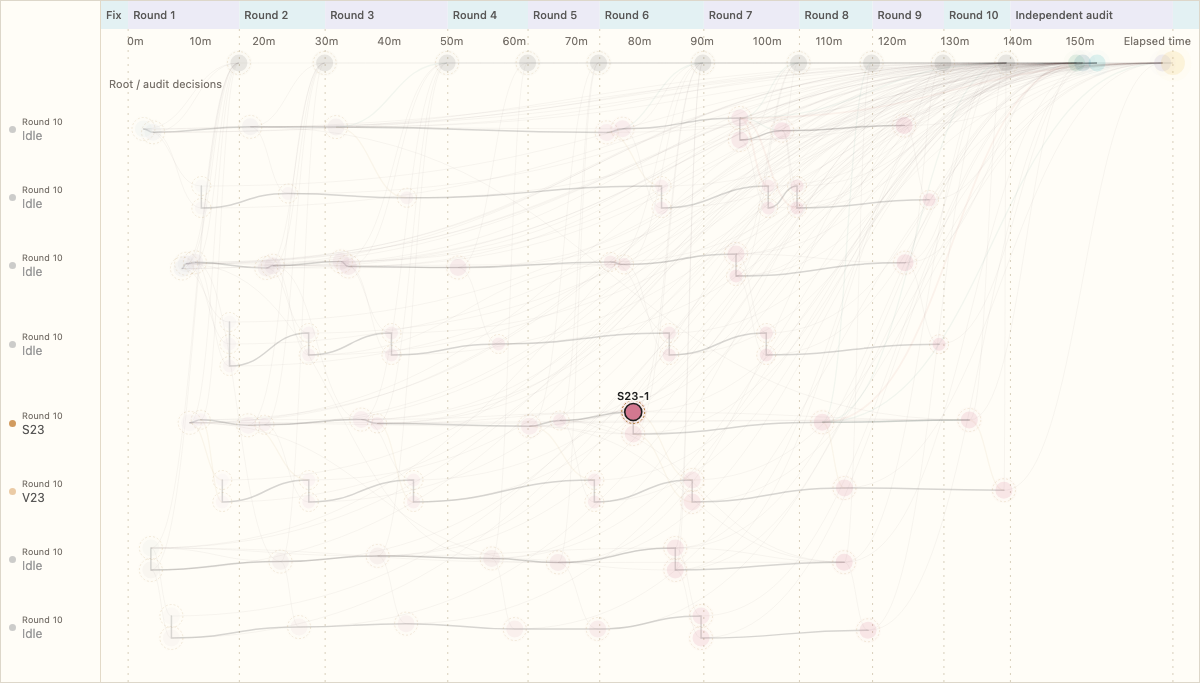
Figure 34. S23-1. - Contract, blindness and source scope. I read the entire canonical problem, recomputed its SHA256 and appended the required S23 round-six acknowledgment. Stage A used only that problem and Tikhomirov, On the probability that the convex hull of random points contains the origin, arXiv:2304.13133v5 (9 August 2025). Theorem 1.2, p.1, was independently extracted and visually inspected in the primary PDF. The blind derivation was saved at
Step10. Stopped and censored laws survive audit
Established in Attempt 2 · stated scope
The complete finite sampling and certificate-probing claims of S3-7 and S3-8 hold under their stated ideal independent uniform-ordering, exact-certificate and fresh conditional-uniform probing hypotheses. In particular, for a uniform m-subset A, $$P(D_m=A,\tau=m,X_m=x)=\frac{\mathbf1_{x\in R(A)}}{m\binom{2^n}m},\qquad P(D_\tau=A\mid\tau=m)=\frac{|R(A)|}{\binom{2^n}m\,E|R(D_m)|},$$ whenever the conditional event has positive probability. Certified interval censoring may be fully informative and still yields the stated conservative bounds. No failure was found; a stopped repair average remains a size-biased quantity, not the uniform-layer repair mean, and these laws establish no asymptotic repair growth or normalized-center limit.
Proof
- Read scope and exact model. After the blind checkpoint was saved, I read the complete S3-7, S3-8, both full V3 reports, and the complete round-five draft. This unit depends on no unchecked same-round result. Its proof below starts from the canonical model. Storage is hereditary, because the same W,b work on every subset. The finite downward-bias strictification preserves all target ones and makes every target zero strictly negative. A singleton stores with zero weights and suitable biases. The full cube contains an adjacent pair; at its differing neuron the two inputs outside that neuron coincide but the targets differ, so no zero-diagonal threshold rule can store that pair. Therefore the first nonstored prefix tau exists, with 2≤tau≤N=2^n.
- Uniform permutation counting proves the joint law. Fix a distinct m-set A and x in A. There are exactly (m−1)!(N−m)! permutations whose first-m set is A and whose mth element is x. Dividing by N! gives 1/[m binom(N,m)]. For every such permutation, tau=m if and only if A is nonstored and A minus x stores. Sufficiency uses heredity for all earlier prefixes, and necessity uses the definition of first failure. With R(A) empty on stored A and equal to its repairing deletions otherwise, this condition is precisely x in R(A). Thus the displayed joint law is exact, under distinct sampling, without iid approximations.
- Size bias and missing zero-repair mass. Put r(A)=|R(A)| and mu_m=E_uniform r(D_m). Summing the joint law over x and then over A gives
$$P(D_m=A,\tau=m)=\frac{r(A)}{m\binom Nm},\qquad P(\tau=m)=\frac{\mu_m}{m}.$$ If mu_m>0, conditioning yields the mass r(A)/[binom(N,m)mu_m] and makes X_m uniform over R(A). Multiplying that conditional mass by r(A), or by 1/r(A) on its positive support, gives $$E[r(D_\tau)\mid\tau=m]=\frac{E[r(D_m)^2]}{\mu_m},\qquad E[1/r(D_\tau)\mid\tau=m]=\frac{P(r(D_m)>0)}{\mu_m}.$$ Zero-repair sets, even nonstored ones, have no stopped mass. Normalized inverse weighting only yields the uniform law conditional on r>0; it cannot supply its unknown missing mass. Conditional displays are undefined at mu_m=0. In the abstract four-point family rejecting supersets of {0,1} or {0,2,3}, the triple repair sizes are 2,2,3,0. Their uniform mean is7/4 and stopped mean is17/7. The distinction is real and matches the draft's warning; it is not a claim about a particular network sample.
- Event-frequency estimator and exact dependence. For b independent ideal uniform orderings, the indicators 1{tau_j=m} are independent Bernoulli with parameter q_m=mu_m/m. Hence K_m is Bin(b,q_m), mK_m/b is unbiased for mu_m and
$$\operatorname{Var}(mK_m/b)=\frac{m\mu_m-\mu_m^2}{b}.$$ Counts at different m over one cohort are multinomial components, since each run has one first failure. They are not independent. Conditional on a fixed positive count K_m=k, representative exactly stopped sets have the law in step3, so their repair average targets its size-biased moment ratio. Discarding hard-to-resolve runs can further change that law. Conditional unbiased probing of each selected set cannot undo its initial selection.
- Fixed-b concentration and interval censoring. For a Bernoulli variable, the centered log mgf has tilted variance at most1/4 and zero value and derivative at0; integration gives log mgf≤t²/8. Across b independent runs, Chernoff optimization gives P(|K_m/b−q_m|≥h)≤2exp(−2bh²). For L predetermined loads, choose h=sqrt(log(2L/delta)/(2b)) and union-bound; dependence across load counts is harmless. If exact certificates give ell_j≤tau_j≤u_j, then pointwise
$$1\{\ell_j=u_j=m\}\le1\{\tau_j=m\}\le1\{\ell_j\le m\le u_j\}.$$ Summing gives K_m^-≤K_m≤K_m^+. Substitution in the latent-K confidence event gives $$m\max(0,K_m^-/b-h)\le\mu_m\le m\min(1,K_m^+/b+h)$$ simultaneously with probability≥1−delta. Censoring can depend arbitrarily on the outcomes; only exact containment is needed. A stored prefix at s certifies tau>s and a nonstored one at t certifies tau≤t; a solver timeout certifies neither. The full cube's adjacent-pair obstruction supplies the trivial terminal upper bound. A purported stored bound s≥t against a nonstored bound flags an error, not a usable interval. For survival at k, ell_j>k and u_j>k give analogous certain/possible count enclosures.
- Binomial inversion and optional cohort size. Let alpha=delta/(2L). For c>0, the equation P(Bin(b,z)≥c)=alpha has a unique root l_b(c) in(0,1); put l_b(0)=0. For c<b, P(Bin(b,z)≤c)=alpha has a unique root u_b(c); put u_b(b)=1. Monotone Bernoulli coupling makes both endpoints nondecreasing in c. At true q, l_b(K)>q is an upper-tail rejection of probability≤alpha and u_b(K)<q is a lower-tail rejection of probability≤alpha. Thus m[l_b(K^-),u_b(K^+)] has the claimed simultaneous conservative coverage. Replacing the Hoeffding radius by sqrt(log(2L b(b+1)/delta)/(2b)) budgets delta/[L b(b+1)] at each fixed load and b. Summing in b and the L loads gives one event valid for all cohort lengths, hence at adaptive stopping. Every generated run, including every unresolved run, must remain in that cohort. This does not justify using a fixed-b bound after an outcome-dependent choice of b.
- Exact dual pattern supports. For spin parameters J,h, a full normalized nonnegative dual satisfies total mass1 and
$$\sum_\mu\lambda_i^\mu s_i^\mu=0,\qquad \sum_\mu(\lambda_i^\mu+\lambda_k^\mu)s_i^\mu s_k^\mu=0\quad(i<k).$$ These are exactly the free-field and shared symmetric-edge moments; no diagonal parameter exists. Summing the strict margins against lambda would be both positive and zero, proving nonstorage. For a pattern outside T={mu:sum_i lambda_i^mu>0}, every multiplier is zero by nonnegativity. Deleting it leaves the full normalized dual intact, so that deletion is nonstored and the pattern is not a repair. Thus every repair lies in every produced pattern support, without a minimum-support claim. With P the exactly stored deletions and F the exactly nonstored deletions, $$P\subseteq R(A)\subseteq C=(\cap_jT_j)\setminus F.$$ Empty support intersection is interpreted as A when no witnesses are listed. Numerical unknowns enter neither P nor F. If C is empty there is no stored (m−1)-subset, hence deletion deficit≥2. At an exact first failure the last pattern is a repair and lies in every produced support. These are pattern supports; active-neuron counts cannot replace them.
- Fresh uniform deletion probing. Freeze a nonstored A and all valid certificate information. Let U=C minus P, c=|U| and s=r(A)−|P|. Then exactly s of the c points are true repairs. A fresh conditional-uniform ell-subset of U has success count
$$P(H=h)=\frac{\binom sh\binom{c-s}{\ell-h}}{\binom c\ell}.$$ Thus hat r=|P|+cH/ell is conditionally unbiased for r. Pairwise sample-position covariance is −p(1−p)/(c−1), p=s/c, so $$\operatorname{Var}(\widehat r)=\frac{c^2}{\ell}p(1-p)\frac{c-\ell}{c-1}$$ for c>1. For c=1 the only probe is deterministic; c=0 needs no probe. This is a finite-population law, not independent deletion outcomes.
- Concentration constant, unresolved probes and adaptivity. Reveal a uniform ordered ell-sample. After j reveals with a successes, if both next outcomes z=0,1 are possible, the conditional expected final H is
$$a+z+(\ell-j-1)\frac{s-a-z}{c-j-1}.$$ The difference between its two possible values is (c−ell)/(c−j−1)≤1; at the exhausted-population boundary the next outcome is deterministic. The Doob increments therefore have conditional range≤1 and conditional mgf≤exp(t²/8). Iterating gives P(|H−ell*s/c|≥t)≤2exp(−2t²/ell). For d_ell=c sqrt(log(2/delta)/(2ell)), substitute h_+≤H≤h_++h_? into that confidence event and intersect with [|P|,|C|]; this proves exactly the stated censored repair interval. Informative unresolved outcomes are allowed. A uniform random order on a frozen U supports all-ell bounds by replacing log(2/delta) with log(2ell(ell+1)/delta) and summing allocated errors. A changed candidate population requires a new frozen phase and a fresh conditional-uniform sample with cross-phase error allocation. Arbitrary solver-chosen deletions have no hypergeometric guarantee.
- Sampling implementation and independent exact challenge. Ideal uniform vertex draws with rejection of previously accepted vertices make the next accepted vertex uniform on the remaining cube, by symmetry or a geometric-series sum; independent ideal streams give independent paths. A deterministic PRNG seed records reproducibility but does not prove ideal independence, and re-certification adds no path. My new isolated script enumerates all166 nonempty proper hereditary families on four points and all24 orders. It verifies5,312 joint-law cases and404 positive-mass stopped ordinary/inverse moment identities, including the7/4 versus17/7 example. It also checks196,560 exact Doob conditional ranges on binary populations through size25. The full rerun passes. These checks are finite combinatorics, not network trials or evidence of asymptotic repair growth. No actual failure was found in S3-7, S3-8 or draft5's corresponding uses; the ideal-sampling and certification hypotheses remain essential.
Sources
The recorded argument is self-contained; its exact dependencies remain linked.
In the attempt tree
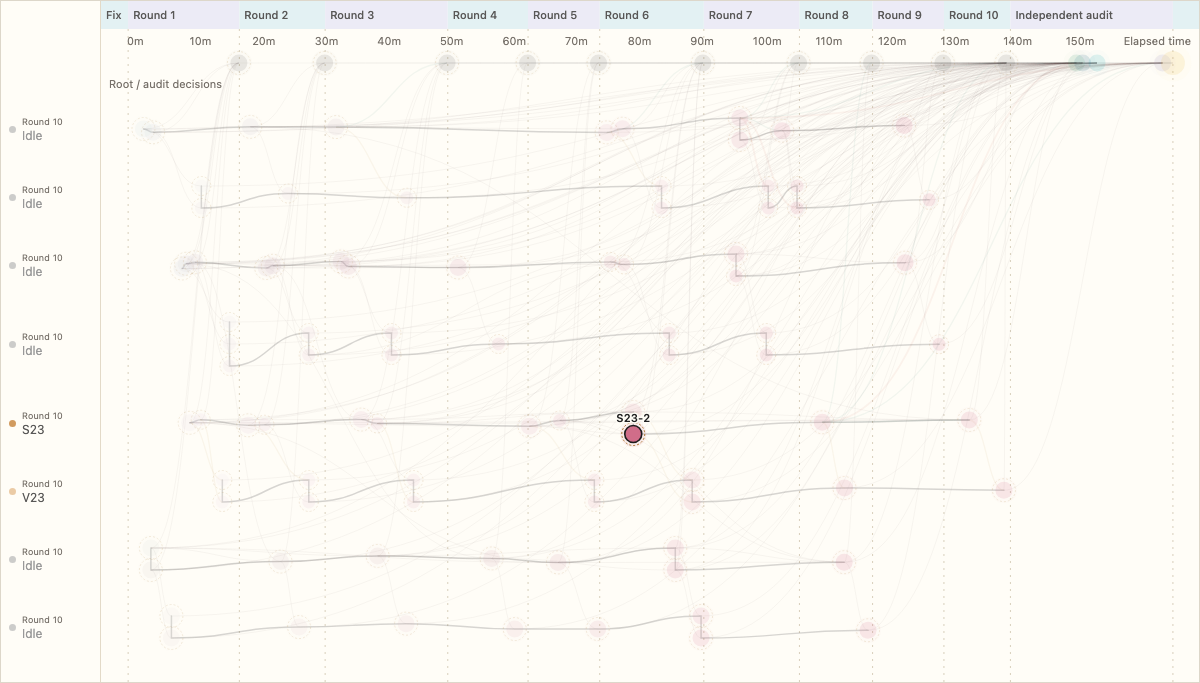
Figure 35. S23-2. Step11. Exact-field reservoirs lose new patterns
Attempt 2 · as-written claim; audit finding retained
As-written audit finding: Mathematical prescription theorem independently holds: affine-reservoir rank follows from cube intersection<=2^rank; simultaneous prefix deficiency equals full deficiency. Exact preservation with frozen old-old block forces A=c=0 on full rank, and a fixed no-self-input network has <=half-cube fixed points via coordinate matching. Future patterns remain conditionally independent under the pre-fixed learner, so success<=2^-k+(1-2^-k)R_n; distinct conditioning and proportional bound are correct with no general feasibility implication. AS WRITTEN step11 incorrectly calls115134 prefix ranks executed checks: original script uses any(...) short circuit but increments counter by n. G2 independently actually enumerated all38874 reservoir matrices and counted104594 executed prefix rank calls,115134 potential indices. S23-4 was inadvertently visible before this provisional was saved, including its count correction; this is an explicitly recorded Phase-A staging exception. The original theorem was rederived and original count directly re-enumerated independently; no paired report/root assessment was read. Existing correction identity will be assessed in Phase B. Phase B: full relevant paired reports and existing corrections read after all Phase-A files were saved. Original node/return identities, canonical hashes/acks and prior-report gates match recorded artifacts; process evidence is in audit/work/G2/process-evidence.json. No unchecked network window, median limit, capacity value or original 1991 theorem is accepted. Final disposition: grade ERROR applies only to its false as-written executed-validation-count assertion, not its correct prescription theorem. Actual immutable corrections R-8 and S23-4 both distinguish104594 executed short-circuit calls from115134 potential indices. My independent direct count, rather than agreement with those records, verifies the repair; old S23.r8 and check-round8 hashes match their historical values. Principal mathematical conclusion holds, and the correction changes no asymptotic or feasibility claim. The staging exception is permanent and explicitly disclosed; it is not erased by later independent recounting. Existing correction: R-8, S23-4.
Fix n≥2 and alpha>1. Let m_0=floor(alpha*n), 1≤l≤n, v=n+l, m_1=floor(alpha*v), and k=m_1−m_0≥1. Start with m_1 iid uniform full v-spin patterns. A fixed measurable learner, using only the first m_0 full patterns and an independent random seed, chooses an old n-neuron symmetric zero-diagonal network (J_0,h_0), or aborts. It may inspect all l new-coordinate values on those old patterns, but no future pattern. Freeze J_0; permit arbitrary cross-edges A, old field-bias adjustments c, and symmetric zero-diagonal new-neuron block B, even selected after seeing the future patterns, subject to EXACTLY preserving every old local field on every first-m_0 pattern: $$A t^\mu+c=0\quad(1\le\mu\le m_0).$$ Let success mean a resulting admissible strict full-network realization stores all m_1 patterns. Under a common iid m_0-by-n reservoir, with T_l its first l columns, $$P\{\exists\,1\le l\le n:\operatorname{rank}[\mathbf1,T_l]<l+1\} \le R_n:=\min\{1,(2^{n+1}-2)2^{-m_0}\}\le 2^{n+1-m_0}.$$ On its complementary event, every permitted A and c is zero for every l. For each fixed l and every such learner, $$\boxed{\ P_{\rm iid}(\mathrm{success})\le 2^{-k}+(1-2^{-k})R_n\le 2^{-k}+R_n.\ }$$ The sharper rank error R_l=min{1,(2^(l+1)−2)2^(−m_0)} may replace R_n for a single fixed l. If m_1≤2^v and rho_{v,m_1}=1−(2^v)_{m_1}/2^(v m_1), the same prescription under uniform ordered distinct full v-patterns obeys $$P_{\rm distinct}(\mathrm{success})\le\min\{1,\ 2^{-k}+(1-2^{-k})R_n+\rho_{v,m_1}\},\qquad \rho_{v,m_1}\le\binom{m_1}2 2^{-v}.$$ Thus for fixed alpha>1 and any fixed beta>0, its success tends to zero uniformly over beta*n≤l≤n. This refutes high-probability proportional augmentation by this exact-field-preserving frozen-block prescription. It is not an upper bound on p_v(m_1), does not refute looser margin-preserving or adaptive block modifications, and establishes neither capacity nor sharpness.
Recorded argument — superseded where identified
- Canonical acknowledgment, checked context and quantifiers. I reread the entire unchanged canonical Setting, Assumed, Target, Files, Web, Criterion and Checklist, recomputed SHA256 69b4558a16b8a4697d8efd749176ee1ac4951d5da70dde0ca4ea739c3fc6a120 and appended the required S23 solver round-eight read-full acknowledgment. I reread the complete S23-1, S3-5 and S3-6 bodies; their checked reports are recorded in the brief/prior read. They motivate testing a stronger augmentation prescription but no theorem below imports their source estimates. This unit is self-contained. Fix the learner before sampling. Its old network is a measurable function of the old full-pattern prefix and independent internal randomness, NOT of future patterns. Aborting is failure. The theorem is an unconditional success bound over all sampled data, not a statement conditioned on the learner finding a particular old realization. Its final new block and attempted cross-edges may be chosen after future data; this relaxation only strengthens the obstruction.
- Exact spin conventions. Use \(s^\mu\in\{-1,1\}^n\), \(J=J^\top\), \(J_{ii}=0\), and free \(h\), with margins \(s_i^\mu((Js^\mu)_i+h_i)>0\). For the tie rule \(\sigma(t)=+1\) for \(t>0\) and \(-1\) otherwise, a finite fixed-point family can be made strict by decreasing each field by less than its least positive field, when present. Positive-target fields stay positive and negative-target fields become negative. Strict margins directly imply fixed points. In spin form the augmented network has
$$J'=\begin{pmatrix}J_0&A\\A^\top&B\end{pmatrix},\qquad h'=(h_0+c,d),\qquad B=B^\top,\quad\operatorname{diag}B=0.$$ The old field change on old sample mu is exactly A t^mu+c.
- Cube points in a low-dimensional linear space. If L is an r-dimensional linear subspace of R^m, choose r coordinate rows of a basis matrix that are linearly independent. Projection onto those coordinates is injective on L: a vector with zero projected coordinates has zero basis coefficients. Its restriction to L intersect {−1,1}^m is therefore injective into {−1,1}^r. Hence
$$|L\cap\{-1,1\}^m|\le 2^r.$$ For an independent uniform sign vector Y this gives P(Y in L)≤2^(r−m). This elementary proof needs no general-position assumption or random-matrix theorem.
- Uniform affine-reservoir rank. Generate n independent uniform sign columns T_1,...,T_n in R^(m_0), and begin with the nonzero deterministic column 1. If the first j−1 random columns have been independent together with 1, their span has dimension j. Conditional on those columns, step3 bounds the probability that column j is the first dependent column by 2^(j−m_0). Summing first-dependence events gives
$$P\{\operatorname{rank}[1,T_1,...,T_n]<n+1\}\le\sum_{j=1}^n2^{j-m_0}=(2^{n+1}-2)2^{-m_0}.$$ Cap by1. Every prefix of a linearly independent family is independent, while the l=n prefix is the full family. Consequently the event that ANY prefix [1,T_l] is deficient is exactly full-matrix deficiency, and this same single bound holds simultaneously for all l≤n, with no extra union factor. Any subset of the columns is also independent on this event. The auxiliary columns beyond a particular observed l can be generated on an enlarged probability space and need not be available to that learner. At fixed l the same argument stops at l and gives R_l. If m_0<n+1, simultaneous full column rank is impossible; the capped bound is then1 and the claim is only vacuous. For fixed alpha>1, m_0≥n+1 eventually and R_n decays exponentially. No nontrivial rank assertion is being made in the too-few-row regime.
- Exact old fields kill the entire reservoir. For old neuron i, exact preservation is
$$[1,T_l]\,(c_i,A_{i1},...,A_{il})^\top=0.$$ On full column rank its kernel is {0}, so c_i=0 and every A_ij=0. Apply this simultaneously to all n old neurons and every l on the good event from step4. This conclusion is deterministic once the reservoir is observed, regardless of how coefficients are selected or how large they are. Symmetry makes the corresponding new-to-old block A^T zero as well. New-new weights B and new biases remain arbitrary, but they cannot alter the old local fields on either old OR future patterns. This is stricter than the valid small-edge extension in S3-5, which intentionally perturbs old fields while preserving their signs and margins.
- Every zero-diagonal network has at most half the cube as fixed points. This fact holds even for nonsymmetric deterministic update functions, provided output i does not depend on input i. Pair all n-cube vertices along coordinate1, giving 2^(n−1) disjoint edges. At either endpoint of a pair, the inputs outside coordinate1 are identical, so output1 is identical. The endpoints' target first coordinates differ. At most one endpoint can be a fixed point. Summing over the matching proves |Fix|≤2^(n−1). A zero-diagonal threshold network satisfies the premise, including at zero fields under the canonical '>0' convention. A strictly stable fixed point is a canonical fixed point, so the same bound covers strict storage. Symmetry is retained by the actual prescription but is not needed for this auxiliary upper bound. There is no multiplication of dependent neuron-feasibility probabilities.
- Independence of future patterns gives the success exponent. Let F_0 be the fixed-point set of the learner's frozen old network. Condition on the complete old-data sigma-field and independent learner seed, including the reservoir and its rank event. Future old-coordinate patterns S^(m_0+1),...,S^(m_1) are still independent uniform n-spins. Thus the conditional probability that they all lie in F_0 is
$$\left(\frac{|F_0|}{2^n}\right)^k\le 2^{-k}.$$ On the full-rank event G, step5 makes this event necessary for full-network success. Any choice of new-new weights or new biases, even future-adaptive, cannot evade that necessary old-subsystem condition. Therefore $$P(\mathrm{success})\le P(G^c)+2^{-k}P(G) =2^{-k}+(1-2^{-k})P(G^c)\le2^{-k}+(1-2^{-k})R_n.$$ The factorization is across independent future patterns after conditioning on a frozen old network, not across neurons. It is crucial that the old network was selected before future patterns were seen; an existential choice of an old realization separately for each completed future sample is outside this quantifier.
- Conditional and simultaneous claims require their own quantifiers. If H is an old-data-measurable event such as successful selection of an old realization, the identical argument gives P(success|H)≤2^(−k)+(1−2^(−k))P(G^c|H), provided P(H)>0. An unconditional R_n cannot silently replace that conditional rank error; only P(G^c|H)≤min(1,R_n/P(H)) follows in general. Conditioning on a rare bad-reservoir event can make the rank error1. Likewise simultaneous rank does not imply the same success bound for the union of successes over many l: for separate frozen learners a valid union bound is R_n+sum_l 2^(−k_l), under a common old/future array. The displayed theorem concerns each fixed l, with constants uniform in l. If l is chosen from old data only and constrained l≥L, the same conditional argument yields 2^(−floor(alpha*L))+R_n; a choice after inspecting future data is different. As a simple warning about lost independence, choosing a zero-weight network with signed biases equal to a single future spin after seeing it makes that spin a fixed point with probability1, though every chosen network has only one fixed point. This is not an admissible learner here; it shows why density alone is insufficient for adaptive selection.
- Canonical distinct sampling transfer. For fixed l, take the iid full v-pattern list and let C mean no repeats among all m_1 full patterns. If m_1≤2^v then
$$P(C)=\frac{(2^v)_{m_1}}{2^{v m_1}}=1-\rho_{v,m_1}>0,\qquad\rho_{v,m_1}\le\binom{m_1}2 2^{-v}.$$ Conditional on C, the full list is uniform ordered distinct, whose unordered set is exactly canonical sampling; ordering is the learner's training/future split. Apply the same pre-fixed learner and its independent seed, extending it arbitrarily to collision inputs if needed. For ANY success event E, iid probability decomposes as P_iid(E)=(1−rho)P(E|C)+rho P(E|C^c), so P(E|C)≤P_iid(E)+rho. This proves the stated additive transfer. The denominator form P(E|C)≤P_iid(E)/(1−rho) is also valid. One must not assume future patterns remain independent after conditioning on C or assume the old n-coordinate projection is distinct; neither is needed. If a different protocol additionally conditions on no repeats among the first m_0 OLD-coordinate projections, its total conditioning failure probability is at most rho_{v,m_1}+binom(m_0,2)2^(−n), yielding that additional cost rather than the canonical full-v cost alone. A separately stipulated old distinct sampler is not silently identified with the full-v canonical law.
- Proportional augmentation consequence and exact scope. Since m_0≥alpha*n−1 and k=floor(alpha*(n+l))−floor(alpha*n)≥floor(alpha*l)≥alpha*l−1,
$$R_n\le\min(1,2^{2-(\alpha-1)n}),\qquad P_{\rm iid}(\mathrm{success})\le2^{1-\alpha l}+2^{2-(\alpha-1)n}.$$ For fixed alpha>1 and beta>0, this tends to zero uniformly for beta*n≤l≤n. Under full-v distinct sampling add O_alpha(n²2^(−n)), because v≤2n and m_1=O_alpha(n). Fixed l only gives the finite bound2^(−k)+o(1), not convergence to zero when k stays bounded. This is the failure of a specified prescription, NOT network infeasibility: another old realization selected with future data, a modified old-old edge block, or small cross-edges that preserve strict signs while changing actual old fields are unexcluded. Even allowing the old-old block to change while preserving fields introduces extra columns S_(−i) into the equations, so the present [1,T] rank proof no longer forces all changes to vanish. More general proportional gluing, a fixed-positive excess construction, repair-core growth, normalized-median convergence, exact alpha_sym, a single sharp threshold and the number1.6 all remain unresolved.
- Finite exact algebra checks. My new isolated
scripts/S23/check_round8.pyexhausts38,874 sign reservoir matrices with n=1,2,3 and m_0=1,...,5 using rational Gaussian elimination. It checks115,134 prefix ranks, equality of 'some prefix deficient' with 'full matrix deficient', and the stated capped rank-error bound in every size case, including too few rows. It checks4,974 spans of cube columns and their exact cube-intersection counts against2^rank. It exhausts4,112 deterministic maps without self-input on dimensions2 and3; every fixed-point count is at most half the cube (maxima2 and4). It also checks756 integer symmetric zero-diagonal threshold networks and the exact spin/Boolean field conversion; maxima in that finite coefficient grid are2 and3, not asserted as global maxima. Finally360 exact independent-future set-probability cases obey (|F|/2^n)^k≤2^(−k). All checks pass. These are finite algebra/combinatorics checks, not stochastic network experiments or evidence locating capacity.
Sources
The recorded argument is self-contained; its exact dependencies remain linked.
In the attempt tree
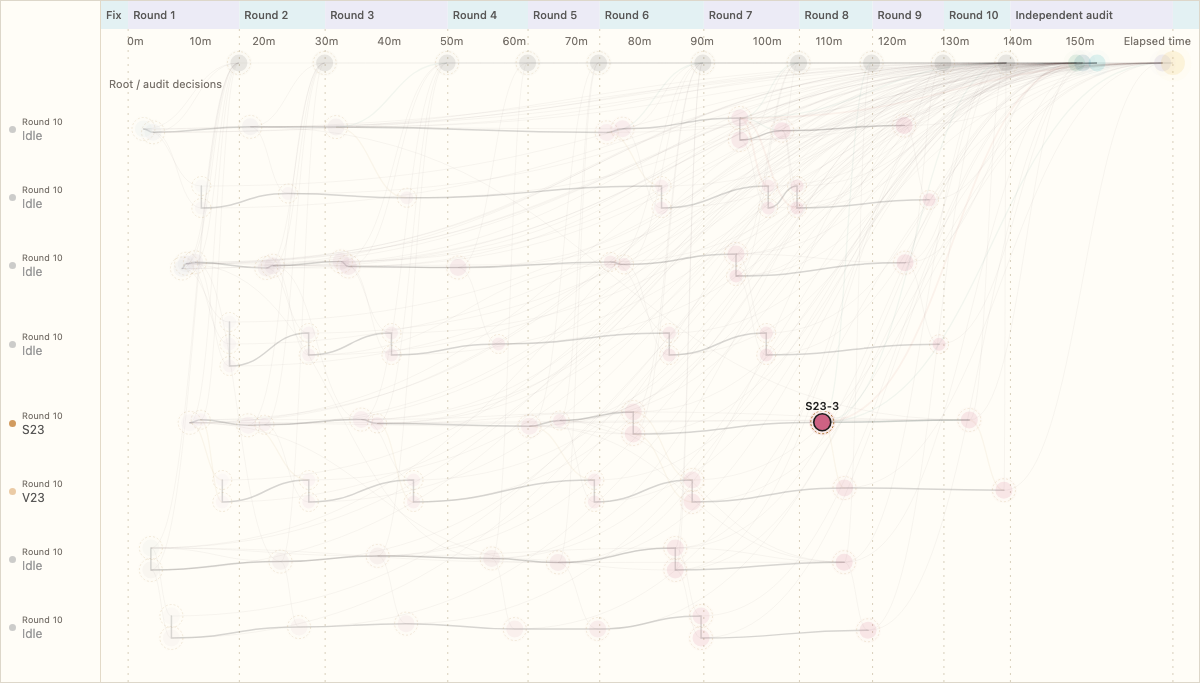
Figure 36. S23-3. Step12. Quantile envelopes identify both endpoints
Established in Attempt 2 · stated scope
For the actual canonical uniform-distinct storage profiles, put N_n=2^n, p_n(0)=1, $$q_n(t)=\min\{1\le m\le N_n:p_n(m)\le t\},\quad c_n=q_n(1/2),\qquad0<t<1,$$ and define exactly $$\mathcal A=\{\alpha>0:p_n(\lfloor\alpha n\rfloor)\to1\},\quad \mathcal Z=\{\alpha>0:p_n(\lfloor\alpha n\rfloor)\to0\},\quad \alpha_-=\sup\mathcal A,\quad \alpha_+=\inf\mathcal Z.$$ The finite exceptional n for which a fixed proportional load is outside the sampling domain are omitted from limits. Both endpoint sets are nonempty, and $$\boxed{\alpha_-=\inf_{\varepsilon\in(0,1)}\liminf_{n\to\infty}\frac{q_n(1-\varepsilon)}n,\qquad \alpha_+=\sup_{\varepsilon\in(0,1)}\limsup_{n\to\infty}\frac{q_n(\varepsilon)}n.}$$ Unconditionally, $$1\le \alpha_-\le\liminf_n c_n/n\le\limsup_n c_n/n\le \alpha_+\le2.$$ The following window statements are equivalent, but UNPROVED for this network: $$\mathrm{(W)}\quad(\tau_n-c_n)/n\xrightarrow{\Pr}0,$$ $$\mathrm{(QW)}\quad[q_n(\varepsilon)-q_n(1-\varepsilon)]/n\to0\quad\text{for every fixed }0<\varepsilon<1/2.$$ Under (W), writing a=liminf c_n/n and b=limsup c_n/n, $$\boxed{\alpha_-=a,\qquad \alpha_+=b.}$$ If a<b, every fixed alpha strictly between them has two dimension subsequences along which storage probability tends respectively to0 and1.
For each fixed c in(0,infinity), the following are equivalent for these actual profiles: (i) all original strict-side limits are1 for0<alpha<c and0 foralpha>c; (ii) tau_n/n converges in probability to c; (iii) q_n(t)/n converges to c for every fixed t in(0,1); (iv) (W) holds and c_n/n converges to c; (v) alpha_sym=alpha_+=c. Such c would lie in[1,2]. None of these equivalent statements, (W), equality of the endpoints, or their numerical value is established here. No additional behavior at a critical endpoint is inferred. These are exact logical reformulations, not a capacity-value solution.
Proof
- Contract, source scope and notation. I read the full canonical problem, recomputed the contract SHA256 and recorded the required S23 round-ten solver acknowledgment. I read the complete current-run S1-3 from
hopfield-r10/returns/S1.r2.jsonand its no-issue V1-3 report; the complete S3-1, S3-6 and S23-1 proofs were reread before use. Current-run IDs below refer to hopfield-r10. In particular S1-3 here is the logarithmic-excess lower theorem, not the unrelated same code inthree-round-paired; no unnamespaced earlier-run upper-bound node is used. The one-neuron upper bound needed below is proved directly from the canonical Cover assumption. Earlier conditional repair/window and abstract-countermodel inputs retain their explicitly stated scope. The new lemma is independent of any unchecked current-round unit and does not rely on another solver's horizon conclusion.
- Actual hereditary profiles and the survival law. A single symmetric zero-diagonal W with free biases stores every subset of a stored sample, so a uniform random ordering of all N_n cube vertices couples every size and makes p_n(m) nonincreasing in m. A singleton {s} stores with J=0 and h=s, while the full cube contains an adjacent pair differing only in coordinate i; their neuron-i input fields coincide but their targets differ, so the pair and full cube do not store. Hence p_n(1)=1,p_n(N_n)=0, and each q_n(t) exists, with2≤q_n(t)≤N_n. Let tau_n be the first nonstored prefix. Heredity gives exactly
$$p_n(m)=P(\tau_n>m),\quad 0\le m\le N_n.$$ Every prefix is uniform among distinct sets, so this is the original sampling law. Thus the hereditary event here is exactly the canonical event, not a relaxed model.
- Applicable exterior bounds, with a direct upper argument. The complete checked current-run lower theorem S1-3 gives p_n(M_n)→1 for M_n=n+floor(c_*n/log n), c_*=1/55296, in the actual distinct law, with all smaller sample sizes succeeding uniformly. Therefore p_n(floor(alpha n))→1 for every0<alpha≤1. Only this consequence is imported; no fixed alpha>1 is obtained from M_n/n→1.
For the upper bound, sample iid spin patterns temporarily. At neuron1 the n−1 other coordinates are iid features, and its m target spins are independent fair labels. On ANY fixed m features in R^(n−1), the number of strictly affine realizable sign assignments is at most Cover's supplied count C_(n−1)(m). To justify the upper bound without general position, choose one strict affine witness for each realizable assignment (there are finitely many), and perturb all features slightly enough to preserve all their finitely many strict signed margins. Affine general-position configurations are dense: each prohibited affine dependence is the zero set of a nonzero determinant polynomial, and a finite union of such zero sets has empty interior. Choose a perturbation in general position. Every original assignment survives and the perturbed count is the assumed Cover count. Hence general position is used only for an upper bound, never asserted for spin features.
Storage of the full network implies neuron1 feasibility; no independence across neurons is used. Therefore $$P_{\rm iid}(\mathrm{storage})\le\frac{C_{n-1}(m)}{2^m} =P\{\operatorname{Bin}(m-1,1/2)\le n-1\}.$$ For m=floor(alpha*n), alpha>2, the binomial mean exceeds n−1 by a positive linear amount, while its variance is O(n). Chebyshev's inequality already makes this lower-tail probability tend to0. The iid collision probability is at most binom(m,2)2^(−n)=o(1). Conditioning the iid list on no full-pattern collisions yields exactly the uniform distinct law; for any event its conditional probability differs from its iid probability by at most the collision probability, using the two-component conditional mixture. Thus p_n(floor(alpha*n))→0 for all alpha>2. These conclusions ensure A contains(0,1] and Z contains(2,infinity). They are nonempty, and their endpoints are finite and positive. A is downward closed and Z upward closed by profile monotonicity; no element of A can exceed an element of Z. In particular1≤alpha_sym≤alpha_+≤2. No conclusion at load2 is used.
- The exact cutoff identity handles every floor. The quantile definition and monotonicity imply, for integer m in the valid domain,
$$p_n(m)>t\ \Longleftrightarrow\ m<q_n(t),\qquad p_n(m)\le t\ \Longleftrightarrow\ m\ge q_n(t).$$ For an integer q and real alpha, floor(alpha*n)<q is equivalent to alpha<q/n, including the equality case alpha=q/n. Consequently, whenever the proportional size is valid, $$\boxed{p_n(\lfloor\alpha n\rfloor)>t\ \Longleftrightarrow\ \alpha<q_n(t)/n.}$$ Also P(tau_n>floor(alpha*n))=P(tau_n/n>alpha) exactly, because tau_n is integer. Thus floors introduce no hidden endpoint shift in either cutoff identity. For every fixed alpha>0, 1≤floor(alpha*n)≤2^n for all sufficiently large n. If useful for finite tail comparisons, extend p_n(m)=1 for integer m≤0 and p_n(m)=0 for m≥N_n; this bookkeeping convention does not alter any quantile or asymptotic canonical load.
- Unconditional lower endpoint envelope. For any fixed t∈(0,1), write L(t)=liminf q_n(t)/n. Step3 and the cutoff identity show1≤L(t)≤limsup q_n(t)/n≤2: use every load below1 for the lower bound and every load above2 for the upper bound. Put a_*=inf_(0<t<1)L(t). If0<alpha<a_*, then alpha<L(t) for every fixed t; eventually q_n(t)/n>alpha, so p_n(floor(alpha*n))>t. Letting t approach1 gives storage probability tending to1. Conversely, if alpha>a_*, choose fixed t with L(t)<alpha. Infinitely many n then have q_n(t)/n<alpha with a fixed positive gap, so the cutoff identity gives p_n(floor(alpha*n))≤t<1 on that subsequence. Thus alpha is not in A. Since a_*∈[1,2], taking the supremum proves alpha_sym=a_*. Relabel t=1−epsilon to obtain exactly the first boxed formula. This proof makes no claim whether alpha=a_* itself belongs to A; it does not interchange an infimum with a liminf.
- Unconditional zero-probability endpoint envelope. Put U(t)=limsup q_n(t)/n and b_*=sup_(0<t<1)U(t), also in[1,2]. If alpha>b_*, then for every fixed t, eventually q_n(t)/n<alpha and p_n(floor(alpha*n))≤t; letting t decrease to0 proves convergence to0. If0<alpha<b_*, choose fixed t with U(t)>alpha. On a subsequence q_n(t)/n>alpha with a fixed positive gap, so the same cutoff gives p_n(floor(alpha*n))>t>0; alpha is not in Z. Taking the infimum gives alpha_+=b_*, exactly the second boxed formula with t=epsilon. Its equality case is again left open. These formulas identify both unknown endpoints by their quantile envelopes, not by known numbers. In particular, choosing t=1/2 yields the unconditional chain
$$1\le \alpha_-\le\liminf c_n/n\le\limsup c_n/n\le \alpha_+\le2.$$ Without an additional window, neither middle inequality may be replaced by equality merely because c_n is a median.
- Fixed-level quantile windows imply the centered stochastic window. Assume (QW), not yet a network theorem. For fixed0<epsilon<1/2 let a_n=q_n(1−epsilon), b_n=q_n(epsilon). Then a_n≤c_n≤b_n. Fix delta>0; eventually b_n−a_n<delta*n. If tau_n<c_n−delta*n, then tau_n<a_n, so its probability is at most P(tau_n<a_n)=1−p_n(a_n−1)<epsilon. If tau_n>c_n+delta*n, then tau_n>b_n, so its probability is at most p_n(b_n)≤epsilon. This proves limsup P(|tau_n−c_n|>delta*n)≤2epsilon; send epsilon down to0. The integer index a_n−1 is valid through p_n(0)=1, and strict tail containment avoids an unaccounted tie. Hence (QW) implies(W).
- The converse window implication is also valid. Assume(W). Fix delta>0 and t∈(0,1). At the integer a_n=floor(c_n−delta*n), the survival law and(W) give p_n(a_n)→1. At b_n=ceil(c_n+delta*n), p_n(b_n)→0. The extension in step4 handles either index beyond its finite sampling domain. Thus eventually p_n(a_n)>t and p_n(b_n)≤t, which imply
$$\lfloor c_n-\delta n\rfloor<q_n(t)\le\lceil c_n+\delta n\rceil.$$ Divide by n and let delta decrease to0 to get [q_n(t)−c_n]/n→0 for every fixed t. In particular the two fixed levels epsilon and1−epsilon differ by o(n), proving(QW). Conversely (QW) sandwiches any fixed t and the median between these two levels after choosing epsilon<min(t,1−t), so it also gives the same all-fixed-t centered quantile conclusion. Therefore(W),(QW), and q_n(t)=c_n+o(n) for every fixed t are equivalent. No median-location convergence is needed for this equivalence.
- Conditional median endpoint formulas and opposite subsequences. Now explicitly assume(W). By step8 all L(t) equal a=liminf c_n/n and all U(t) equal b=limsup c_n/n. The unconditional envelopes then give alpha_sym=a and alpha_+=b. If a<b and alpha∈(a,b), choose delta>0 with a<alpha−2delta and alpha+2delta<b. There is a subsequence with c_n/n<alpha−delta and another with c_n/n>alpha+delta. On the first,
$$p_n(\lfloor\alpha n\rfloor)=P(\tau_n/n>\alpha) \le P(|\tau_n-c_n|/n>\delta)\to0.$$ On the second, the analogous bound for1−p_n gives convergence to1. These subsequences can be chosen with an extra fixed margin if desired, avoiding any equality in the tail event. This is a statement CONDITIONAL on the unproved(W); without it an intermediate load could instead have an intermediate limiting probability. Nothing here determines the behavior at alpha=a or alpha=b.
- Exact sharpness/center equivalences. Fix c>0. Under the actual exterior bounds, any sharp constant must lie in[1,2]. The original strict-side limits are equivalent to tau_n/n→c in probability: convergence in probability forces its survival function to tend to1 below c and0 above c; conversely those survival limits at c−delta/2 and c+delta/2 bound both tails outside a delta-neighborhood (the lower tail is empty if the neighborhood crosses0). The exact floor/survival identity in step4 applies. These strict-side limits also force q_n(t)/n→c for every fixed t, by bracketing each quantile between the loads c−delta and c+delta; the converse follows from the exact cutoff identity and fixed t approaching1 or0. All fixed quantiles converging to c give c_n/n→c and(QW), hence(W); conversely(W) plus c_n/n→c gives tau_n/n→c by the triangle inequality. Finally, alpha_sym=alpha_+=c is equivalent to the strict-side limits: since A is downward closed and nonempty, every alpha below its supremum lies in A (choose a larger member of A); similarly every alpha above inf Z lies in Z. If the strict-side limits hold, no alpha>c lies in A and none below c lies in Z, proving both endpoint values equal c. Thus all five formulations in the statement are equivalent, but this equivalence proves none of their unverified premises. Behavior at alpha=c is unrestricted by the strict-side formulation, except for independently known special endpoint facts such as p_n(n)→1.
- What the conditional repair route and cutoff example actually supply. The checked S3-1 has the exact identity p_n(m−1)−p_n(m)=E|R(D_m)|/m. It also follows directly by deleting a uniform point from a uniform m-set: heredity makes the indicator difference1 exactly for a repairing deletion. Take the now-established exterior bracket A=1/2,B=3. If, as a separate UNPROVED network hypothesis, the expected repair count is at least r_n(epsilon)→infinity whenever epsilon≤p_n(m)≤1−epsilon in this bracket, each interior index between q_n(1−epsilon) and q_n(epsilon) contributes at least r_n/(3n) to a sum of differences at most1. Therefore the width is at most2+3n/r_n=o(n); steps7–8 yield(W). This is a sufficient route, not proof of its repair-growth premise. The complete S3-6/S23-1 abstract cutoff family accepts cube subsets of size at most a_n=2^ceil(log2 n). It is hereditary, has exact same-load dimension monotonicity, tau_n=c_n=a_n+1 and(W) identically, yet median/n has liminf1 and limsup2 (at powers of two and just above preceding powers). Hence even perfect windows do not logically provide a single center. This is an abstract hereditary family, not a counterexample to this threshold-network model. The same-load extension remains a valid result with insufficient center control; the separate exact-field-reservoir prescription failure is likewise no general capacity upper bound.
- Modest exact checks and append-only metadata correction. My new isolated
scripts/S23/check_round10.pyenumerates70 probability laws on tau∈{2,3,4,5,6} with quarter-grid masses. It verifies3,920 exact quantile cutoffs,1,344 width-to-tail bounds and3,156 tail-to-quantile bounds; it also verifies38,272 exact rational floor comparisons including equality and checks the abstract cutoff inequalities in4,095 dimensions. These are supplemental finite-profile sanity checks, not network simulations or evidence for(W).
The preceding V23-3 report correctly identified a reporting error in S23-3: its counter called115,134 potential prefix indices executed checks, although
any(...)short-circuited. I now correct THAT METADATA ONLY. From the immutable old size-by-size deficiency counts, the number of calls at prefix j equals the number of arrays whose first j−1 random columns were independent with1, multiplied by the number of completions. Summing gives104,594 actual prefix-rank evaluations, while115,134 is exactly the potential-index count. The new check recomputes both values exactly without modifying or rerunning any old output writer. This node'son/correctsrepair applies only to that finite-validation count; its mathematical prescription theorem is unchanged. All current checks pass. The original capacity, equality of the two endpoint envelopes, network(W)/repair growth, a limiting center and the number1.6 remain unresolved; a separate fresh all-step audit is still required.Sources
The recorded argument is self-contained; its exact dependencies remain linked.
In the attempt tree
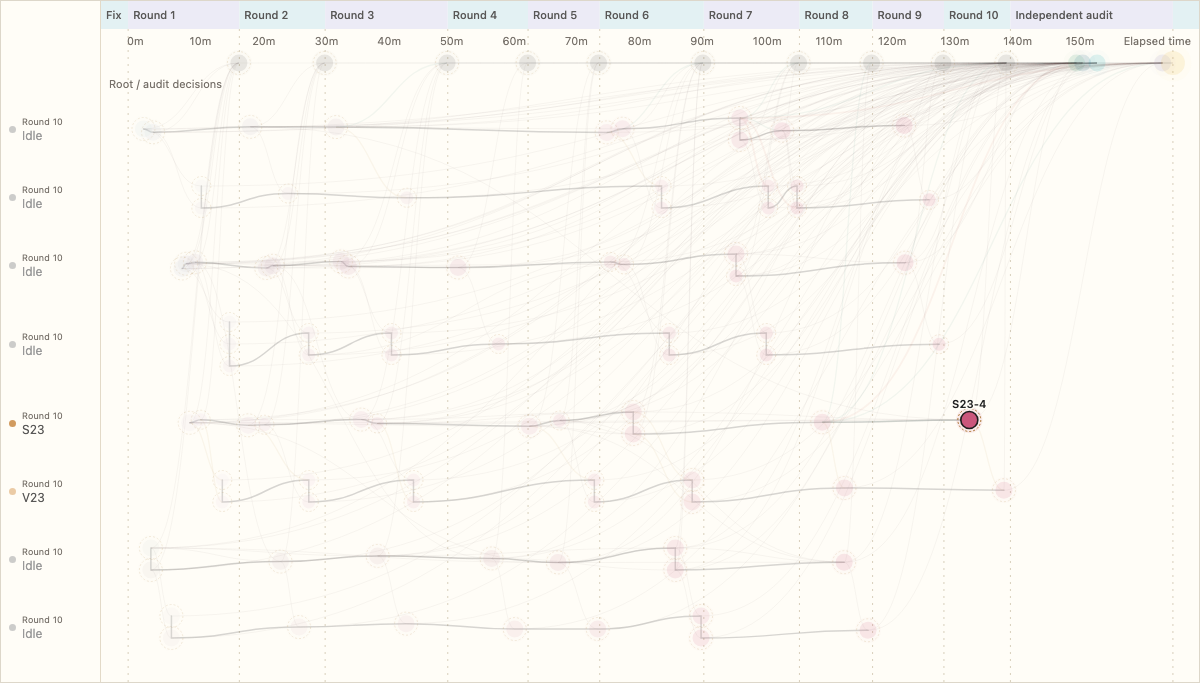
Figure 37. S23-4. - Contract, source scope and notation. I read the full canonical problem, recomputed the contract SHA256 and recorded the required S23 round-ten solver acknowledgment. I read the complete current-run S1-3 from
Earlier three-round supporting results
Q1. Which concentration statement would prove a sharp threshold?
Definitions
Definition 1. Spin network
For \(n\ge2\), \(J=J^\top\in\mathbb R^{n\times n}\), \(J_{ii}=0\), and \(h\in\mathbb R^n\). $$H_i(s)=\sum_{j\ne i}J_{ij}s_j+h_i,\qquad f_{J,h}(s)_i=\sigma(H_i(s)),\qquad\sigma(t)=\begin{cases}+1,&t>0,\\-1,&t\le0.\end{cases}$$ Strict storage requires \(s_iH_i(s)>0\) for every prescribed spin and neuron.
Definition 2. Storage probability
\(D\) is uniform among the \(m\)-element subsets of \(\{-1,1\}^n\). $$p_n(m)=\Pr\{D\text{ is storable}\}.$$
Definition 3. Capacity
$$\alpha_-=\sup\{a>0:p_n(\lfloor an\rfloor)\longrightarrow1\}.$$ This supremum does not assert a sharp threshold.
Definition 4. Two limiting endpoints
$$\alpha_-=\sup\{u>0:p_n(\lfloor un\rfloor)\to1\},\qquad \alpha_+=\inf\{a>0:p_n(\lfloor an\rfloor)\to0\}.$$ A sharp proportional threshold is equivalent to equality of these endpoints.
Definition 5. Spin patterns
\(s^\mu\in\{-1,1\}^n\), and \(S=[s^1\ \cdots\ s^m]\in\{-1,1\}^{n\times m}\).
Definition 6. Spin couplings
\(J=J^\top\in\mathbb R^{n\times n}\), \(J_{ii}=0\), and \(h\in\mathbb R^n\). Strict stability means \(s_i^\mu((Js^\mu)_i+h_i)>0\).
Definition 7. Augmented projection
$$U=\begin{bmatrix}S\\\mathbf1_m^\top\end{bmatrix},\qquad P=U(U^\top U)^{-1}U^\top$$ when \(U\) has column rank \(m\). Its last coordinate represents a free field.
Definition 8. Nonstorage certificate
The multipliers \(\lambda_i^\mu\ge0\) have total mass one and satisfy $$\sum_\mu\lambda_i^\mu s_i^\mu=0,\qquad \sum_\mu(\lambda_i^\mu+\lambda_j^\mu)s_i^\mu s_j^\mu=0\quad(i<j).$$ Their existence is equivalent to nonstorage.
Definition 9. First failure time
Uniformly order the entire spin cube and let \(\tau_n\) be the first prefix length that is not storable. $$p_n(m)=\Pr\{\tau_n>m\}.$$
Definition 10. Maximum storable subset
For a finite sample \(D\), $$L(D)=\max\{|E|:E\subseteq D\text{ is storable}\}.$$ Full storage is the event \(L(D)=|D|\).
Statement
Attempt 1 · supporting result in its stated scope
What concentrates, and what remains open. For a uniform distinct \(m\)-subset \(D\subseteq\{-1,1\}^n\), \(1\le m\le2^n\), define
$$L(D)=\max\{|E|:E\subseteq D,\ E\text{ storable}\},\qquad\Delta(D)=m-L(D).$$
For either \(Z=L(D)\) or \(Z=\Delta(D)\), and every \(t\ge0\),
$$\Pr\{|Z-\mathbb EZ|\ge t\}\le2e^{-2t^2/m}.$$
Now uniformly order the entire cube, let \(D_m\) be its first \(m\) patterns, and set
$$\tau_n=\min\{m:D_m\text{ nonstorable}\},\qquad p_n(m)=\Pr\{\tau_n>m\}.$$
A sharp proportional threshold at \(c>0\) is equivalent to
$$\forall\varepsilon>0:\quad\Pr\{|\tau_n/n-c|>\varepsilon\}\longrightarrow0.$$
The displayed concentration bound for the maximum storable subset does not establish this last limit; concentration of the first failure time remains open.
Proof and supporting results
Step 1. Two capacity endpoints and exact quantifiers
Established in Attempt 1 · stated scope
Let \(A=\{\alpha>0:p_n(\lfloor\alpha n\rfloor)\to1\}\) and \(B=\{\alpha>0:p_n(\lfloor\alpha n\rfloor)\to0\}\), and set \(\alpha_-:=\sup A=\alpha_-\), \(\alpha_+:=\inf B\). Then \(1\le \alpha_-\le \alpha_+\le2\). Every fixed \(\alpha<\alpha_-\) belongs to \(A\), and every fixed \(\alpha>\alpha_+\) belongs to \(B\). The requested deterministic sharp threshold exists if and only if \(\alpha_-=\alpha_+\); when it exists its value equals both. No endpoint limit is forced.
Proof
- The checked round-1 bounds give \((0,1)\subseteq A\) and \((2,\infty)\subseteq B\). They follow from a symmetric zero-diagonal projection construction and a one-neuron necessary condition, respectively; neither assumes independent neuron feasibility. Thus both sets are nonempty and their endpoints are finite.
- The nested uniform-subset coupling in the checked round-1 distinct-sampling lemma gives \(p_n(m+1)\le p_n(m)\). Hence \(A\) is downward closed in positive loads and \(B\) is upward closed: for fixed \(\alpha<\beta\), the integer floors have the required order for every \(n\).
- If \(\alpha<\alpha_-\), the definition of supremum supplies \(\beta\in A\) with \(\alpha<\beta\), so monotonicity gives success at \(\alpha\). If \(\alpha>\alpha_+\), choose \(\beta\in B\) with \(\beta<\alpha\) and obtain failure at \(\alpha\). If some \(b\in B\) were smaller than some \(a\in A\), monotonicity would give \(1=\lim p_n(\lfloor an\rfloor)\le\lim p_n(\lfloor bn\rfloor)=0\). Taking endpoints yields \(\alpha_-\le \alpha_+\).
- Equality of the endpoints gives the two required limits on their strict sides by Step 3. Conversely, if a constant \(c>0\) has those limits, every load below \(c\) belongs to \(A\), every load above \(c\) belongs to \(B\), and no load above \(c\) can belong to \(A\) nor any load below \(c\) to \(B\). Thus \(\alpha_-=\alpha_+=c\).
- For \(\alpha_-<\alpha<\alpha_+\), neither limit one nor limit zero holds; an intermediate limit or nonexistence of the limit is consistent. This is a quantified obstruction to inferring sharpness from the supremum alone.
Sources
The derivation is self-contained; no external theorem is required.
In the attempt tree
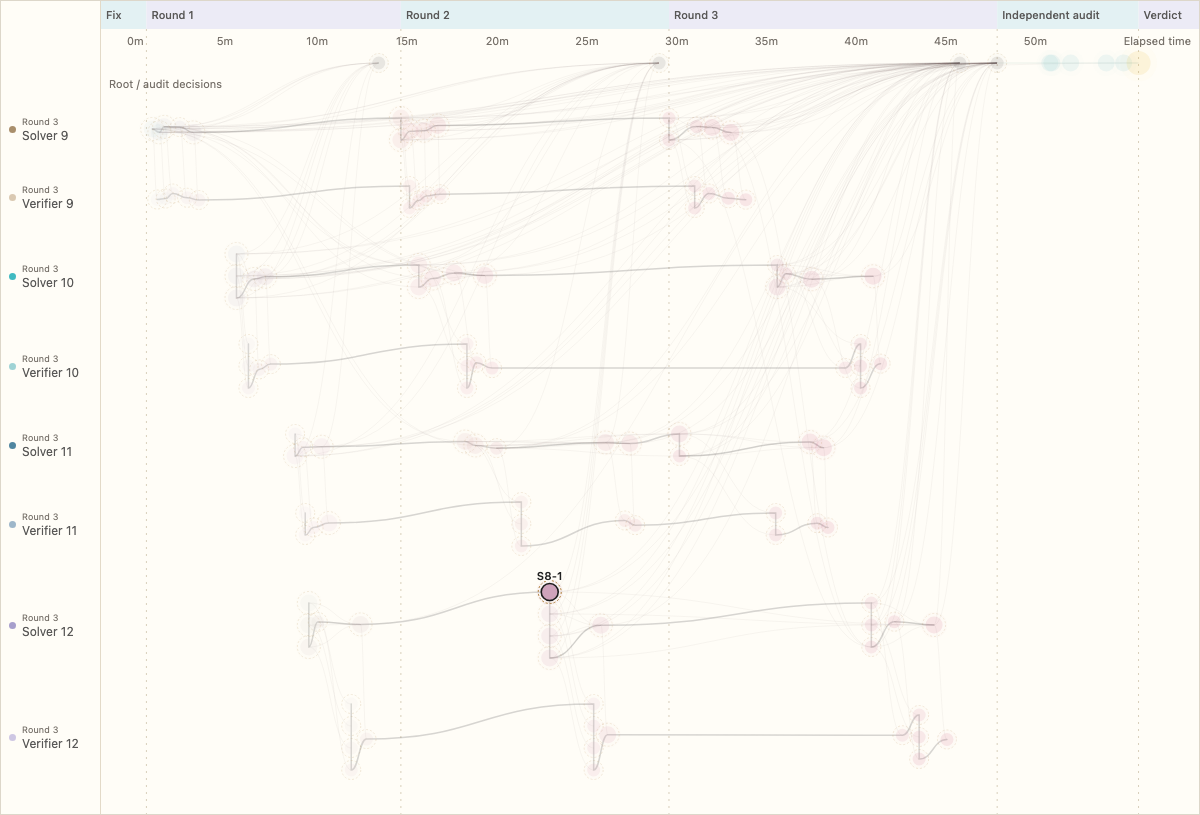
Figure 71. S8-1. Step 2. Prefix-time concentration is equivalent
Established in Attempt 1 · stated scope
Choose a uniform random ordering of all \(N=2^n\) patterns, let \(D_m\) be its first \(m\) patterns, and let \(\tau_n=\min\{m:D_m\text{ is not storable}\}\). Then \(2\le\tau_n\le N\), \(p_n(m)=\Pr(\tau_n>m)\), and the requested sharp threshold at \(c>0\) is exactly equivalent to \(\tau_n/n\xrightarrow{\Pr}c\). The checked exterior bounds imply \(\Pr(\tau_n/n<1-\varepsilon)+\Pr(\tau_n/n>2+\varepsilon)\to0\) for every \(\varepsilon>0\).
Proof
- A singleton \(\{s\}\) stores with \(J=0,h=s\). Adjacent spin patterns have identical input to the neuron where their prescribed signs differ, so cannot both be stored. The full cube contains such a pair; the first nonstorable prefix therefore lies between 2 and N.
- Storage is hereditary under deletion, with the same network storing every subset. Therefore a prefix is storable precisely before its first nonstorable index. Every prefix \(D_m\) is a uniform distinct \(m\)-subset, proving \(p_n(m)=\Pr(\tau_n>m)\) exactly, with no iid replacement.
- Suppose \(\tau_n/n\to c\) in probability. For \(\alpha<c\), take \(\delta=(c-\alpha)/2\); on \(|\tau_n/n-c|<\delta\), one has \(\tau_n>\lfloor\alpha n\rfloor\). For \(\alpha>c\) the corresponding choice gives \(\tau_n\le\lfloor\alpha n\rfloor\) for sufficiently large \(n\). The two storage limits follow from Step 2.
- Conversely, suppose the sharp storage limits hold at \(c\). For \(0<\varepsilon<c\), the event \(\tau_n/n<c-\varepsilon\) is contained in \(\{\tau_n\le\lfloor(c-\varepsilon/2)n\rfloor\}\) for large \(n\), whose probability tends to zero. The event \(\tau_n/n>c+\varepsilon\) is contained in \(\{\tau_n>\lfloor(c+\varepsilon/2)n\rfloor\}\), also of probability tending to zero. Lower tails for \(\varepsilon\ge c\) are empty. Thus convergence in probability follows.
- Apply the same floor-buffer argument to the checked success limits at every load below 1 and failure limits at every load above 2. It gives the stated asymptotic interval containment. It does not concentrate that interval to one point; this is the exact missing probabilistic assertion.
Sources
The derivation is self-contained; no external theorem is required.
In the attempt tree
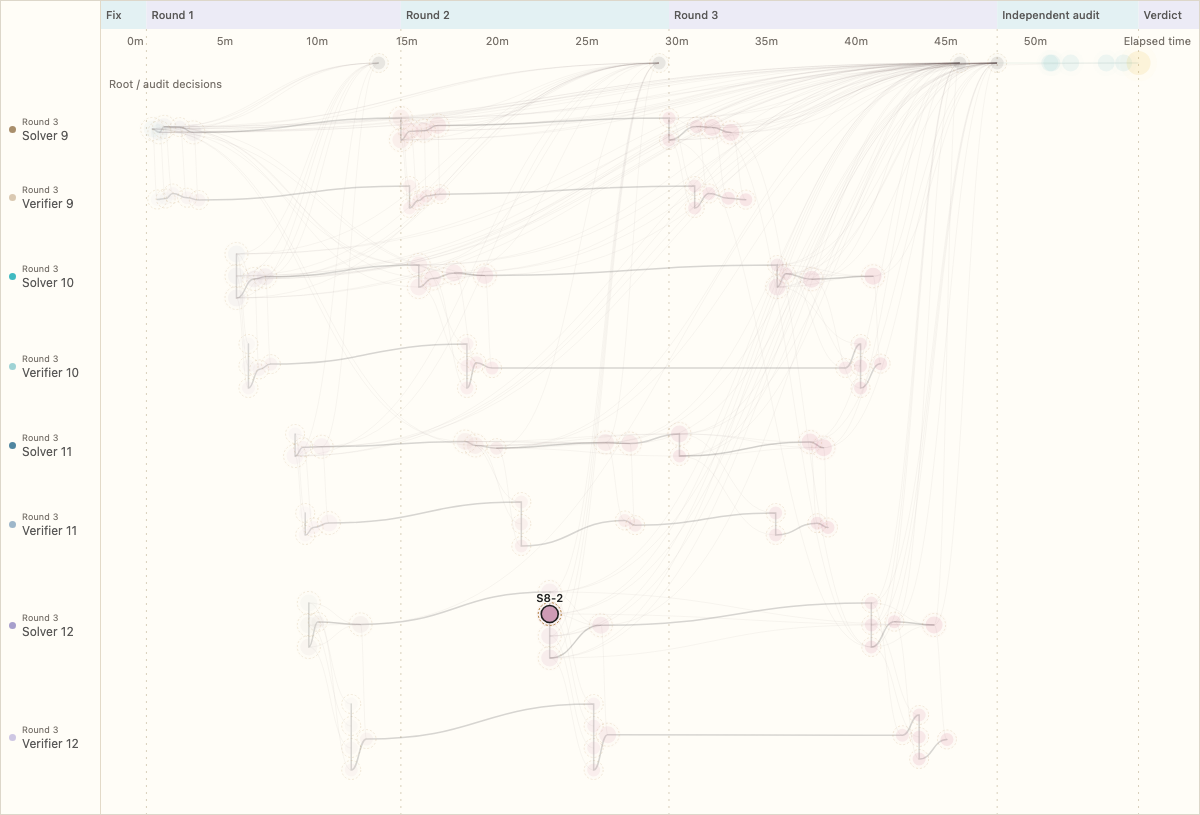
Figure 72. S8-2. Step 3. Transitive threshold tools lose the scale
Established in Attempt 1 · stated scope
The nonstorage event is an increasing transitive event on \(N=2^n\) independent pattern-presence bits. Friedgut–Kalai (1996), Theorem 3.2, applies, but at presence density \(\theta=\alpha n/2^n\) its guaranteed density window is \(O_\varepsilon(\theta)\), corresponding to \(O_\varepsilon(n)\) patterns rather than the \(o(n)\) needed for proportional sharpness. The fixed-size and binomial-presence formulations have equivalent sharp limits at any fixed constant \(c>0\).
Proof
- In spin coordinates, strict storage means \(s_i((Js)_i+h_i)>0\), with symmetric zero-diagonal \(J\) and unrestricted \(h\). A cube translation is \(s\mapsto Rs\) for a diagonal sign matrix \(R\). Sending \((J,h)\) to \((RJR,Rh)\) preserves every signed margin, symmetry and the zero diagonal. Since translations act transitively on cube vertices, nonstorage, which is increasing under addition of patterns, satisfies the transitive-symmetry hypothesis on its \(N\) pattern-presence bits.
- Let \(F_n(\theta)\) be binomial-presence nonstorage probability. Conditional on \(M\sim\operatorname{Bin}(N,\theta)\), the selected set is uniform of size \(M\), so \(F_n(\theta)=\mathbb E[1-p_n(M)]\). For \(\theta=\alpha n/N\), \(M/n\to\alpha\) in probability since \(\operatorname{Var}(M)\le\alpha n\). Monotonicity brackets this expectation by its values at \(\lfloor(\alpha-\delta)n\rfloor\) and \(\lfloor(\alpha+\delta)n\rfloor\), up to tail errors tending to zero. Thus sharp slice limits at \(c\) imply sharp binomial limits at \(c\).
- For the converse write \(f_n(m)=1-p_n(m)\). With \(M_\beta\sim\operatorname{Bin}(N,\beta n/N)\) and \(\beta<\alpha\), \(F_n(\beta n/N)\le f_n(\lfloor\alpha n\rfloor)+\Pr(M_\beta>\lfloor\alpha n\rfloor)\); with \(\beta>\alpha\), \(F_n(\beta n/N)\ge f_n(\lfloor\alpha n\rfloor)\Pr(M_\beta\ge\lfloor\alpha n\rfloor)\). Choosing \(\beta\) strictly between \(\alpha\) and \(c\) yields the slice failure/success limit, respectively. All binomial tail errors vanish by Chebyshev.
- The primary paper's Theorem 3.2 has hypothesis “For every symmetric monotone property A” and gives, for fixed \(\varepsilon\in(0,1/2)\), a transition increment \(C\log(1/\varepsilon)\theta\log(1/\theta)/\log N\). Here symmetry is transitivity, not invariance under all permutations. In the present normalization,
$$\frac{\log(1/\theta)}{\log N}=\frac{n\log2-\log(\alpha n)}{n\log2}\longrightarrow1.$$ Consequently the theorem's guaranteed increment has order \(\theta\), and \(N\) times that increment has order \(n\). The estimate does not supply an \(o(n)\) window. The paper's Theorem 2.1 instead gives an additive \(O_\varepsilon(1/\log N)\) density window, still larger on this scale. No conclusion that all sparse transitive events have relative sharpness follows.
- Even a new \(o(n)\) window estimate around a deterministic sequence of locations would need convergence of the normalized locations to yield one constant \(c\); the checked exterior bounds only confine possible locations to \([1,2]\).
Sources
In the attempt tree
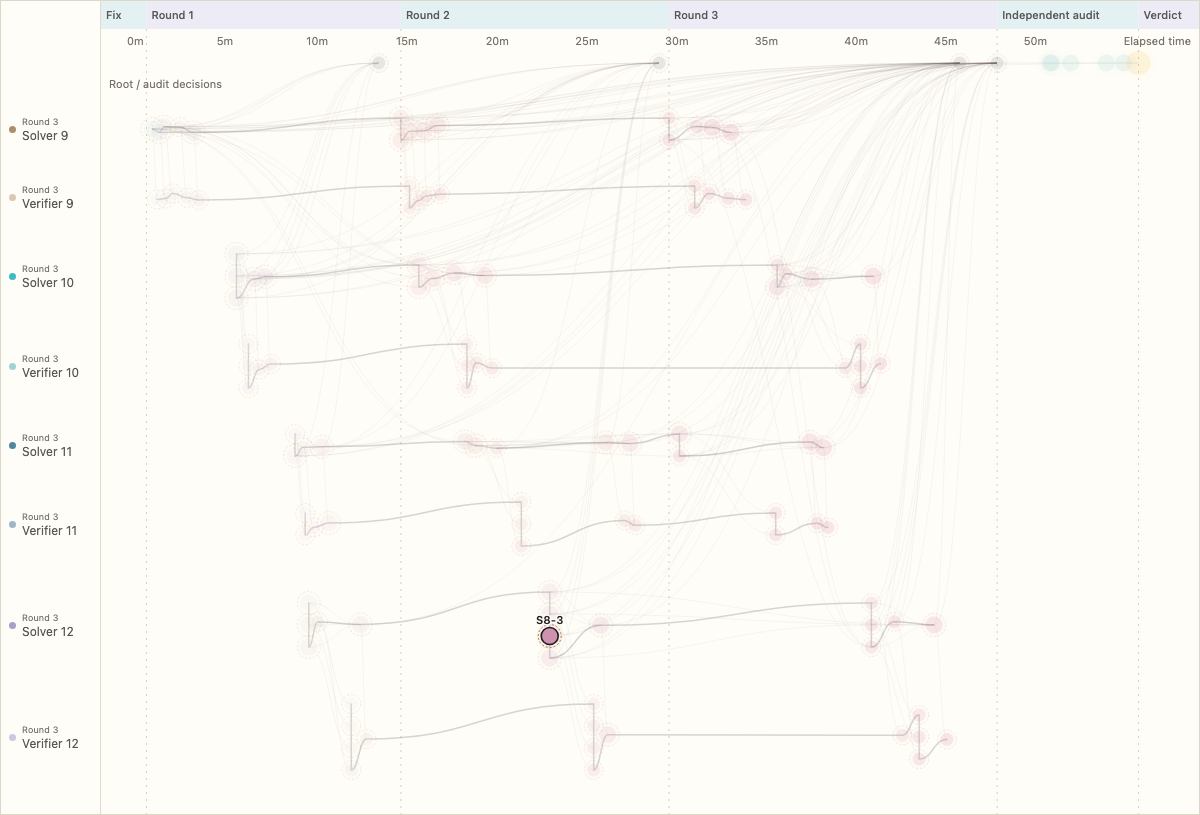
Figure 73. S8-3. Step 4. Sparse transitivity permits a coarse band
Established in Attempt 1 · stated scope
There are hereditary, families invariant under coordinate sign changes \(\mathcal H_n\subseteq2^{\{-1,1\}^n}\) such that their fixed-size probabilities \(h_n(m)\) equal 1 for \(m\le n\) and 0 for \(m\ge2n\), while every fixed \(1<\alpha<2\) has both \(\liminf h_n(\lfloor\alpha n\rfloor)>0\) and \(\limsup h_n(\lfloor\alpha n\rfloor)<1\). Thus monotonicity, transitivity, and the checked exterior bounds alone cannot prove the desired sharpness. These families are an abstract counterexample, not the network's storage family.
Proof
- For \(n\ge4\) let \(k=\lceil2\log_2n\rceil\le n\) and partition the cube into \(K=2^k\) blocks according to its first \(k\) spin coordinates. Every block has size \(L=2^n/K\) and \(n^2\le K<2n^2\). Define
$$D\in\mathcal H_n\quad\Longleftrightarrow\quad |D|\le n\quad\text{or}\quad \bigl(|D|<2n\text{ and }D\text{ meets each block at most once}\bigr).$$
- The family is hereditary: a subset of an accepted set either has size at most \(n\), or retains the no-collision condition and size below \(2n\). Cube translations permute these blocks, preserving the family, and are transitive on the \(2^n\) ground elements. By definition \(h_n(m)=1\) for \(m\le n\) and \(h_n(m)=0\) for \(m\ge2n\).
- For \(n<m<2n\), counting ordered distinct tuples gives exactly
$$h_n(m)=\frac{(K)_mL^m}{(2^n)_m}=\prod_{j=0}^{m-1}\frac{1-j/K}{1-j/2^n},$$ where \((a)_m=a(a-1)\cdots(a-m+1)\). The numerator chooses distinct blocks and one point per block, and the denominator is every ordered distinct cube sample; hence this is the required distinct-subset law, not an iid approximation.
- For \(m=\lfloor\alpha n\rfloor\), fixed \(1<\alpha<2\), the expansion \(\log(1-u)=-u+O(u^2)\) applies uniformly to all factors since \(m/K=O(1/n)\). Therefore
$$\log h_n(m)=-\frac{m(m-1)}{2K}+O\left(\frac{m^3}{K^2}+\frac{m^2}{2^n}\right)=-\frac{\alpha^2n^2}{2K}+o(1).$$ In particular \(e^{-\alpha^2/2}\le\liminf h_n(m)\le\limsup h_n(m)\le e^{-\alpha^2/4}\), with the left and right bounds strictly between zero and one. Along \(n=2^r\), \(K=n^2\) and the limit is exactly \(e^{-\alpha^2/2}\).
- Thus the success-load supremum for this example is 1 and its failure-load infimum is 2, despite transitivity and the same success/failure exterior bounds. This disproves the abstract inference from those properties to endpoint equality; it makes no claim that the storage event itself has a coarse transition.
Sources
The derivation is self-contained; no external theorem is required.
In the attempt tree
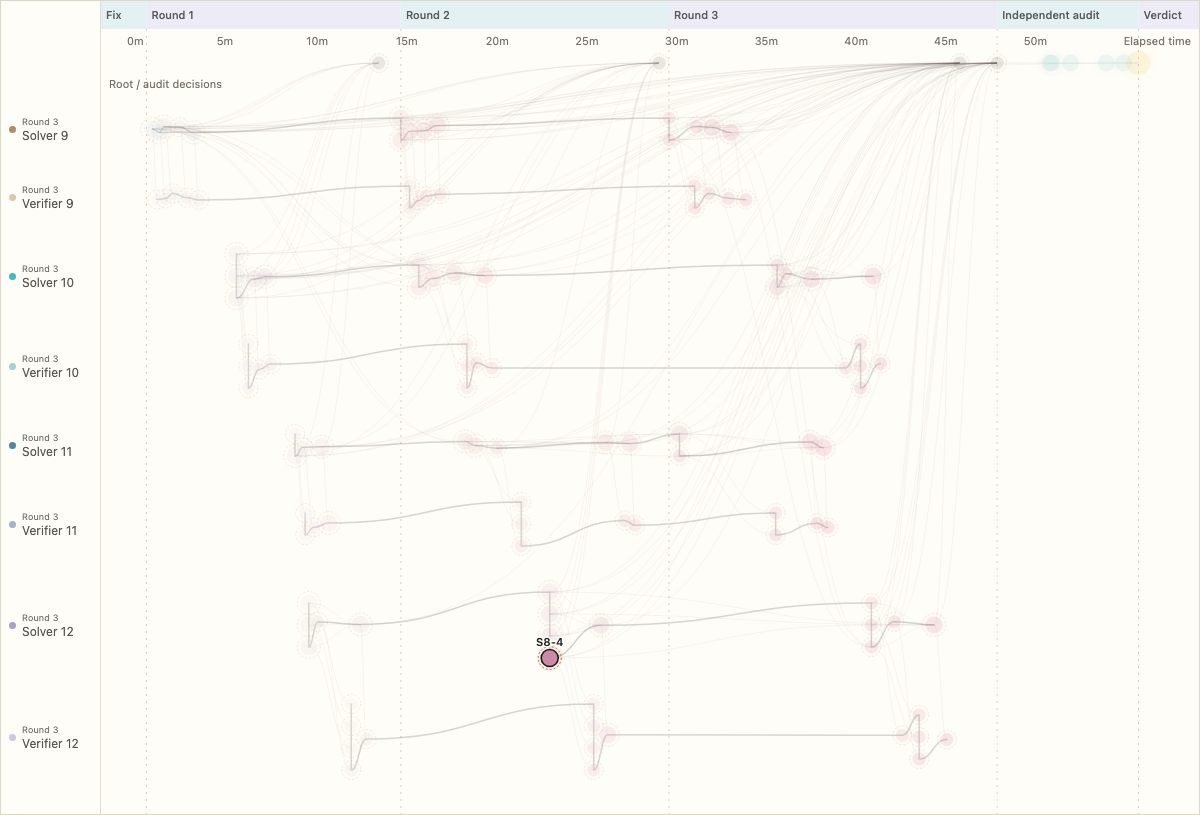
Figure 74. S8-4. Step 5. Sharpness has one exact concentration gap
Attempt 1 · open argument
Under the original symmetric zero-diagonal network conventions, $$1\le \alpha_-\le \alpha_+\le2,\qquad \alpha_-.$$ The requested sharp threshold exists exactly when \(\alpha_-=\alpha_+\), equivalently when there is a deterministic \(c\in[1,2]\) with \(\tau_n/n\xrightarrow{\Pr}c\). The remaining obligation is $$\exists c\in[1,2]\ \forall\varepsilon>0:\quad \Pr\{|\tau_n/n-c|>\varepsilon\}\longrightarrow0.$$ No equality of the endpoints, exact value of \(c\), or justification of \(c\approx1.6\) is obtained.
Attempted argument
- S8-1 derives \(1\le \alpha_-\le \alpha_+\le2\) from the checked construction below load one, checked necessary-condition upper bound above load two, and exact nested-subset monotonicity. It also proves that equality of these endpoints is necessary and sufficient for the two fixed-load limits requested by the original problem. Endpoint values themselves need no prescribed limit.
- S8-2 constructs the finite first nonstorable prefix index under a uniform ordering of the cube and proves the exact identity \(p_n(m)=\Pr(\tau_n>m)\). Therefore the endpoint equality is equivalent to the displayed convergence in probability at one deterministic \(c\in[1,2]\). Current results only imply that \(\tau_n/n\) lies in every enlarged interval \([1-\varepsilon,2+\varepsilon]\) with probability tending to one. They do not make its width vanish.
- The actual nonstorage event has the transitive symmetry needed by the Friedgut–Kalai theorem, as proved in S8-3 with symmetry and free biases preserved explicitly. That theorem's sparse estimate guarantees only an \(O_\varepsilon(n)\) pattern-count increment; its standard absolute sharpness does not yield the required \(o(n)\) width at density \(\Theta(n/2^n)\). Binomial-size concentration itself introduces only an \(O(\sqrt n)\) fluctuation, and S8-3 proves that fixed-size and binomial-presence sharp limits are equivalent; this sampling distinction is not the unresolved obstruction.
- S8-4 supplies a hereditary translation-transitive family with the same exterior success/failure limits and strictly intermediate probabilities throughout \(1<\alpha<2\). Thus monotonicity and transitivity alone logically cannot force equality of the two capacity endpoints. This example does not identify the behavior of the storage family, which has further algebraic structure.
- Consequently the sharpness target remains open in this argument. A new theorem controlling the structured symmetric feasibility event strongly enough to prove the displayed concentration, including a deterministic limiting location, would close this exact gap. Until such a theorem is proved, the capacity interval \([1,2]\), endpoint quantifiers, concentration equivalence, sparse-theorem scope, and abstract insufficiency counterexample are the rigorous partial conclusion; the proposed number 1.6 is neither proved nor refuted.
Sources
In the attempt tree
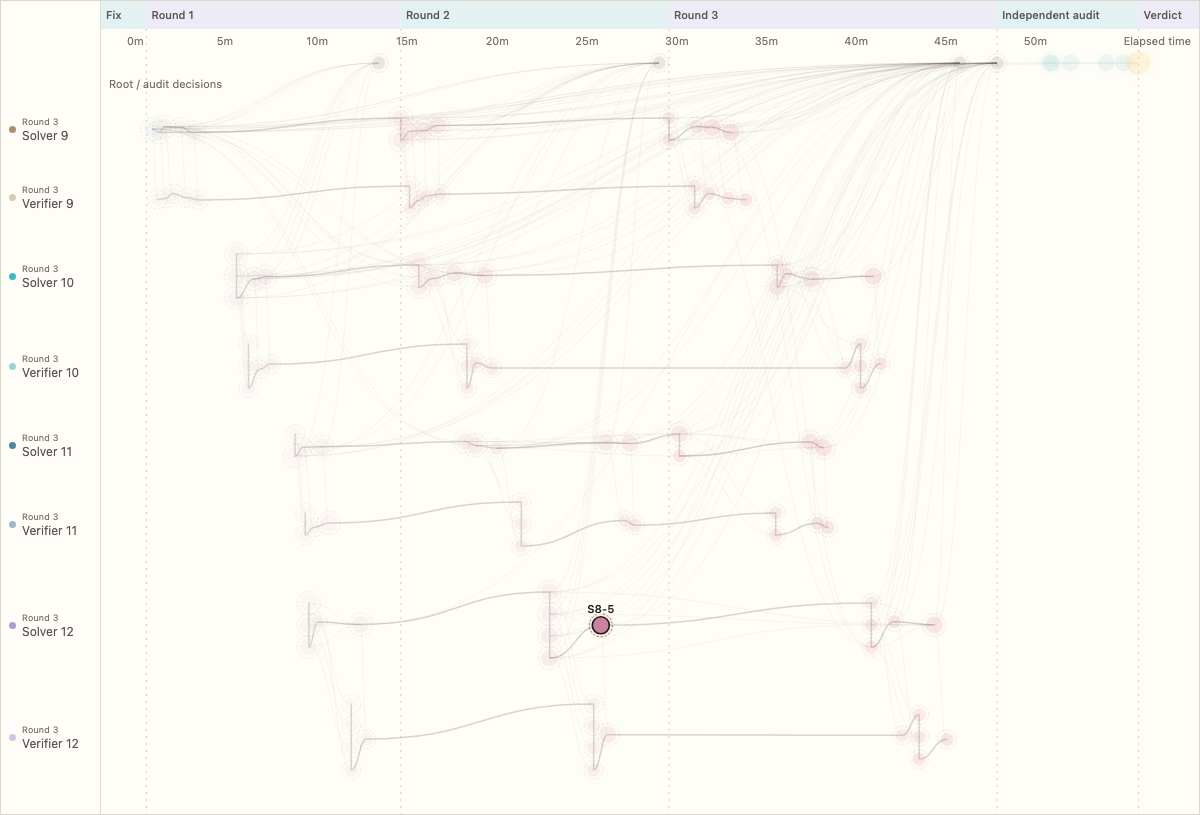
Figure 75. S8-5. Step 6. Maximum storable size concentrates
Established in Attempt 1 · stated scope
Let \(X_1,\ldots,X_m\) be iid uniform cube patterns, and let $$L(X)=\max\{|I|:I\subseteq[m],\ \{X_i:i\in I\}\text{ is storable}\},\qquad \Delta(X)=m-L(X).$$ Repeated positions count separately in \(|I|\). For \(m\ge1,t\ge0\), each \(Z\in\{L,\Delta\}\) satisfies $$\Pr\{|Z-\mathbb E Z|\ge t\}\le 2\exp(-2t^2/m),$$ and each one-sided bound holds with prefactor one. Put \(\delta=\binom m2 2^{-n}<1\). For a uniform distinct \(m\)-subset \(D\), write \(Z_D=L(D)\) or \(m-L(D)\), and \(\nu=\mathbb E Z_D\). Then $$|\nu-\mathbb E Z|\le m\delta,\qquad \Pr\{|Z_D-\nu|\ge t+m\delta\}\le\frac{2e^{-2t^2/m}}{1-\delta}.$$ The corresponding one-sided bounds again have prefactor one. In particular, at \(m=\lfloor\alpha n\rfloor\), fixed \(\alpha>0\), \((Z_D-\nu)/n\to0\) in probability. Convergence of \(\nu/n\) is not asserted.
Proof
- If two indexed lists differ at position \(j\), remove that position from an optimal storable index set for the first list. At most one index is lost, and the remaining patterns and their common network are unchanged. Thus the optimum for the second list is at least the first optimum minus one. Reverse the lists to obtain \(|L(X)-L(X')|\le1\), hence the same bound for \(\Delta\). This uses only heredity of storage, so it preserves the original symmetry, zero diagonal, free biases, and strict constraints.
- Reveal the independent inputs in order and use the Doob martingale for \(Z\). Conditional on any past, the conditional expectation after revealing the next input has range of length at most one: couple the future inputs identically and use Step 1. A centered random variable with range length at most one has moment generating function at most \(e^{\lambda^2/8}\). Indeed the second derivative of its log moment generating function is the variance under exponential tilting, at most \(1/4\), while its value and first derivative at zero are zero. Iterated conditional expectation therefore bounds the martingale's centered moment generating function by \(e^{m\lambda^2/8}\). Chernoff minimization at \(\lambda=4t/m\) proves each one-sided inequality; their union gives the displayed two-sided inequality. No theorem about neuronal independence or general position is used.
- Let \(A\) be the event that the iid list is distinct and \(\epsilon=\Pr(A^c)\le\delta\), by the union bound over pairs. Given \(A\), forgetting order is exactly uniform distinct-subset sampling; on \(A\), the indexed and set definitions of \(Z\) agree. Since \(0\le Z\le m\), the identity \(\mathbb EZ=(1-\epsilon)\mathbb E(Z\mid A)+\epsilon\mathbb E(Z\mid A^c)\) gives \(|\nu-\mathbb EZ|\le m\epsilon\le m\delta\). If \(\epsilon=0\), the same conclusion follows directly without the second conditional expectation.
- The event \(|Z_D-\nu|\ge t+m\delta\) is contained, under conditioning, in \(|Z-\mathbb EZ|\ge t\). Divide Step 2's bound by \(\Pr(A)\ge1-\delta\). The one-sided versions follow by the same inclusion. At fixed linear load, \(m\delta=O(n^3 2^{-n})\), so taking any fixed positive multiple of \(n\) for the deviation makes the bound tend to zero. This concentrates the normalized variable around its finite-n expectation, without controlling the full-storage atom \(\Delta_D=0\).
Sources
In the attempt tree
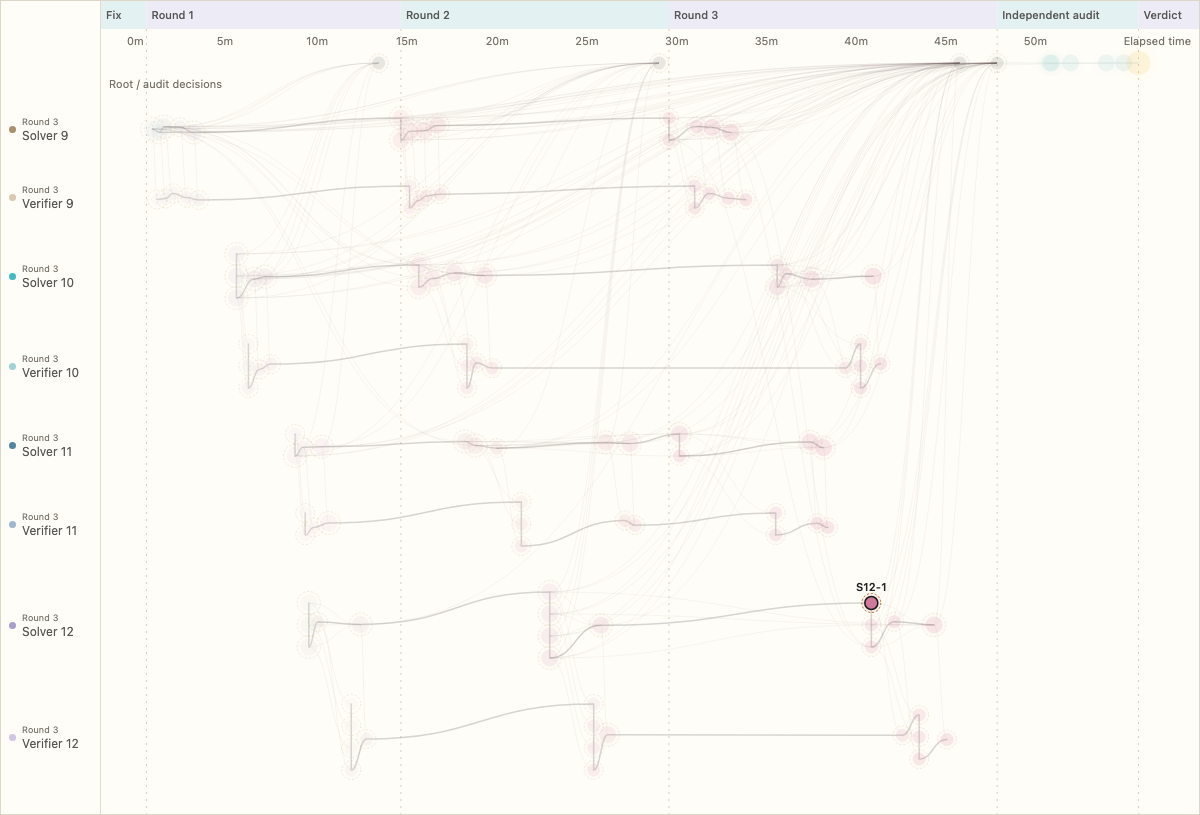
Figure 76. S12-1. Step 7. Linear witnesses do not control zero defect
Established in Attempt 1 · stated scope
In the hereditary translation-transitive family \(\mathcal H_n\) of checked S8-4, every subset of cardinality at most \(n\) belongs to \(\mathcal H_n\), so every inclusion-minimal forbidden subset has size greater than \(n\). For fixed \(1<\alpha<2\), let \(D\) be a uniform distinct subset of size \(m=\lfloor\alpha n\rfloor\), and define \(L_{\mathcal H}(D)=\max\{|E|:E\subseteq D,E\in\mathcal H_n\}\). Then $$\mathbb E[m-L_{\mathcal H}(D)]\le\binom m2/K=O(1),\qquad L_{\mathcal H}(D)/n\xrightarrow{\Pr}\alpha,$$ where \(K=2^{\lceil2\log_2n\rceil}\in[n^2,2n^2)\). Nevertheless $$0<e^{-\alpha^2/2}\le\liminf\Pr\{L_{\mathcal H}(D)=m\}\le\limsup\Pr\{L_{\mathcal H}(D)=m\}\le e^{-\alpha^2/4}<1.$$ Thus normalized-defect concentration, even with deterministic absence of all forbidden subsets of size at most \(n\), does not imply full-storage sharpness for general hereditary families. This is an abstract obstruction to an inference, not a counterexample about symmetric networks.
Proof
- The full definition and issue-free report of S8-4 have been read. Partition the cube into \(K\) equal first-coordinate blocks of size \(B=2^n/K\). A set is accepted exactly when its size is at most \(n\), or when its size is below \(2n\) and no block is repeated. This is hereditary and translation-transitive, as checked there. Because all sets of size at most \(n\) are accepted, every minimal forbidden set has size greater than \(n\), independently of the random sample.
- For \(n<m<2n\), let \(b(D)\) be the number of occupied blocks. An accepted subset has either at most \(n\) elements or at most one element per occupied block. Both maxima are attainable, so
$$L_{\mathcal H}(D)=\max\{n,b(D)\},\qquad 0\le m-L_{\mathcal H}(D)\le m-b(D).$$ If a block contains \(c\) sampled points, its contribution \(c-1\) to \(m-b(D)\) is at most \(\binom c2\). Thus the defect is bounded by the number of same-block pairs in \(D\).
- For two distinct uniform cube points, the probability of the same block is \((B-1)/(2^n-1)\le1/K\). Linearity of expectation therefore gives the displayed defect bound. Markov's inequality gives \((m-L_{\mathcal H})/n\to0\) and hence \(L_{\mathcal H}/n\to\alpha\), even in mean. This argument uses exact distinct sampling.
- Full acceptance for this range of \(m\) is exactly no repeated block. Its probability is
$$\prod_{j=0}^{m-1}\frac{1-j/K}{1-j/2^n}.$$ Expanding logarithms yields \(-\alpha^2n^2/(2K)+o(1)\); since \(n^2\le K<2n^2\), the stated strict interior bounds follow. These are the bounds independently checked in S8-4. Therefore even linear minimal-obstruction size and a bounded unnormalized expected defect do not determine the atom at zero. No dual algebra or network realization of this family is asserted.
Sources
In the attempt tree
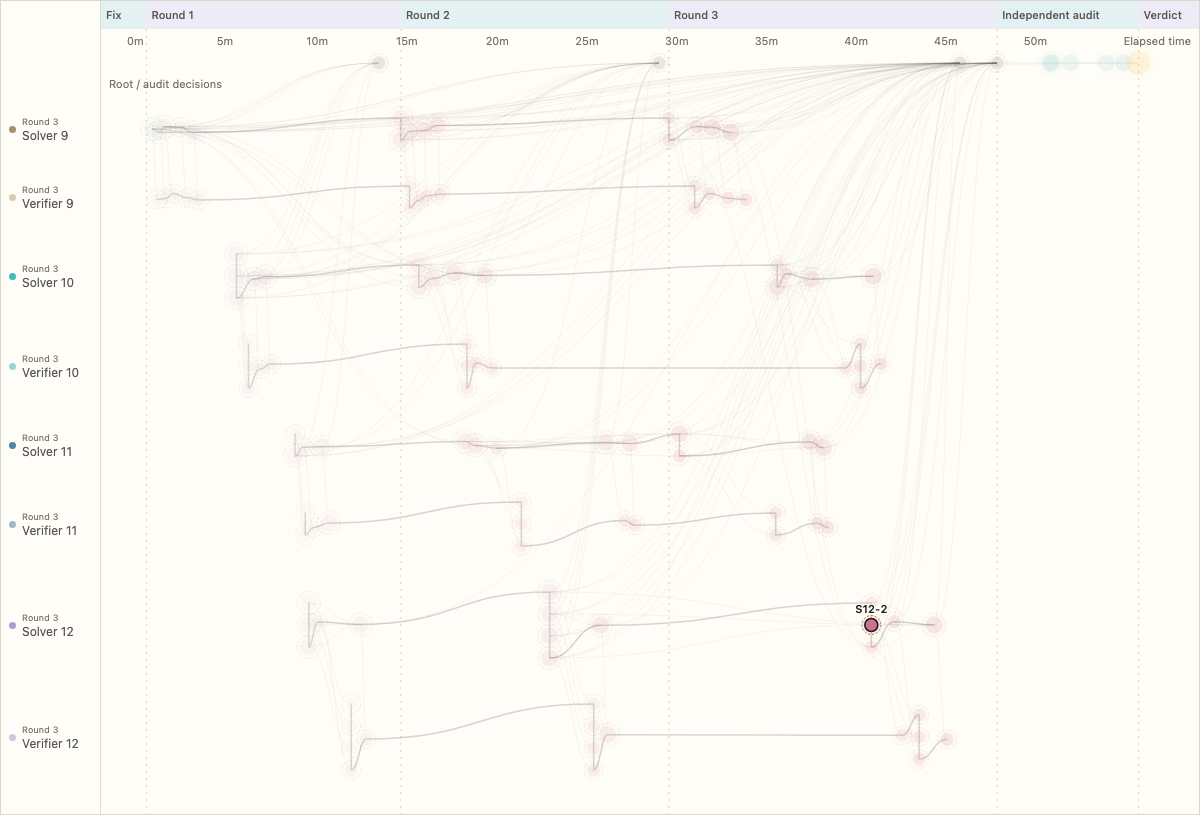
Figure 77. S12-2. Step 8. Thinning exposes the missing witness count
Established in Attempt 1 · stated scope
Let \(1\le k<m\le2n\), and let \(D_m\) be a uniform distinct \(m\)-subset of the cube. Choose a uniform \(k\)-subset \(D_k\subset D_m\), equivalently the two prefixes of a uniform cube ordering. Let \(\mathcal M(D_m)\) be the set of inclusion-minimal nonstorable subsets of \(D_m\), and \(N_q(D_m)=|\{F\in\mathcal M(D_m):|F|=q\}|\). Put \(\Delta_m=m-L(D_m)\) and \(r=\lfloor n/8\rfloor\). For any real \(u>0\), and \(n\ge8\), $$\Pr\{D_k\text{ nonstorable},\ \Delta_m<u\}\le e_n+ \mathbb E\!\left[\mathbf1_{\{\Delta_m<u\}}\sum_{q=r+1}^{k}N_q(D_m)\frac{(k)_q}{(m)_q}\right],$$ where \((a)_q=a(a-1)\cdots(a-q+1)\) and $$e_n=\frac{2n e^{-c_0n}}{1-\binom r2 2^{-n}},\qquad c_0=7\log2/8-2H(1/16)>0.$$ An empty sum is zero. On the event that all subsets of size at most \(r\) are storable, the conditional early-nonstorage probability is also at most $$|\mathcal M(D_m)|(k/m)^{r+1}.$$ These are sufficient bounds; the checked support theorem provides no estimate for \(N_q\).
Proof
- The full statements and proofs in returns/S9.json and all reports in reports/V9.json have been read; the reports for S9-3, S9-4 and S9-5 contain no issues. In the original symmetric zero-diagonal network, S9-3 gives the probability bound \(e_n\) for failure of the event \(U_r\) that every subset of \(D_m\) of size at most \(r\) is storable. This is exactly the present distinct-sampling law. Its entropy notation is \(H(t)=-t\log t-(1-t)\log(1-t)\). There are no inherited gaps in that structural assertion.
- Since the sample is finite, every nonstorable subset contains an inclusion-minimal nonstorable subset, by successive deletion. Hence \(D_k\) is nonstorable exactly when it contains at least one member of \(\mathcal M(D_m)\). Conditional on \(D_m\), a specified \(q\)-subset \(F\) is contained in a uniform \(k\)-subset with probability
$$\frac{\binom{m-q}{k-q}}{\binom mk}=\frac{(k)_q}{(m)_q}\quad(q\le k).$$ The conditional law remains uniform even after conditioning on any event determined by \(D_m\), such as \(\Delta_m<u\).
- On \(U_r\), every member of \(\mathcal M(D_m)\) has cardinality greater than \(r\). A union bound over these finite subsets, followed by expectation and the cost \(\Pr(U_r^c)\le e_n\), proves the first inequality. No independence among overlapping witnesses is assumed. Also \((k)_q/(m)_q\le(k/m)^q\le(k/m)^{r+1}\) for \(q\ge r+1\), proving the second bound.
- The dual-support statement of S9-4 says that any normalized nonnegative dual certificate restricts to a genuinely nonstorable active pattern set. In particular it is consistent with the minimum cardinality above, but it does not bound how many different minimal nonstorable subsets exist. Each minimal nonstorable set has a dual certificate; zero extension preserves all shared-edge and bias equations. The union bound therefore concerns actual pattern obstructions, not independent neuron constraints. The missing estimate is the displayed expected witness sum on small-defect samples; support size alone cannot make it small.
Sources
In the attempt tree
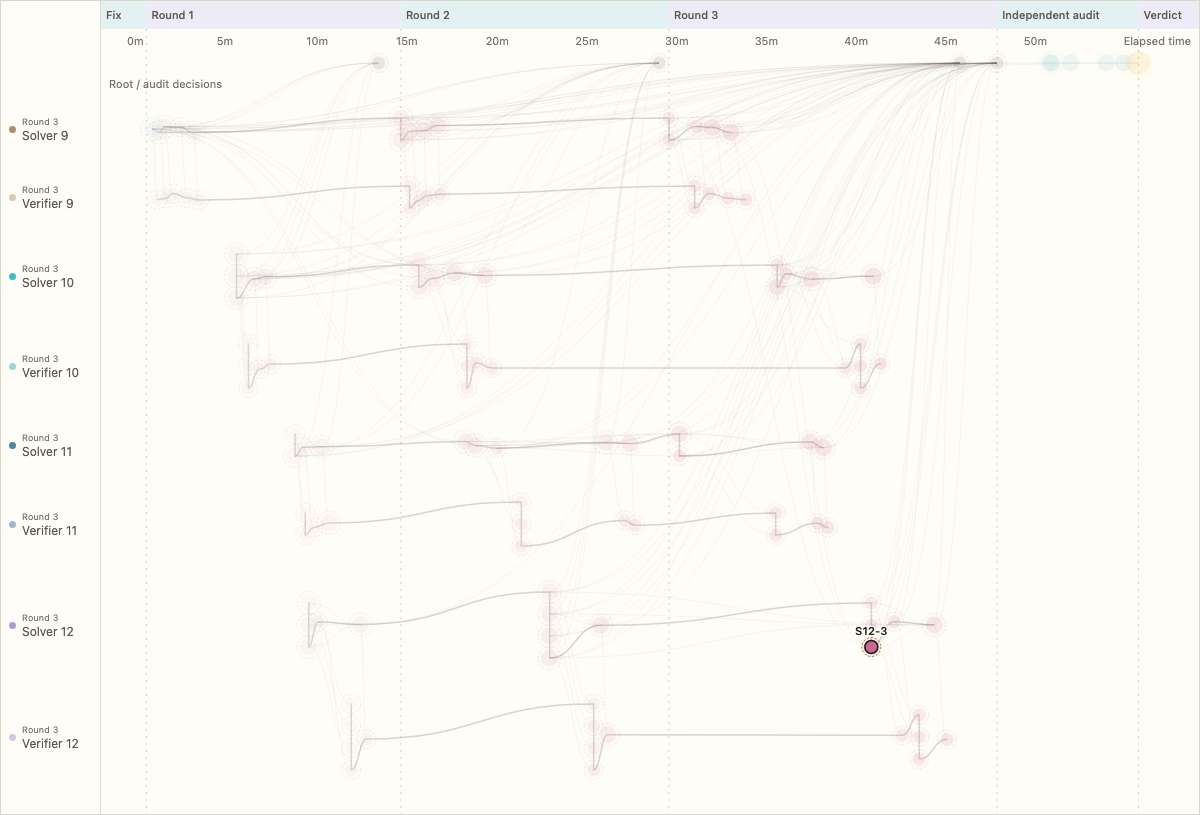
Figure 78. S12-3. Step 9. Distinct sampling concentrates directly
Established in Attempt 1 · stated scope
For a uniform distinct \(m\)-subset \(D\) of \(\{-1,1\}^n\), \(1\le m\le2^n\), let \(L(D)\) be the maximum cardinality of a storable subset and \(\Delta(D)=m-L(D)\). For either \(Z=L\) or \(Z=\Delta\), and every \(t\ge0\), $$\Pr\{Z-\mathbb EZ\ge t\}\le e^{-2t^2/m},\qquad \Pr\{Z-\mathbb EZ\le-t\}\le e^{-2t^2/m}.$$ Thus \(\Pr\{|Z-\mathbb EZ|\ge t\}\le2e^{-2t^2/m}\), without a collision correction. The claim applies to any hereditary family in place of storage.
Proof
- Two sets of equal size differing by one replacement have maximum accepted subset sizes differing by at most one. Delete the replaced point from an optimum for one set and use heredity to retain an accepted subset in the other set; reverse the roles. Therefore the same assertion holds for the deletion defect.
- Generate \(D\) by revealing the first \(m\) elements of a uniform ordering of the cube. Fix the already revealed prefix before position \(j\), and consider two possible next elements \(x,y\) in the remaining population. Given next element \(x\), sample the ordered suffix uniformly without replacement from the remaining population excluding \(x\). Apply the transposition swapping \(x\) and \(y\) to every suffix entry. This gives exactly the suffix law conditional on next element \(y\). If the first suffix contains \(y\), the two resulting final unordered sets are equal; otherwise they differ by replacing \(x\) by \(y\). The prefix is fixed because neither \(x\) nor \(y\) has appeared there. Step 1 bounds the paired values of \(Z\) by one in both cases. Consequently the Doob conditional expectations, as the next element varies, have range length at most one. This coupling remains valid at the final reveal and when \(m=2^n\).
- Each centered Doob increment therefore has conditional moment generating function at most \(e^{\lambda^2/8}\). For completeness, the log moment generating function of any centered random variable in an interval of length one has second derivative equal to an exponentially tilted variance, at most \(1/4\); its value and first derivative at zero vanish. Integrating twice gives this bound. Iteration yields \(\mathbb E e^{\lambda(Z-\mathbb EZ)}\le e^{m\lambda^2/8}\). Chernoff's inequality at \(\lambda=4t/m\) and at its negative gives the asserted exact distinct-sampling tails. No iid assumption about revealed coordinates is needed, since the bounded conditional ranges were proved by the completion coupling.
Sources
In the attempt tree
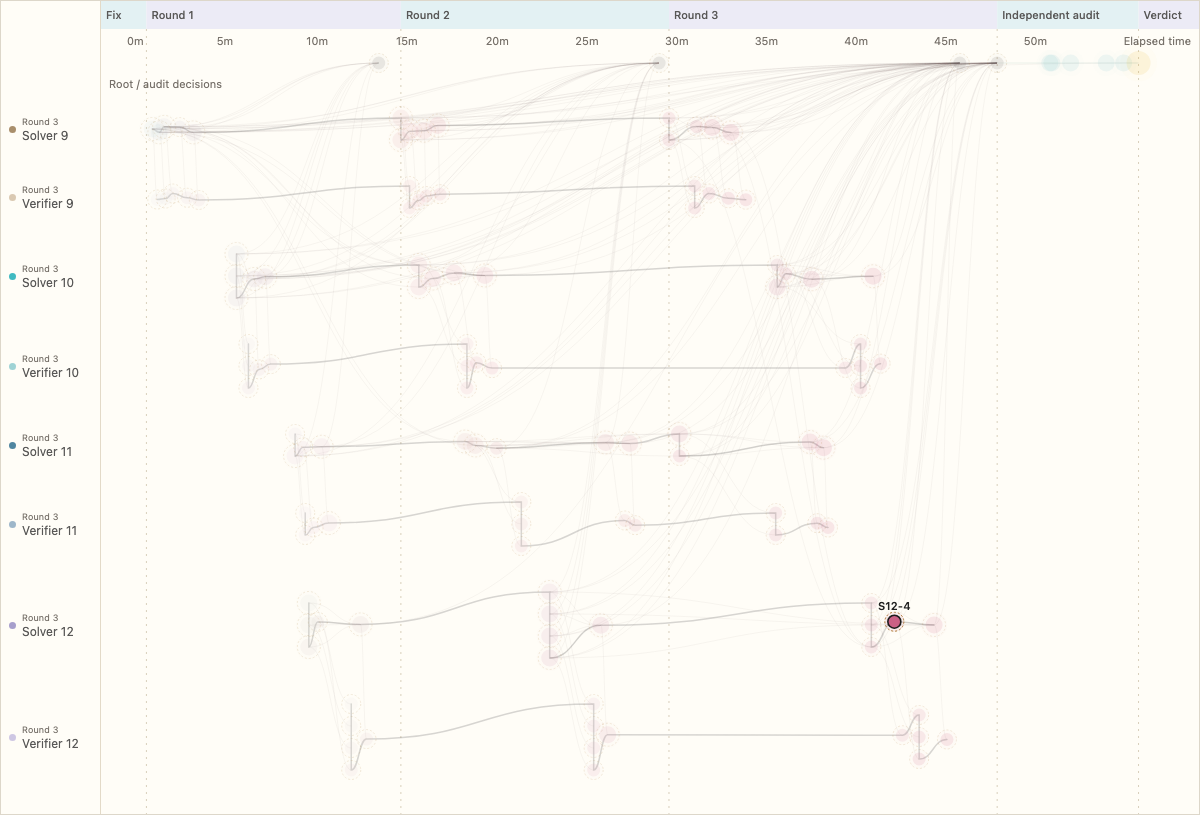
Figure 79. S12-4. Step 10. The zero-defect bridge remains open
Established in Attempt 1 · stated scope
Under the original distinct-pattern network model, let \(D_m\) be uniform permutation prefixes, \(\Delta_m=m-L(D_m)\), and $$q_n=\min\{m:p_n(m)\le1/2\},\qquad c_n=q_n/n.$$ The concentration bounds in S12-1 and S12-4 are proved. They do not prove the zero-defect atom has a sharp transition, even after adding the checked linear witness-support assertion, by S12-2.
The following is an explicit sufficient route, with two UNPROVED network-specific obligations:
B (defect propagation). For every fixed \(0<a<b<2\), with \(k=\lfloor an\rfloor,m=\lfloor bn\rfloor\), $$\Pr\{D_k\text{ nonstorable},\ \Delta_m<n^{2/3}\}\longrightarrow0.$$ M (location). The deterministic median locations satisfy \(c_n\to c\) for some \(c\in[1,2]\).
Conditional on B, for every fixed \(0<a<b<2\), $$[1-p_n(\lfloor an\rfloor)]p_n(\lfloor bn\rfloor)\to0,\qquad \tau_n/n-c_n\xrightarrow{\Pr}0.$$ Conditional on BOTH B and M, \(\tau_n/n\xrightarrow{\Pr}c\), hence the original sharp threshold exists at \(c\). Neither B nor M is proved here; B alone does not logically force M for hereditary transitive families. The original capacity remains within the inherited interval \([1,2]\), with no determination of its value or of the suggested 1.6.
Proof
- The full reports for S12-1 through S12-4 have been read: their timestamps are 2026-11-05T23:30:21Z and 2026-11-05T23:31:17Z, all before this node, and all have zero issues. Their proved conclusions are the iid concentration and explicit collision transfer, the strengthened abstract block obstruction, exact prefix thinning, and direct distinct-sampling concentration. The inherited checked S8-1 gives the interval \(1\le \alpha_-\le \alpha_+\le2\); S8-2 gives \(p_n(m)=\Pr(\tau_n>m)\) and equivalence between sharp limits and deterministic normalized prefix-time convergence. No network-specific defect propagation or median-location convergence is among those proved inputs.
- Here is the inference conditional on B. Fix \(0<a<b<2\), and suppose along a subsequence that \(p_n(m)\ge\epsilon>0\). Write \(\mu_n=\mathbb E\Delta_m\). Because the defect is nonnegative and full storage is exactly zero defect, the lower-tail bound in S12-4 gives
$$\epsilon\le\Pr\{\Delta_m=0\}\le\exp(-2\mu_n^2/m),\qquad \mu_n\le\sqrt{(m/2)\log(1/\epsilon)}=O(\sqrt n).$$ Consequently its upper-tail bound gives $$\Pr\{\Delta_m\ge n^{2/3}\}\le \exp\!\left[-2(n^{2/3}-\mu_n)^2/m\right]\longrightarrow0,$$ eventually when \(n^{2/3}>\mu_n\). B and the union bound now imply \(1-p_n(k)\to0\) along this subsequence. If the displayed product in the statement did not tend to zero, a subsequence would have both factors bounded below by the same positive constant, contradicting this implication. This proves the product conclusion conditional on B; it does not establish B.
- The median \(q_n\) exists because the full cube contains an unstorable adjacent pair, whereas singleton storage is possible, as in S8-2. By definition \(p_n(q_n)\le1/2\) and \(p_n(q_n-1)>1/2\). The checked exterior limits imply
$$1\le\liminf c_n\le\limsup c_n\le2.$$ Take any subsequence along which \(c_n\to d\in[1,2]\). For any fixed \(a<d\) with \(a>0\), choose \(a<b<d\) if \(a\ge1\); eventually \(\lfloor bn\rfloor<q_n\), so \(p_n(\lfloor bn\rfloor)>1/2\), and Step 2 forces \(p_n(\lfloor an\rfloor)\to1\). When \(a<1\), the same conclusion follows directly from the exterior limit, including when \(d=1\). For fixed \(b>d\) with \(b<2\), choose \(d<a<b\); eventually \(\lfloor an\rfloor\ge q_n\), so \(1-p_n(\lfloor an\rfloor)\ge1/2\), and Step 2 forces \(p_n(\lfloor bn\rfloor)\to0\). For \(b>2\), use the exterior limit. These fixed-load statements suffice, with arbitrarily small buffers, to give \(\tau_n/n\to d\) in probability along this subsequence. No assertion at load exactly 1 or 2 is needed.
- Conditional on B, the preceding subsequence argument proves \(\tau_n/n-c_n\to0\) in probability along the entire sequence. Otherwise a subsequence with a fixed positive deviation probability would, by boundedness of \(c_n\), have a further subsequence with \(c_n\to d\), contradicting Step 3 and the triangle inequality. Adding the separate unproved obligation M then yields \(\tau_n/n\to c\), and the survival identity in S8-2 yields the requested two strict-side limits. Every claim in Steps 2–4 that uses B or M is conditional on that obligation.
- The distinction between B and M is substantive. In an abstract hereditary translation-transitive family, accept every set of size at most \(n\) for even \(n\), and every set of size at most \(2n\) for odd \(n\), rejecting all larger sets. Its first forbidden prefix and median are deterministic: \(q_n=n+1\) for even \(n\), and \(q_n=2n+1\) for odd \(n\). It satisfies the same strict exterior limits. For fixed \(0<a<b<2\), odd \(n\) has no early failure; for even \(n\), early failure is possible eventually only if \(a>1\), in which case \(\Delta_{\lfloor bn\rfloor}\) grows linearly and exceeds \(n^{2/3}\). At \(a=1\) early failure is absent. Thus B holds in this abstract example while \(c_n\) does not converge. This is not a counterexample about networks.
- A self-contained sufficient estimate for the still open B is supplied by S12-3. For each fixed \(0<a<b<2\), with \(r=\lfloor n/8\rfloor\), it would suffice to prove
$$\mathbb E\!\left[\mathbf1_{\{\Delta_m<n^{2/3}\}}\sum_{q=r+1}^{k}N_q(D_m)\frac{(k)_q}{(m)_q}\right]\longrightarrow0.$$ The checked exceptional term \(e_n\) already tends to zero exponentially. Here \(N_q\) counts actual inclusion-minimal nonstorable pattern subsets, each having an exact dual certificate. Neither the support theorem nor the concentration inequality bounds this weighted count. In the inherited abstract block family, small defect coexists with early nonacceptance of positive probability, so minimum obstruction size cannot furnish B by itself.
- The assigned concentration and obstruction statements are therefore proved, while the bridge is filed as a precise obligation rather than silently assumed. A network proof of B (or another estimate upgrading the zero-defect atom) and a network proof of M would complete this route to sharpness. No such proof, exact capacity value, or validation or refutation of 1.6 is obtained here.
Sources
In the attempt tree
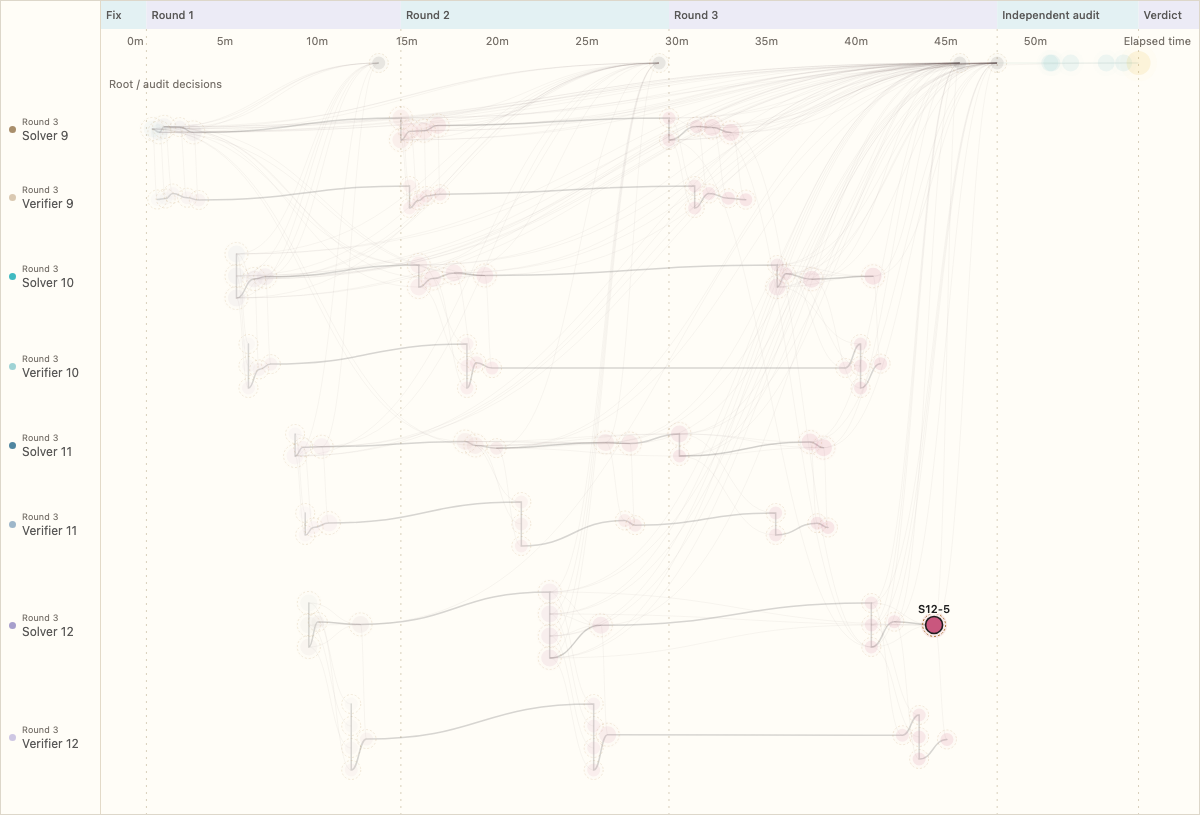
Figure 80. S12-5.